
Michigan city guide
Moving From California to Ann Arbor, MI
A university town with the state's strongest job market and its highest prices, built around the University of Michigan and its hospital system.
Housing comparison
California versus Ann Arbor, side by side
- Median home value
- $725,800
- $435,100
- Median annual property tax
- $5,114
- not available
- Median monthly cost, owners with a mortgage
- $2,844
- not available
- Population
- 39.0 million (state)
- 122,914
Figures are US Census Bureau American Community Survey 2020 to 2024 5-Year Estimates for the city place. Property tax and monthly cost rows cover owner-occupied units with a mortgage, so they describe what current owners pay, not what a new buyer would pay at today's prices. California column is the statewide baseline used across this site.
Why Californians look at Ann Arbor
Ann Arbor is the exception to Michigan's affordability story. It is a university town built around the University of Michigan, and that single institution, its faculty, staff, students, and its enormous academic medical center, drives both the local economy and the local price level.
The city sits about 45 minutes west of Detroit and its airport, close enough for easy access to national and international flights without living in the city itself. Downtown and the area around campus are dense and walkable in a way most Michigan cities are not, with a genuine restaurant, bookstore, and live music scene supported by a young, highly educated population.
For a California buyer, Ann Arbor is the closest thing Michigan offers to a coastal-city feel: strong job market, high home prices relative to the rest of the state, and a highly educated, politically diverse population. It is not the bargain that most of this list represents.
Ann Arbor fits you if
- You want the strongest and most diversified job market in Michigan, anchored by a major research university and its health system.
- You want walkability, a college-town cultural scene, and easy access to Detroit Metro Airport.
- You are comfortable paying Michigan's highest prices outside the Detroit suburbs in exchange for the strongest local economy.
- You want a politically and culturally diverse community rather than a small, homogenous town.
Look elsewhere if
- You are relocating specifically for lower housing costs. Ann Arbor is the most expensive city on this list by a wide margin.
- You need retail and industry outside of academia, healthcare, or the tech firms that cluster around the university.
- You want a quiet, low-density lifestyle. Ann Arbor's core is dense and its traffic is real for a city this size.
- You dislike long, cold winters. Ann Arbor's winters are milder than the Lake Michigan snowbelt cities but still genuinely cold.
Housing in Ann Arbor
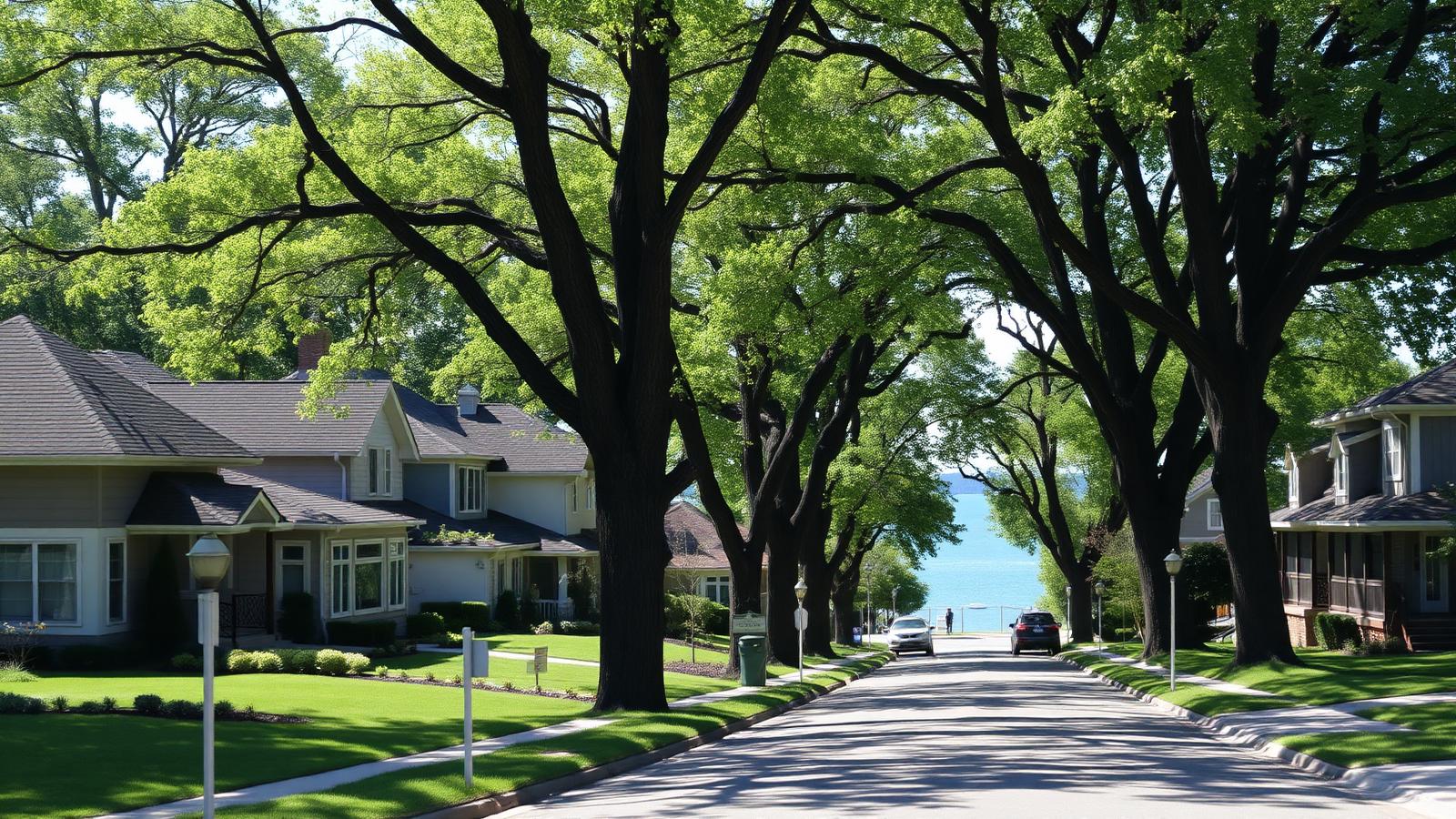
Ann Arbor's housing stock centers on early twentieth-century homes near downtown and the university, ringed by postwar and newer subdivisions further out. Old West Side and Burns Park are the classic close-in neighborhoods, both walkable and expensive by Michigan standards.
The city's population is 122,914, and the median home value has been reported around $435,100 in recent American Community Survey estimates, the highest figure on this list by a large margin.
Rental demand from the university's tens of thousands of students supports a large rental market near campus, which can mean noise and turnover in some neighborhoods but also strong long-term investment demand.
Work and the local economy
The University of Michigan is overwhelmingly the largest employer in the city, and Michigan Medicine, the university's academic health system, is one of the largest single employers in the state.
Beyond the university, Ann Arbor has developed a real technology and life sciences cluster, drawing startups and larger firms that want proximity to the university's research and talent pipeline, along with automotive research and engineering offices tied to Detroit's industry.
This gives Ann Arbor the broadest professional job market of any city on this list, though it is still tilted heavily toward education, healthcare, and research rather than general private industry.
Climate and setting
Ann Arbor has a humid continental climate, similar in broad strokes to the rest of southern Michigan, with warm humid summers and cold winters, but it sits far enough from Lake Michigan that it avoids the heaviest lake effect snow bands.
Winters bring routine snow and consistent cold from December through February, with more sun than the West Michigan lakeshore but still far less than California.
Summers are warm and green, and the Huron River running through town supports parks, trails, and paddling that residents use heavily from May through September.
Getting around, care, and schools
- Commercial air
- Detroit Metropolitan Wayne County Airport (DTW), a major hub with extensive domestic and international service, is about 25 miles east.
- Highways
- Interstate 94 runs along the south side of the city; US 23 runs north to south on the east side.
- Hospital
- Michigan Medicine, the University of Michigan's academic medical center, one of the largest hospital systems in the state.
- Public schools
- Ann Arbor Public Schools.
- Higher education
- The University of Michigan, one of the country's largest public research universities.
- Setting
- On the Huron River, about 45 miles west of Detroit.
The trade-offs
- Home prices are the highest of any city on this list, closer to a mid-tier California inland market than to the rest of Michigan.
- Traffic around campus and downtown is real for a city this size, and street parking is limited and metered.
- The job market outside the university, its hospital, and adjacent research and tech firms is thinner than the headline economy suggests.
- Winters, while milder than the lakeshore snowbelt, still bring several months of cold and routine snow.
Other Michigan towns people compare
Grand Rapids
Michigan's second largest city and the state's strongest non-auto economy, anchored by a nationally known health system and furniture-and-design industry.
Traverse City
A bay town on Lake Michigan with wineries, cherry orchards, and a genuine second-home market, widely considered the state's most desirable small city address.
Holland
A Lake Michigan lakeshore town known for its Dutch heritage, a downtown that heats its own sidewalks, and a manufacturing base tied to the automotive supply chain.
Royal Oak
A walkable Detroit suburb with restaurants, a dense downtown, and a short drive to downtown Detroit and Detroit Metro Airport.
Marquette
The largest city in Michigan's Upper Peninsula, a college and hospital town on Lake Superior for buyers who want real winter, not a mild version of it.
Statewide figures, tax detail, and the full Michigan picture are on the Michigan page. Compare property, income, and sales tax across all 49 destination states on Taxes, and see where Californians are actually moving on Stats.
Sources
- US Census Bureau, American Community Survey 2020 to 2024 5-Year Estimates, table B25077 (median home value), retrieved via Census Reporter, September 3, 2026.
- US Census Bureau, ACS 2020 to 2024 5-Year Estimates, table B25103 (median real estate taxes paid, owner-occupied units with a mortgage), retrieved September 3, 2026.
- US Census Bureau, ACS 2020 to 2024 5-Year Estimates, table B25088 (median selected monthly owner costs, owner-occupied units with a mortgage), retrieved September 3, 2026.
- US Census Bureau, ACS 2020 to 2024 5-Year Estimates, table B01003 (total population), retrieved September 3, 2026.
- Census Reporter, Ann Arbor, MI profile, censusreporter.org.
- Population Review, Ann Arbor city Michigan, American Community Survey 5-Year Estimates, populationreview.org.
- Michigan Medicine facilities overview, uofmhealth.org.
See what your California equity buys in Ann Arbor
Four short questions. We match you with one local agent and apply a closing cost credit funded from our referral fee.
Start your Ann Arbor move
Four short questions. We use them to decide which agent fits your move, and to build your equity report.