
Vermont city guide
Moving From California to Burlington, VT
Vermont's only real city, anchored by a university, a hospital system, and a lakefront downtown on Lake Champlain.
Housing comparison
California versus Burlington, side by side
- Median home value
- $725,800
- $444,800
- Median annual property tax
- $5,114
- not available
- Median monthly cost, owners with a mortgage
- $2,844
- not available
- Population
- 39.0 million (state)
- 44,675
Figures are US Census Bureau American Community Survey 2020 to 2024 5-Year Estimates for the city place. Property tax and monthly cost rows cover owner-occupied units with a mortgage, so they describe what current owners pay, not what a new buyer would pay at today's prices. California column is the statewide baseline used across this site.
Why Californians look at Burlington
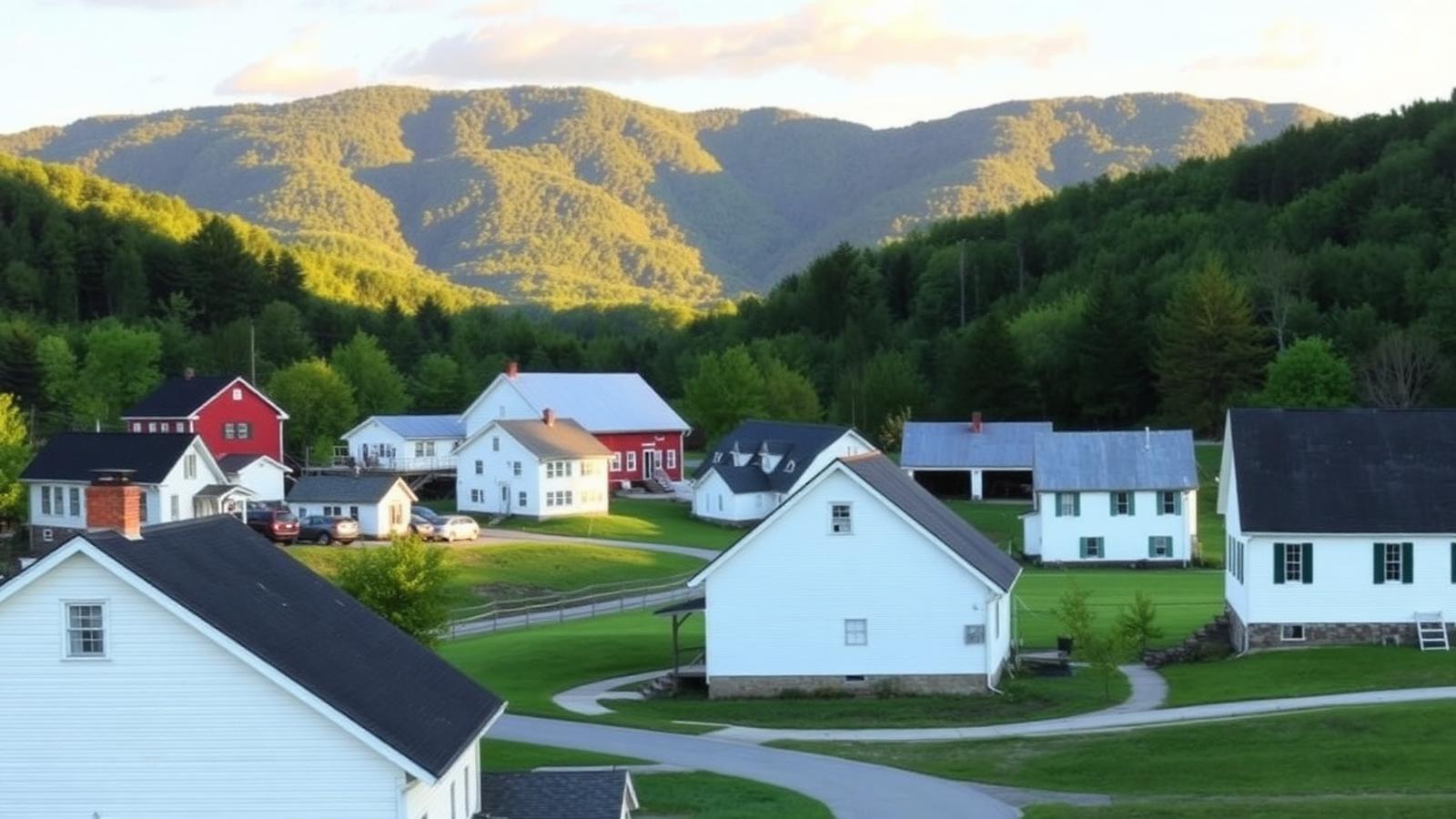
Burlington is the closest thing Vermont has to a city, and it plays that role for the entire state. It sits on the eastern shore of Lake Champlain with the Adirondacks visible across the water and the Green Mountains behind it, and its compact downtown, Church Street Marketplace, and waterfront are genuinely walkable in a way almost nowhere else in Vermont is.
The University of Vermont and the University of Vermont Medical Center dominate the local economy, which gives Burlington a younger population and a more liberal, college-town character than the rest of the state. That same concentration means the job market outside healthcare, education, and state government is thin.
For a California seller, Burlington will not feel cheap. It is Vermont's most expensive city outside the ski towns, and buyers should expect competition for the limited inventory rather than the wide-open market found in Wyoming or the rural Mountain West.
Burlington fits you if
- You want a walkable downtown, a lakefront, and a real restaurant and arts scene in a small city.
- You or a household member will work at UVM or the UVM Medical Center, the two dominant local employers.
- You are bringing remote income and want New England access without New York or Boston prices.
- You want four real seasons and are comfortable with a long, cold, snowy winter.
Look elsewhere if
- You expect Wyoming-style or Rust Belt-style affordability. Burlington carries a premium for Vermont.
- You need a large, diverse private-sector job market outside healthcare and education.
- You dislike long winters, mud season, or driving on ice and packed snow for months at a time.
- You need frequent long-haul nonstop flights. Burlington's airport is regional in scope.
Housing in Burlington
Burlington's housing stock is dense by Vermont standards, with triple-deckers and older single-family homes in the Old North End and the Hill Section, and a supply that has not kept pace with demand from the university and the medical center for years. Renovation and small-lot infill are common because there is little room to build outward inside city limits.
The ACS median home value for the city is $444,800, well above the Vermont statewide figure and closer to the cost of a mid-sized California inland city than to Casper or Cheyenne. Property tax bills in Vermont run high relative to home value because the state funds much of public education through the property tax, so budget for that even though the purchase price looks modest next to California.
South Burlington, immediately adjacent, generally offers newer construction and more inventory for buyers who want proximity to Burlington's jobs and amenities without competing directly for the city's older housing stock.
Work and the local economy
The University of Vermont and the UVM Medical Center are by a wide margin the two largest employers in the region, together accounting for a large share of local payroll in education, research, and healthcare. That concentration gives Burlington a stable, professional job base but a narrow one.
Beyond the university and the hospital, the economy runs on state and local government, tourism tied to the lake and the surrounding ski areas, a modest technology and manufacturing sector, and the restaurants and retail that serve students and visitors.
A household relocating with a specific private-sector career outside healthcare, education, or state government should research whether that field exists here before assuming Burlington's job market will absorb them.
Climate and setting
Burlington sits at lake level, roughly 340 feet, which moderates its winters somewhat compared with higher inland Vermont towns, but winters are still long and cold by California standards, with regular snow from November into April.
Summers are short, mild, and genuinely pleasant, with warm days and cool nights near the lake, and this is the season Vermonters live for. Humidity is present but nothing like the Southeast, and heat waves are rare and brief.
Mud season, the weeks in March and April when frozen ground thaws into a mess, is a real and often-mocked feature of the calendar. Lake-effect snow bands can also add unpredictable local accumulation on the Champlain Valley's eastern shore.
Getting around, care, and schools
- Commercial air
- Burlington International Airport (BTV) offers direct flights to major East Coast hubs and several other cities.
- Highways
- Interstate 89 runs through the metro, connecting to Montreal north and central Vermont south.
- Hospital
- The University of Vermont Medical Center, the state's largest hospital and referral center.
- Public schools
- Burlington School District.
- Higher education
- The University of Vermont, Champlain College, and the University of Vermont Medical Center's teaching programs.
- Setting
- On the eastern shore of Lake Champlain, at the foot of the Green Mountains.
The trade-offs
- Housing costs are the highest in Vermont outside the ski towns, with limited inventory relative to demand.
- The job market outside the university, the hospital, and government is narrow.
- Winters are long and snowy, and mud season is a genuine seasonal nuisance.
- Property taxes are high relative to home value because Vermont funds schools heavily through that tax.
Other Vermont towns people compare
South Burlington
Adjacent to Burlington with newer housing and the most inventory in the metro area, without the historic downtown.
Montpelier
Vermont's small state capital, with steady government employment and a walkable center along the Winooski River.
Stowe
A ski-town economy built on second-home pricing, carrying the highest housing costs in Vermont.
Brattleboro
A southern Vermont arts town with the lowest prices among the state's real towns and easier access to Boston and New York.
Statewide figures, tax detail, and the full Vermont picture are on the Vermont page. Compare property, income, and sales tax across all 49 destination states on Taxes, and see where Californians are actually moving on Stats.
Sources
- US Census Bureau, American Community Survey 2020 to 2024 5-Year Estimates, table B25077 (median home value), retrieved via Census Reporter, September 3, 2026.
- US Census Bureau, ACS 2020 to 2024 5-Year Estimates, table B25103 (median real estate taxes paid, owner-occupied units with a mortgage), retrieved September 3, 2026.
- US Census Bureau, ACS 2020 to 2024 5-Year Estimates, table B25088 (median selected monthly owner costs, owner-occupied units with a mortgage), retrieved September 3, 2026.
- US Census Bureau, ACS 2020 to 2024 5-Year Estimates, table B01003 (total population), retrieved September 3, 2026.
- Census Reporter, Burlington, VT profile, censusreporter.org.
- University of Vermont Medical Center, uvmhealth.org.
- Burlington International Airport, btv.aero.
See what your California equity buys in Burlington
Four short questions. We match you with one local agent and apply a closing cost credit funded from our referral fee.
Start your Burlington move
Four short questions. We use them to decide which agent fits your move, and to build your equity report.