
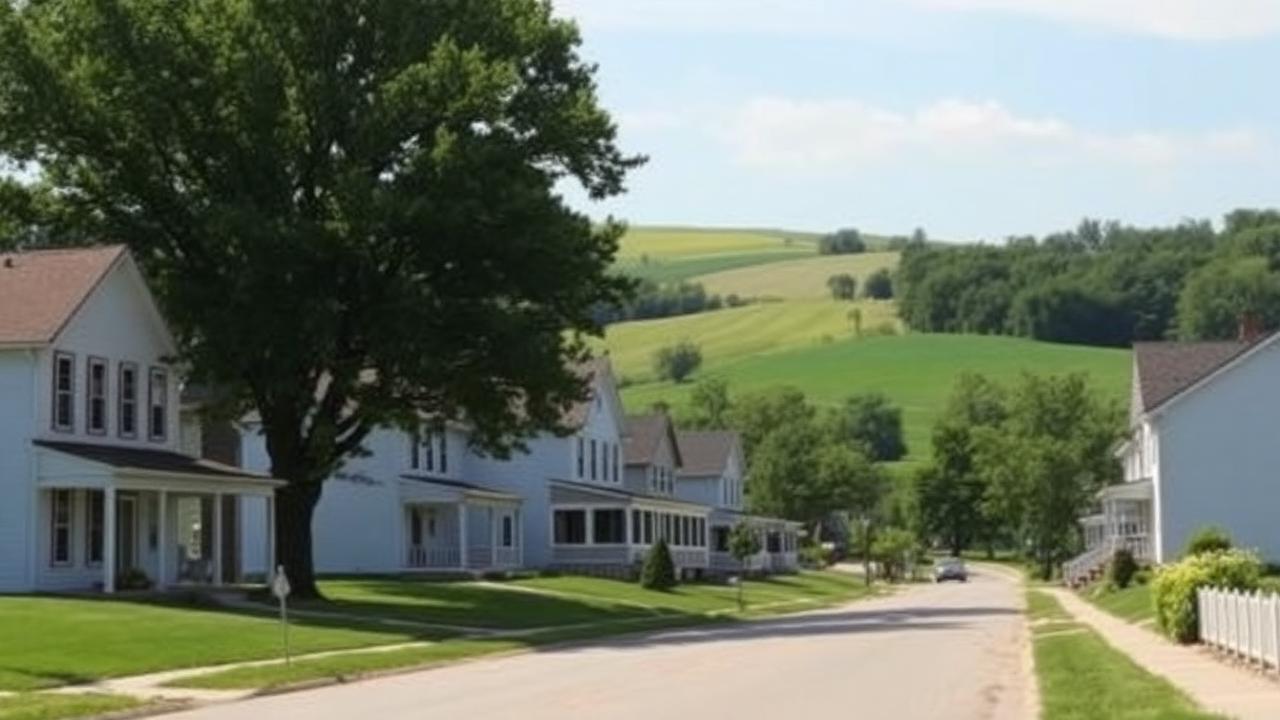
Iowa city guide
Moving From California to Cedar Rapids, IA
The cheapest real housing of any sizable Iowa metro, still rebuilding its tree canopy after a 2020 derecho and historic flooding.
Housing comparison
California versus Cedar Rapids, side by side
- Median home value
- $725,800
- $225,600
- Median annual property tax
- $5,114
- not available
- Median monthly cost, owners with a mortgage
- $2,844
- not available
- Population
- 39.0 million (state)
- 137,264
Figures are US Census Bureau American Community Survey 2020 to 2024 5-Year Estimates for the city place. Property tax and monthly cost rows cover owner-occupied units with a mortgage, so they describe what current owners pay, not what a new buyer would pay at today's prices. California column is the statewide baseline used across this site.
Why Californians look at Cedar Rapids
Cedar Rapids is Iowa's second largest city and its industrial and agribusiness hub, home to major cereal and grain processing operations along the Cedar River and a manufacturing base that predates most of the state's newer suburban growth. It is also, by a wide margin, the most affordable sizable city in this guide.
The city has been rebuilding since two major disasters: catastrophic flooding of the Cedar River in 2008 that reshaped downtown, and the August 2020 derecho, a severe inland windstorm that flattened much of the city's mature tree canopy in under an hour. Both events are still visible in the built environment and in ongoing recovery projects.
For a California household focused purely on affordability and a full range of city services, hospital, and airport, Cedar Rapids offers the lowest entry price of any Iowa metro in this guide, with the trade-off of a still-recovering urban tree canopy and a housing stock that is older on average than the fast-growing Des Moines suburbs.
Cedar Rapids fits you if
- You want the lowest home prices of any full-service Iowa city, with a regional airport, hospitals, and a community college in town.
- You are comfortable with an industrial and manufacturing-driven local economy.
- You value proximity to Iowa City and the University of Iowa's hospital system, about 25 miles south.
- You are bringing remote income or retirement income and want the lowest possible cost base.
Look elsewhere if
- You want mature street trees and an established urban canopy; much of it was destroyed by the 2020 derecho and is still regrowing.
- You are risk-averse about flooding; the Cedar River has produced major floods, including a historic 2008 event.
- You want the newest housing stock; that is more available in the Des Moines suburbs.
- You need a deep white-collar job market beyond insurance and manufacturing.
Housing in Cedar Rapids
The housing stock is older on average than the Des Moines-area suburbs, with early twentieth-century neighborhoods near downtown, mid-century ranch neighborhoods further out, and newer development on the southwest side toward the airport.
The ACS median home value for the city is $225,600, the lowest of any city in this guide, which makes Cedar Rapids the most accessible entry point in Iowa for a buyer bringing California home equity.
Flood-zone status matters more here than in most Iowa cities because of the Cedar River's 2008 flood history. Buyers should check FEMA flood maps and any property's specific elevation and flood insurance requirements before making an offer.
Work and the local economy
Grain processing and food manufacturing, led by major cereal and corn milling operations along the river, have anchored Cedar Rapids' economy for more than a century. Insurance and financial services, including Transamerica's local operations, add a white-collar layer.
Collins Aerospace, a major aerospace and defense manufacturer, is headquartered in Cedar Rapids and is one of the largest private employers in the state, giving the city an engineering and skilled manufacturing workforce that is unusual for a city this size.
The mix of heavy manufacturing, food processing, and aerospace engineering gives Cedar Rapids a broader industrial job base than most Iowa cities, though it remains narrower than a diversified metro of similar population elsewhere in the country.
Climate, flooding, and the derecho
Cedar Rapids has the same four-season continental climate as the rest of eastern Iowa, with cold, snowy winters and warm, humid summers punctuated by thunderstorms.
The August 2020 derecho was one of the most damaging inland wind events in recent US history, with sustained hurricane-force winds that destroyed an estimated large share of the city's tree canopy in under an hour. Recovery and replanting efforts are ongoing years later, and many neighborhoods still look visibly different than they did before the storm.
The Cedar River flooded catastrophically in 2008, displacing thousands of residents and reshaping downtown redevelopment for the following decade. Flood control projects have since been built along the river, but flood risk remains a real factor for riverside property.
Getting around, care, and schools
- Commercial air
- The Eastern Iowa Airport (CID), with nonstop service to several major hubs.
- Highways
- Interstate 380 runs through the city, connecting north to Waterloo and south to Iowa City and Interstate 80.
- Hospital
- UnityPoint Health-St. Luke's Hospital and Mercy Medical Center both operate in Cedar Rapids.
- Public schools
- Cedar Rapids Community School District.
- Higher education
- Kirkwood Community College; Coe College and Mount Mercy University are private four-year schools in the city.
- Setting
- Along the Cedar River, with a mix of flat and gently rolling terrain.
The trade-offs
- Tree cover across much of the city is still recovering from the 2020 derecho, which changed the look and shade of many neighborhoods.
- The Cedar River's 2008 flood remains a factor in insurance and property decisions for riverside areas.
- The job base leans on manufacturing and food processing more than professional services, which narrows options for some career fields.
- Downtown retail and dining, while active, are more limited than in the larger Des Moines metro.
Other Iowa towns people compare
West Des Moines
The Des Moines metro's professional core, with new construction, corporate headquarters, and the deepest job access in the state.
Ankeny
The fastest-growing suburb in Iowa, heavy on newer homes and young families, on the north edge of the Des Moines metro.
Iowa City
A university and hospital town with the state's most walkable core and its highest rents, built around the University of Iowa.
Ames
Home to Iowa State University, a stable employment base built around the school, and a small-town cost structure.
Decorah
A small town in the bluff country of Iowa's northeast corner, chosen by people who want scenery over convenience.
Statewide figures, tax detail, and the full Iowa picture are on the Iowa page. Compare property, income, and sales tax across all 49 destination states on Taxes, and see where Californians are actually moving on Stats.
Sources
- US Census Bureau, American Community Survey 2020 to 2024 5-Year Estimates, table B25077 (median home value), retrieved via Census Reporter, September 3, 2026.
- US Census Bureau, ACS 2020 to 2024 5-Year Estimates, table B25103 (median real estate taxes paid, owner-occupied units with a mortgage), retrieved September 3, 2026.
- US Census Bureau, ACS 2020 to 2024 5-Year Estimates, table B25088 (median selected monthly owner costs, owner-occupied units with a mortgage), retrieved September 3, 2026.
- US Census Bureau, ACS 2020 to 2024 5-Year Estimates, table B01003 (total population), retrieved September 3, 2026.
- NOAA National Weather Service, August 2020 Iowa derecho event summary, weather.gov.
- City of Cedar Rapids flood control system information, cedar-rapids.org.
See what your California equity buys in Cedar Rapids
Four short questions. We match you with one local agent and apply a closing cost credit funded from our referral fee.
Start your Cedar Rapids move
Four short questions. We use them to decide which agent fits your move, and to build your equity report.