
West Virginia city guide
Moving From California to Charleston, WV
West Virginia's capital and largest city, with the widest range of professional services, healthcare, and government employment in the state.
Housing comparison
California versus Charleston, side by side
- Median home value
- $725,800
- not available
- Median annual property tax
- $5,114
- not available
- Median monthly cost, owners with a mortgage
- $2,844
- not available
- Population
- 39.0 million (state)
- 47,421
Figures are US Census Bureau American Community Survey 2020 to 2024 5-Year Estimates for the city place. Property tax and monthly cost rows cover owner-occupied units with a mortgage, so they describe what current owners pay, not what a new buyer would pay at today's prices. California column is the statewide baseline used across this site.
Why Californians look at Charleston
Charleston is West Virginia's capital and largest city, sitting at the confluence of the Kanawha and Elk rivers in the southern-central part of the state. It functions as the state's hub for government, law, banking, and healthcare, and as a result offers the broadest professional job market and the deepest medical care available anywhere in West Virginia.
The city's population has declined gradually for decades as the broader region's coal and chemical industries have contracted, which keeps housing prices low relative to almost anywhere in the country, but also means slower population growth than the Eastern Panhandle or Morgantown.
For a California household, Charleston is the pragmatic choice among West Virginia cities: real hospitals, a real downtown, state government stability, and a genuine urban core, all at a small fraction of California housing costs.
Charleston fits you if
- You want the widest range of professional services, law, banking, and state government work in West Virginia.
- You need the deepest hospital and specialist network the state offers.
- You want a real, if modest, downtown with restaurants, a civic center, and cultural venues.
- You are comfortable with a slower-growing city in exchange for stability and low cost.
Look elsewhere if
- You want a growing, dynamic local economy. Charleston's population and job base have been flat to declining for years.
- You need frequent nonstop flights to major hubs. Yeager Airport's route network is limited.
- You are sensitive to industrial history. The Kanawha Valley has a legacy chemical industry presence and associated environmental concerns some residents weigh carefully.
- You want new-construction subdivisions. Much of the housing stock is older, reflecting the city's age.
Housing in Charleston
Charleston's housing ranges from grand early twentieth-century homes in neighborhoods like the South Hills and Edgewood, to modest older housing stock throughout the city's flatter sections, to a smaller amount of newer construction on the outskirts. Hills and river terrain shape the street layout and limit how much new subdivision development can occur inside city limits.
The city's population was 47,421 in the most recent ACS estimate, and home prices here remain among the lowest of any state capital in the country. A California seller relocating here should expect to be able to buy a substantial home outright or with a small mortgage using California home equity.
Because population has been roughly flat or declining for years, competition for listings is generally light compared to growth markets, though the best homes in the most desirable South Hills neighborhoods still move quickly.
Work and the local economy
State government is the single largest employment sector, since Charleston is the capital and hosts most state agencies. CAMC Health System and other hospital networks make healthcare the other major pillar, alongside law firms, banks, and insurance companies that serve the entire state from Charleston offices.
The wider Kanawha Valley retains a legacy chemical and energy industry presence, though it employs far fewer people than in past decades. Retail, logistics, and a modest but real professional services sector round out the base.
A professional in law, healthcare administration, government affairs, insurance, or banking will find the deepest local opportunities in the state here. Someone in a narrower specialty should research the local market carefully before assuming a job exists.
Climate and setting
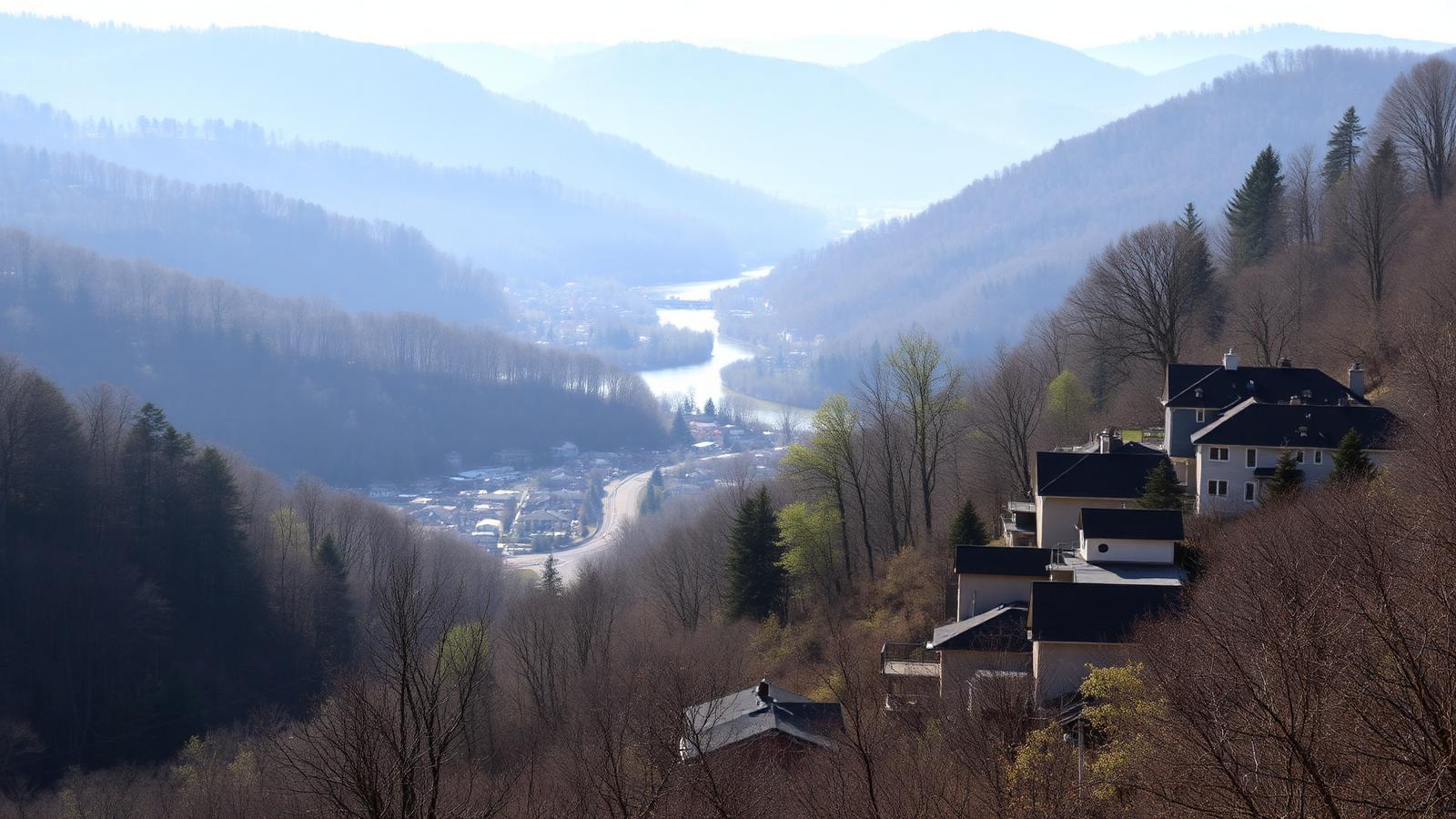
Charleston sits in a river valley in the Appalachian foothills at a modest elevation, with a humid continental to subtropical-leaning climate. Summers are warm and humid, winters bring periodic snow and ice, and spring and fall are generally the most comfortable seasons.
The valley setting means temperature inversions can trap haze in the winter, and river fog is common in the mornings. Severe weather is rare compared to the Midwest, though remnants of tropical systems occasionally bring heavy rain and flooding risk along the rivers.
The surrounding hills limit sun exposure in the narrower parts of the valley during winter months, something to be aware of if you are used to California's consistent daylight.
Getting around, care, and schools
- Commercial air
- Yeager Airport (CRW) offers limited daily service to regional hubs including Charlotte, Atlanta, and Washington.
- Highways
- Interstate 64, Interstate 77, and Interstate 79 all serve Charleston.
- Hospital
- CAMC Memorial Hospital and the broader CAMC Health System, the state's largest healthcare provider.
- Public schools
- Kanawha County Schools.
- Higher education
- University of Charleston, with West Virginia State University nearby in Institute.
- Setting
- A river valley city in the Appalachian foothills of central West Virginia.
The trade-offs
- Population and the broader job base have been shrinking for years, which keeps prices low but also limits dynamism.
- Air service is limited to a handful of regional hub connections rather than broad nonstop options.
- The Kanawha Valley's industrial legacy is a real consideration some buyers weigh when choosing a neighborhood.
- Winter fog and valley haze are routine, a change from California's clearer skies.
Other West Virginia towns people compare
Morgantown
Home to West Virginia University and its hospital system, the state's strongest and most diverse job market outside the DC-adjacent panhandle.
Lewisburg
A small Greenbrier Valley town known for its arts and food scene, a favorite landing spot for remote-work transplants, with a very small year-round job base.
Shepherdstown
A small Eastern Panhandle college town on the Potomac, within reach of the DC job market for those willing to make a long commute or work remotely.
Fayetteville
A small outdoor-recreation town at the New River Gorge, built around whitewater rafting and rock climbing, with a very tight housing supply.
Statewide figures, tax detail, and the full West Virginia picture are on the West Virginia page. Compare property, income, and sales tax across all 49 destination states on Taxes, and see where Californians are actually moving on Stats.
Sources
- US Census Bureau, American Community Survey 2020 to 2024 5-Year Estimates, table B25077 (median home value), retrieved via Census Reporter, September 3, 2026.
- US Census Bureau, ACS 2020 to 2024 5-Year Estimates, table B25103 (median real estate taxes paid, owner-occupied units with a mortgage), retrieved September 3, 2026.
- US Census Bureau, ACS 2020 to 2024 5-Year Estimates, table B25088 (median selected monthly owner costs, owner-occupied units with a mortgage), retrieved September 3, 2026.
- US Census Bureau, ACS 2020 to 2024 5-Year Estimates, table B01003 (total population), retrieved September 3, 2026.
- Census Reporter, Charleston, WV profile, censusreporter.org.
- CAMC Health System facility information, camc.org.
- Yeager Airport service information, yeagerairport.com.
See what your California equity buys in Charleston
Four short questions. We match you with one local agent and apply a closing cost credit funded from our referral fee.
Start your Charleston move
Four short questions. We use them to decide which agent fits your move, and to build your equity report.