
South Dakota city guide
Moving From California to Dakota Dunes, SD
A planned, higher-income riverfront community on the Iowa and Nebraska border with tri-state job access and no state income tax on the South Dakota side.
Housing comparison
California versus Dakota Dunes, side by side
- Median home value
- $725,800
- $565,600
- Median annual property tax
- $5,114
- not available
- Median monthly cost, owners with a mortgage
- $2,844
- not available
- Population
- 39.0 million (state)
- 3,936
Figures are US Census Bureau American Community Survey 2020 to 2024 5-Year Estimates for the city place. Property tax and monthly cost rows cover owner-occupied units with a mortgage, so they describe what current owners pay, not what a new buyer would pay at today's prices. California column is the statewide baseline used across this site.
Why Californians look at Dakota Dunes
Dakota Dunes is unlike anywhere else in South Dakota. It is a master-planned community on a bend of the Missouri River, built along golf courses and man-made lakes, sitting exactly where South Dakota, Iowa, and Nebraska meet at the edge of the Sioux City metro area.
The appeal for a California buyer is specific: you can live in a well-built, higher-end planned community, commute a few minutes into the Sioux City, Iowa job market for work that South Dakota alone would not support, and still bank South Dakota's lack of a state income tax on the income you earn.
This is not a full-service town. There is no downtown, no hospital, and no independent school district here of its own scale, because Dakota Dunes was built as an unincorporated residential community that leans on Sioux City and North Sioux City for almost everything beyond housing.
Dakota Dunes fits you if
- You want a planned, higher-end residential community with golf and lake amenities rather than a conventional town.
- You work in or near Sioux City, Iowa and want to live on the South Dakota side for the tax treatment.
- You want new and well-maintained construction with homeowners association upkeep standards.
- You are comfortable driving a short distance into Iowa or Nebraska for hospitals, shopping, and a fuller range of services.
Look elsewhere if
- You want an independent town identity with its own downtown, city government beyond a homeowners association, and civic life.
- You are budget-conscious. Home values here run well above every other city in this guide.
- You need a hospital or major shopping in town. Both are a short drive away in Sioux City rather than in Dakota Dunes itself.
- You want variety in home styles and eras. The community is newer and built to a consistent planned aesthetic.
Housing in Dakota Dunes
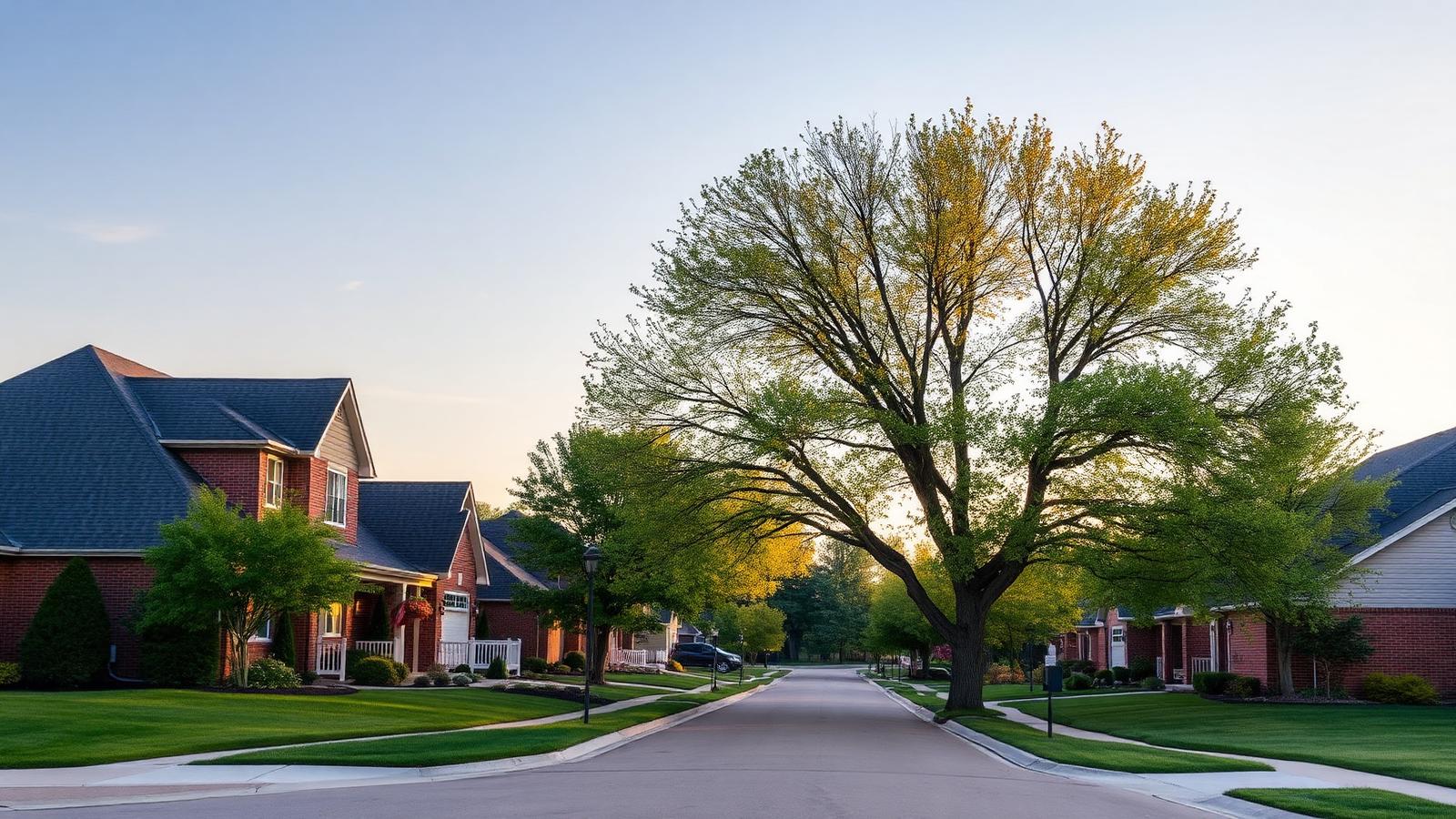
Homes here are almost entirely newer construction, built from the 1990s onward around golf courses, lakes, and the Missouri River, with homeowners association standards that keep the community consistently maintained.
The median home value is $565,600, far above any other city in this guide and among the highest in South Dakota, reflecting the planned, amenity-driven nature of the community and its higher household incomes. There is no city income tax and no South Dakota state income tax, so the property tax bill, assessed through Union County, is the main recurring state and local cost.
Because it is a smaller, tightly built community, turnover is limited and a buyer should expect to work with local agents who track the specific inventory closely rather than relying on broad regional listings alone.
Work and the local economy
Dakota Dunes itself has little standalone employment beyond its golf course, a business park, and a handful of professional offices. The functioning job market for residents is the wider Sioux City, Iowa, metro area, a few minutes across the state line, which includes healthcare systems, manufacturing, agribusiness, and financial services.
Households here commonly work in Sioux City or North Sioux City and choose to live in Dakota Dunes specifically to avoid Iowa's state income tax on their earnings, since South Dakota has none.
This arrangement works well for a professional household with steady employment across the river, but it depends on that tri-state commute continuing to make sense for your specific job.
Climate and setting
Dakota Dunes sits in the Missouri River valley at a low elevation for the region, with the same continental climate pattern as the rest of eastern South Dakota: cold winters, hot and humid summers, and a real spring severe weather season.
The river and surrounding lakes and golf courses give the immediate setting a more landscaped, green feel than the open prairie farther from the water, but the underlying weather pattern is the same as Sioux Falls or Sioux City.
Flooding along the Missouri River has affected the broader Sioux City area in past years, and it is worth asking directly about flood zone status and insurance for any specific property near the river or lakes.
Getting around, care, and schools
- Commercial air
- Sioux Gateway Airport (SUX) in Sioux City, Iowa, a short drive away, offers limited commercial service.
- Highways
- Interstate 29 runs directly through the community, connecting to Sioux City and Sioux Falls.
- Hospital
- MercyOne Siouxland and UnityPoint Health St. Luke's, both in Sioux City, a few minutes away.
- Public schools
- Dakota Valley School District serves the community.
- Higher education
- Western Iowa Tech Community College and Morningside University are in Sioux City, nearby.
- Setting
- Planned riverfront community on the Missouri River at the South Dakota, Iowa, and Nebraska border.
The trade-offs
- Home values here are well above every other city in this guide, and the buy-in is not the bargain some expect from South Dakota.
- There is no hospital, downtown, or major shopping inside Dakota Dunes itself. All of that is a short drive into Iowa.
- The local economy is really the Sioux City, Iowa metro. Your job security depends on that broader market, not on South Dakota alone.
- Properties near the river or lakes warrant a direct flood zone and insurance check before purchase.
Other South Dakota towns people compare
Sioux Falls
South Dakota's largest city and its economic engine, with the state's deepest job market, hospitals, and housing inventory.
Rapid City
The gateway to the Black Hills, with milder winters than the eastern part of the state and a large veteran and military community.
Brandon
A fast-growing Sioux Falls suburb with newer construction, its own school district, and a short commute into the state's largest job market.
Spearfish
A canyon town on the western edge of the Black Hills, home to a university, milder for the region, and popular with retirees.
Custer
A small Black Hills town for buyers who want land and are willing to drive for a hospital, a real grocery selection, and most jobs.
Statewide figures, tax detail, and the full South Dakota picture are on the South Dakota page. Compare property, income, and sales tax across all 49 destination states on Taxes, and see where Californians are actually moving on Stats.
Sources
- US Census Bureau, American Community Survey 2020 to 2024 5-Year Estimates, table B25077 (median home value), retrieved via Census Reporter, September 3, 2026.
- US Census Bureau, ACS 2020 to 2024 5-Year Estimates, table B25103 (median real estate taxes paid, owner-occupied units with a mortgage), retrieved September 3, 2026.
- US Census Bureau, ACS 2020 to 2024 5-Year Estimates, table B25088 (median selected monthly owner costs, owner-occupied units with a mortgage), retrieved September 3, 2026.
- US Census Bureau, ACS 2020 to 2024 5-Year Estimates, table B01003 (total population), retrieved September 3, 2026.
- Data USA, American Community Survey based profile for Dakota Dunes, SD, datausa.io.
- Dakota Valley School District overview, dakotavalley.k12.sd.us.
See what your California equity buys in Dakota Dunes
Four short questions. We match you with one local agent and apply a closing cost credit funded from our referral fee.
Start your Dakota Dunes move
Four short questions. We use them to decide which agent fits your move, and to build your equity report.