
Alaska city guide
Moving From California to Eagle River, AK
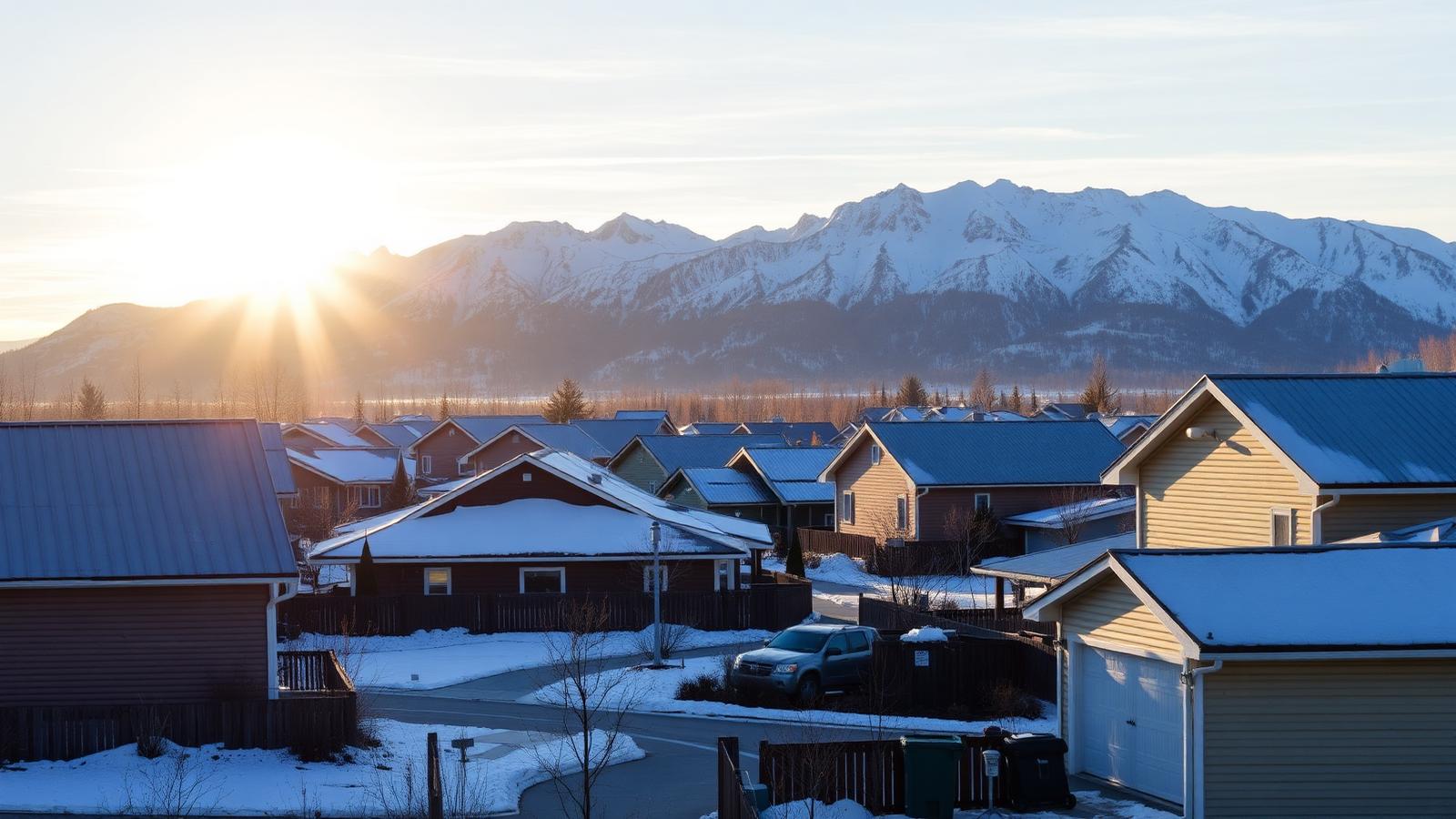
Anchorage bedroom community on the Glenn Highway, with more land per dollar than the city proper and direct access into the Chugach Mountains.
Housing comparison
California versus Eagle River, side by side
- Median home value
- $725,800
- $413,400
- Median annual property tax
- $5,114
- not available
- Median monthly cost, owners with a mortgage
- $2,844
- not available
- Population
- 39.0 million (state)
- 27,917
Figures are US Census Bureau American Community Survey 2020 to 2024 5-Year Estimates for the city place. Property tax and monthly cost rows cover owner-occupied units with a mortgage, so they describe what current owners pay, not what a new buyer would pay at today's prices. California column is the statewide baseline used across this site.
Why Californians look at Eagle River
Eagle River is a census-designated place inside the Municipality of Anchorage, roughly a twenty-five minute drive north of downtown on the Glenn Highway. It functions as Anchorage's main bedroom community, drawing people who want a house with more land, a quieter feel, and mountain access, while still commuting into the city for work, specialty medical care, and the airport.
The town sits at the mouth of the Eagle River valley, wedged between Chugach State Park and Joint Base Elmendorf-Richardson, which shapes both its geography and its economy. A large share of residents either work on the base or commute south into Anchorage proper.
For a California household, Eagle River offers a middle path: more room than an Anchorage subdivision lot, quicker access to hiking and rivers, and home prices that run somewhat above the Anchorage city median because of the land and the setting, while still being a fraction of coastal California prices.
Eagle River fits you if
- You want a house with more land and a quieter setting while keeping an easy commute into Anchorage.
- You value direct access to Chugach State Park trailheads, the Eagle River itself, and salmon fishing close to home.
- You or a household member works at Joint Base Elmendorf-Richardson or commutes reliably into Anchorage.
- You want Anchorage's hospitals and airport within a short drive without living inside the city itself.
Look elsewhere if
- You want to walk to restaurants, shops, or entertainment. Eagle River is car-dependent and spread out.
- You need a hospital or specialist in town. Serious medical care means driving into Anchorage.
- You want the lowest possible home price in the area. Eagle River generally costs more than comparable Anchorage neighborhoods, not less.
- You dislike winter driving on the Glenn Highway, which sees ice, moose collisions, and periodic closures.
Housing in Eagle River
Housing here runs from older subdivisions near the town center to larger-lot homes pushing up the valley toward the mountains, plus newer construction on the fringes. Detached garages, generous storage, and larger septic and well setups are common outside the core service area.
Available figures put the median home value in Eagle River around $413,400, somewhat above the city of Anchorage's median, reflecting the larger lots and newer stock in many of its neighborhoods. As a CDP within the Municipality of Anchorage, Eagle River shares Anchorage's property tax structure and mill rate rather than having its own separate city tax.
Because Eagle River is unincorporated and administered by Anchorage, buyers should expect municipal rather than small-town governance, including permitting, road maintenance, and schools run out of the Anchorage School District.
Work and the local economy
Joint Base Elmendorf-Richardson sits adjacent to Eagle River and is a major employer for the surrounding area, alongside contractors that support it. Most other private-sector jobs are commuted for, into downtown or Midtown Anchorage.
There is a functioning local commercial strip along the Old Glenn Highway and the Business Boulevard corridor, with retail, medical clinics, and services sufficient for daily needs, but it is not a self-contained job market.
Treat Eagle River as an Anchorage suburb economically. Your job, or your remote income, is very likely to be tied to Anchorage or the base rather than to Eagle River itself.
Climate and setting
Eagle River shares Anchorage's general Southcentral climate, moderate by Alaska standards, but its inland valley position means slightly colder winter nights and somewhat more snow accumulation than the coastal parts of Anchorage.
Daylight swings are the same as Anchorage: short winter days around the solstice and long, bright summer days that barely dim at night.
The valley setting means more direct exposure to mountain weather, including localized wind events funneling down from Chugach State Park, and higher avalanche awareness in the surrounding terrain during winter and spring.
Getting around, care, and schools
- Commercial air
- Ted Stevens Anchorage International Airport (ANC), about a 25 to 30 minute drive south via the Glenn Highway.
- Highways
- Glenn Highway connects Eagle River to Anchorage to the south and the Matanuska-Susitna Valley to the north.
- Hospital
- No hospital in Eagle River; Providence Alaska Medical Center and other Anchorage hospitals are the nearest full facilities.
- Public schools
- Anchorage School District, with several Eagle River elementary, middle, and high schools.
- Higher education
- University of Alaska Anchorage, a short drive south in Anchorage proper.
- Setting
- At the mouth of the Eagle River valley, adjacent to Chugach State Park and Joint Base Elmendorf-Richardson.
The trade-offs
- Eagle River is a commuter community. Nearly everything beyond daily errands means a drive into Anchorage.
- The Glenn Highway commute is generally easy but is subject to winter ice, moose strikes, and occasional closures.
- Home prices run above the Anchorage city median rather than below it, despite the suburban setting.
- There is no hospital in town, so serious medical needs mean a drive during Alaska winter conditions.
Other Alaska towns people compare
Anchorage
Alaska's only real metro, with most of the state's hospitals, its main airport, and the bulk of its professional jobs.
Palmer
Mat-Su Valley farm town with the state's best growing soil and a genuine small-town center, about 40 miles from Anchorage.
Wasilla
The fastest-growing part of the Mat-Su Valley, with the newest construction and the region's main retail and services hub.
Juneau
Alaska's capital, with a government-anchored economy, mild coastal winters, and no road connection to the rest of the state or the continent.
Homer
Coastal arts and fishing town at the end of the Sterling Highway, with the mildest weather of any city covered in this guide.
Statewide figures, tax detail, and the full Alaska picture are on the Alaska page. Compare property, income, and sales tax across all 49 destination states on Taxes, and see where Californians are actually moving on Stats.
Sources
- US Census Bureau, American Community Survey 2020 to 2024 5-Year Estimates, table B25077 (median home value), retrieved via Census Reporter, September 3, 2026.
- US Census Bureau, ACS 2020 to 2024 5-Year Estimates, table B25103 (median real estate taxes paid, owner-occupied units with a mortgage), retrieved September 3, 2026.
- US Census Bureau, ACS 2020 to 2024 5-Year Estimates, table B25088 (median selected monthly owner costs, owner-occupied units with a mortgage), retrieved September 3, 2026.
- US Census Bureau, ACS 2020 to 2024 5-Year Estimates, table B01003 (total population), retrieved September 3, 2026.
- TheZipCodeApp.com, Eagle River, AK ZIP code demographics and housing profile, thezipcodeapp.com.
- Point2Homes, Eagle River, AK demographics profile, point2homes.com.
- Municipality of Anchorage, Eagle River community information, muni.org.
See what your California equity buys in Eagle River
Four short questions. We match you with one local agent and apply a closing cost credit funded from our referral fee.
Start your Eagle River move
Four short questions. We use them to decide which agent fits your move, and to build your equity report.