
Idaho city guide
Moving From California to Meridian, ID
Idaho's second largest city and the center of Treasure Valley family relocation, dense with new schools and new subdivisions west of Boise.
Housing comparison
California versus Meridian, side by side
- Median home value
- $725,800
- $531,600
- Median annual property tax
- $5,114
- not available
- Median monthly cost, owners with a mortgage
- $2,844
- not available
- Population
- 39.0 million (state)
- 130,138
Figures are US Census Bureau American Community Survey 2020 to 2024 5-Year Estimates for the city place. Property tax and monthly cost rows cover owner-occupied units with a mortgage, so they describe what current owners pay, not what a new buyer would pay at today's prices. California column is the statewide baseline used across this site.
Why Californians look at Meridian
Meridian sits immediately west of Boise and has grown from a farm town into Idaho's second largest city almost entirely inside the last three decades. Nearly every neighborhood is new or newer, built around large employers, big-box retail, and a school system that expanded to keep pace.
For a California family, Meridian reads as the safe, familiar choice in the Treasure Valley. It has the master-planned subdivisions, the chain restaurants, and the newer schools that resemble what many buyers are leaving, at a fraction of the price and without California's income tax rates.
The trade is that Meridian is not a distinct place with its own downtown character in the way Boise or Coeur d'Alene are. It functions as Boise's largest suburb, and residents commute into Boise for much of the region's specialty work, culture, and nightlife.
Meridian fits you if
- You want new construction, a large public school system, and subdivisions built for young families.
- You want Boise's job market and airport without Boise's downtown prices.
- You are comfortable in a car-dependent suburb with major retail nearby.
- You want no state income tax exposure to weigh against Idaho's moderate rates on the income you do have.
Look elsewhere if
- You want walkable urban character or a historic downtown. Meridian's core is modest compared to its subdivisions.
- You expect Boise-level cultural offerings inside city limits rather than a fifteen to twenty five minute drive away.
- You are hoping for rock-bottom prices. Meridian is the most expensive of the fast-growing Treasure Valley suburbs.
- You dislike traffic growth. Meridian's rapid build-out has strained Eagle Road and Chinden Boulevard at peak hours.
Housing in Meridian
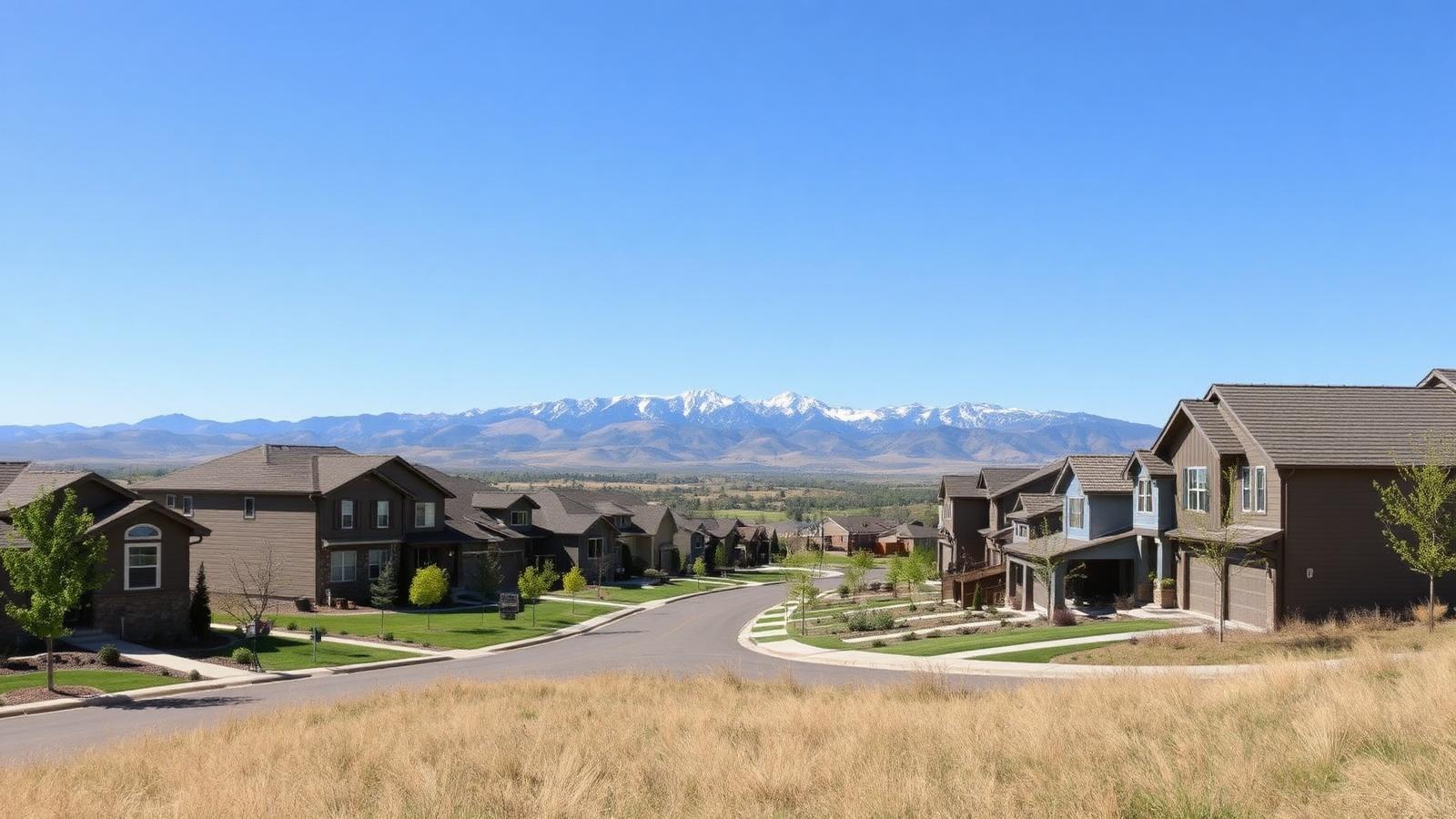
Meridian's housing stock is dominated by subdivisions built from the 1990s through today, with the newest construction pushing south and west toward Kuna and toward Star. Lot sizes are smaller than the acreage buyers find in Eagle or Star, but the trade-off is walkable proximity to schools, parks, and retail.
The most recent sourced population figure for Meridian is 130,138, and it is still one of the fastest growing cities in the country by percentage. Home values have risen sharply over the last five years alongside that growth, and Meridian now carries some of the highest prices in the Treasure Valley outside Eagle.
Because so much of the housing stock is recent, buyers get modern insulation, HVAC, and construction codes, but also less character and often smaller lots than an equivalent California suburb.
Work and the local economy
Meridian benefits directly from the Boise metro's job base. St. Luke's Health System, one of Idaho's largest employers, operates a major medical campus in the city, and West Ada School District, Idaho's largest, is itself one of Meridian's biggest employers.
Retail, healthcare, and a growing base of tech and back-office operations drawn by Boise's broader growth round out the picture. Meridian itself is less an independent economic engine than the residential and retail face of the wider Treasure Valley boom.
Remote workers moving from California will find fast growth here works in their favor for resale value, but local wages in most fields remain well below California levels, so a household needing to replace a California salary locally should research the specific field carefully.
Climate and setting
Meridian sits in the high desert of the Treasure Valley at roughly 2,600 feet. Summers are hot and dry with highs regularly in the 90s in July and August, while winters are cold but generally mild for the Mountain West, with modest snowfall compared to the mountains just to the east.
Air quality can suffer in late summer from regional wildfire smoke drifting in from Oregon, Washington, and Idaho's own backcountry fires, and temperature inversions in winter occasionally trap valley air for days.
The dry climate suits people leaving California's coastal fog or Central Valley humidity, but newcomers should expect a real difference between winter mountain recreation an hour away and the flat, developed valley floor where Meridian itself sits.
Getting around, care, and schools
- Commercial air
- Boise Airport (BOI) is roughly 15 to 20 minutes away with a growing list of nonstop destinations.
- Highways
- Interstate 84 runs along the south edge of the city; Eagle Road and Chinden Boulevard are the main arterials.
- Hospital
- St. Luke's Meridian Medical Center, a full-service hospital campus.
- Public schools
- West Ada School District, the largest school district in Idaho.
- Higher education
- College of Western Idaho has a Meridian campus; Boise State University is about 20 minutes away.
- Setting
- High desert valley floor, about 2,600 feet in elevation.
The trade-offs
- Meridian is a suburb of Boise in function, not a self-contained city. Expect commuting for many jobs and much of the region's culture.
- Rapid growth has pushed home prices up quickly and put real strain on Eagle Road and other arterials at rush hour.
- Summer wildfire smoke is a recurring, not occasional, air quality issue in the Treasure Valley.
- The newest, most affordable subdivisions keep pushing further from the center, which lengthens commutes over time.
Other Idaho towns people compare
Eagle
Where higher-equity California sellers buy in the Treasure Valley, larger lots along the Boise River and the highest home prices in the region.
Coeur d'Alene
The panhandle's lake town, closer to Spokane than to Boise and running on an entirely different market and economy from the rest of Idaho.
Nampa
The value play in Canyon County, the most house per dollar in the Boise metro area.
Star
The fastest-growing small town in the Treasure Valley, almost entirely new construction on the valley's northwest edge.
Sandpoint
A mountain and lake town on Lake Pend Oreille for buyers who want scale-down living rather than a metro, at the far north end of the state.
Statewide figures, tax detail, and the full Idaho picture are on the Idaho page. Compare property, income, and sales tax across all 49 destination states on Taxes, and see where Californians are actually moving on Stats.
Sources
- US Census Bureau, American Community Survey 2020 to 2024 5-Year Estimates, table B25077 (median home value), retrieved via Census Reporter, September 3, 2026.
- US Census Bureau, ACS 2020 to 2024 5-Year Estimates, table B25103 (median real estate taxes paid, owner-occupied units with a mortgage), retrieved September 3, 2026.
- US Census Bureau, ACS 2020 to 2024 5-Year Estimates, table B25088 (median selected monthly owner costs, owner-occupied units with a mortgage), retrieved September 3, 2026.
- US Census Bureau, ACS 2020 to 2024 5-Year Estimates, table B01003 (total population), retrieved September 3, 2026.
- Census Reporter, Meridian, ID profile, censusreporter.org.
- Data USA, Meridian, ID profile, datausa.io.
- West Ada School District, westada.org.
See what your California equity buys in Meridian
Four short questions. We match you with one local agent and apply a closing cost credit funded from our referral fee.
Start your Meridian move
Four short questions. We use them to decide which agent fits your move, and to build your equity report.