
Utah city guide
Moving From California to St. George, UT
Southern Utah's desert hub near Zion National Park, with mild winters, no inversion, and a fast-growing retiree and remote-work population.
Housing comparison
California versus St. George, side by side
- Median home value
- $725,800
- not available
- Median annual property tax
- $5,114
- not available
- Median monthly cost, owners with a mortgage
- $2,844
- not available
- Population
- 39.0 million (state)
- not available
Figures are US Census Bureau American Community Survey 2020 to 2024 5-Year Estimates for the city place. Property tax and monthly cost rows cover owner-occupied units with a mortgage, so they describe what current owners pay, not what a new buyer would pay at today's prices. California column is the statewide baseline used across this site.
Why Californians look at St. George
St. George sits in Utah's southwest corner, in the Mojave Desert transition zone known locally as Utah's Dixie, about two hours northeast of Las Vegas and roughly six hours from the Bay Area by car. It is the largest city in a fast-growing metro area that has drawn retirees, remote workers, and second-home buyers from California for two decades.
The appeal is climate and scenery without Wasatch Front winters. St. George sits low enough in elevation to avoid the temperature inversions that plague Salt Lake and Utah valleys, and Zion National Park, Snow Canyon, and a growing base of golf courses are minutes away.
It is also one of the hottest cities in Utah, with summer highs that regularly clear 100 degrees for weeks at a stretch, and a local economy still built more on tourism, retirement services, and construction than on high-wage private employers.
St. George fits you if
- You are retiring and want mild winters, no inversion, and year-round outdoor access without Arizona-level summer extremes.
- You want proximity to Zion, Bryce, and the Grand Canyon's North Rim for regular visits.
- You are bringing remote or retirement income and do not need a deep local job market.
- You want a straightforward, direct drive back to Southern California, without mountain passes.
Look elsewhere if
- You cannot tolerate extended summer heat. St. George regularly sees weeks of 100-plus degree highs from June through August.
- You need a deep, diverse local job market outside tourism, healthcare, retail, and construction.
- You want dense urban amenities. St. George is spread out and car-dependent, built around subdivisions and golf communities.
- You need major medical specialists in town for a complex condition; the largest hospital here is regional, not tertiary.
Housing in St. George
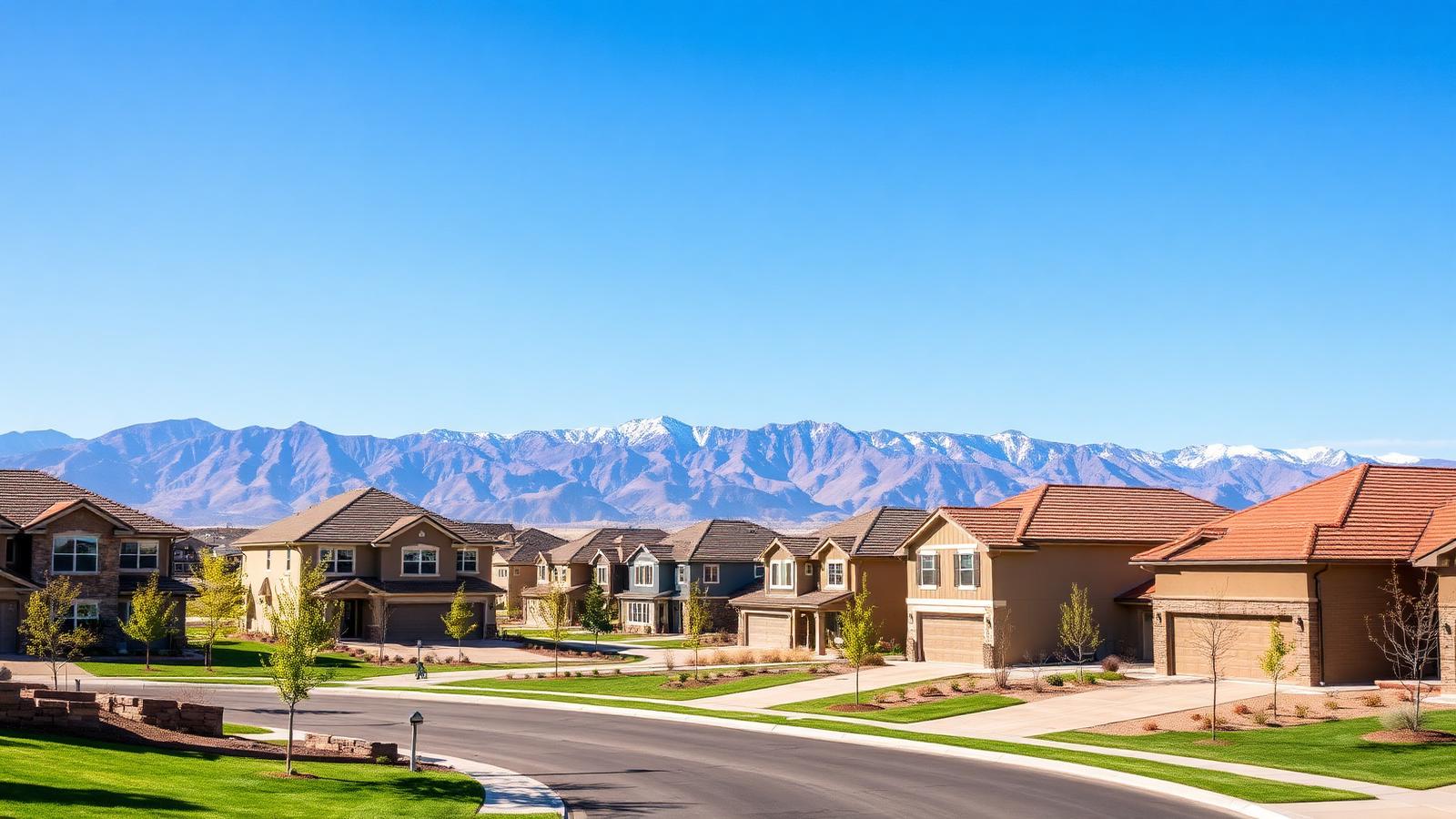
Housing ranges from older neighborhoods near downtown to a large and still-expanding supply of subdivisions, active-adult communities, and golf course developments toward Washington and Santa Clara. Stucco construction with tile roofs is the regional standard, built for heat rather than snow load.
St. George has been one of the faster-appreciating markets in Utah over the past decade as retirees and remote workers have moved in, and it is priced above the Utah statewide average even though it remains well below most California markets.
New subdivisions continue to open on the city's edges, which keeps some inventory moving, but well-located resale homes near golf courses or with mountain views draw competitive offers, particularly from out-of-state buyers.
Work and the local economy
Tourism tied to the national parks, along with retail, healthcare, and construction to serve the area's rapid population growth, form the backbone of the local economy. Dixie State University, now Utah Tech University, is a meaningful employer and a source of some diversification.
Intermountain Health's regional hospital and associated medical offices have grown into one of the larger employment bases in the area as the retiree population has expanded demand for healthcare services.
The wage base here is lower than the Wasatch Front's tech-heavy corridor, so this city works best for retirees, remote workers, and small-business owners rather than someone seeking a raise from a local employer.
Climate and setting
St. George sits at roughly 2,860 feet in the Mojave Desert transition zone, low enough that winter here looks more like a mild Southern California winter than a Utah one. Snow is rare and does not stick for long when it falls.
Summer is the trade-off. June through August bring long stretches of highs well over 100 degrees, and the dry heat is intense even by desert standards. Spring and fall are the area's best months and the reason many residents plan outdoor activity around them.
There is no winter temperature inversion here, unlike Salt Lake and Utah valleys, which is one of the more consistent things residents cite when they compare the two regions.
Getting around, care, and schools
- Commercial air
- St. George Regional Airport (SGU) has daily flights to several western hubs; Harry Reid International in Las Vegas, about two hours away, offers far more nonstop options.
- Highways
- Interstate 15 runs through the city, connecting north to Salt Lake City and south to Las Vegas.
- Hospital
- Intermountain St. George Regional Hospital, the area's main referral hospital.
- Public schools
- Washington County School District.
- Higher education
- Utah Tech University (formerly Dixie State University), based in the city.
- Setting
- Elevation about 2,860 feet, in the Mojave Desert transition zone near Zion National Park.
The trade-offs
- Summer heat is intense and prolonged, with weeks of highs above 100 degrees.
- The local job market is narrower and lower-wage than the Wasatch Front, favoring retirees and remote workers over job seekers.
- Specialty medical care beyond the regional hospital usually means a drive to Las Vegas or Salt Lake City.
- Rapid growth has strained roads and water planning, both frequent topics in local government discussions.
Other Utah towns people compare
Lehi
The center of Utah's Silicon Slopes tech corridor, one of the fastest-growing cities in the country and the default landing spot for California tech transplants.
Bountiful
An established Davis County suburb on the bench above Salt Lake City, with mature tree-lined neighborhoods and a short downtown commute.
Heber City
A mountain valley town in the Heber Valley, a short drive from Park City's ski resorts at a meaningful discount to Park City's own pricing.
Ogden
The cheapest full-service city on the Wasatch Front, with the most direct access to the northern Utah ski resorts and a historic, still-revitalizing downtown.
Daybreak
A master-planned community within South Jordan built around walkable villages, lakes, and TRAX light rail, unusual for a region built almost entirely around driving.
Statewide figures, tax detail, and the full Utah picture are on the Utah page. Compare property, income, and sales tax across all 49 destination states on Taxes, and see where Californians are actually moving on Stats.
Sources
- US Census Bureau, American Community Survey 2020 to 2024 5-Year Estimates, table B25077 (median home value), retrieved via Census Reporter, September 3, 2026.
- US Census Bureau, ACS 2020 to 2024 5-Year Estimates, table B25103 (median real estate taxes paid, owner-occupied units with a mortgage), retrieved September 3, 2026.
- US Census Bureau, ACS 2020 to 2024 5-Year Estimates, table B25088 (median selected monthly owner costs, owner-occupied units with a mortgage), retrieved September 3, 2026.
- US Census Bureau, ACS 2020 to 2024 5-Year Estimates, table B01003 (total population), retrieved September 3, 2026.
- U.S. Census Bureau QuickFacts, St. George city, Utah, census.gov/quickfacts.
- Intermountain Health, St. George Regional Hospital service information, intermountainhealthcare.org.
- St. George Regional Airport flight information, flysgu.com.
See what your California equity buys in St. George
Four short questions. We match you with one local agent and apply a closing cost credit funded from our referral fee.
Start your St. George move
Four short questions. We use them to decide which agent fits your move, and to build your equity report.