
Oklahoma city guide
Moving From California to Broken Arrow, OK
A Tulsa suburb with newer housing stock and consistently strong public schools, popular with families moving out from the city core.
Housing comparison
California versus Broken Arrow, side by side
- Median home value
- $725,800
- not available
- Median annual property tax
- $5,114
- not available
- Median monthly cost, owners with a mortgage
- $2,844
- not available
- Population
- 39.0 million (state)
- 122,131
Figures are US Census Bureau American Community Survey 2020 to 2024 5-Year Estimates for the city place. Property tax and monthly cost rows cover owner-occupied units with a mortgage, so they describe what current owners pay, not what a new buyer would pay at today's prices. California column is the statewide baseline used across this site.
Why Californians look at Broken Arrow
Broken Arrow is the largest suburb in the Tulsa metro and functions the way Edmond does for Oklahoma City: a family-oriented, school-district-driven suburb that shares a labor market with the larger city next door but keeps its own identity and services.
Growth here has been steady rather than explosive, and it shows in the housing stock, which skews newer than Tulsa's urban core and includes a substantial amount of construction from the 1990s onward. That newer stock, plus consistently well-regarded schools, is the main draw for families relocating.
For a California household, the appeal is a lower cost of living, newer housing with modern layouts, and a short commute into Tulsa, at the cost of a car-dependent layout and Oklahoma's severe spring weather.
Broken Arrow fits you if
- You have school-age kids and want Broken Arrow Public Schools, which is well regarded within the state.
- You want newer construction and modern floor plans rather than an older housing stock to renovate.
- You want a short commute into Tulsa's job market and cultural amenities while living in a quieter, more residential setting.
- You are comfortable with a suburban, car-dependent layout.
Look elsewhere if
- You want a walkable downtown or dense urban amenities at your doorstep. Broken Arrow is built around arterial roads and shopping centers.
- You need a deep, specialized local job market rather than a commute into Tulsa.
- Severe spring weather and tornado risk are dealbreakers.
- You want an established, historic housing stock rather than newer suburban construction.
Housing in Broken Arrow
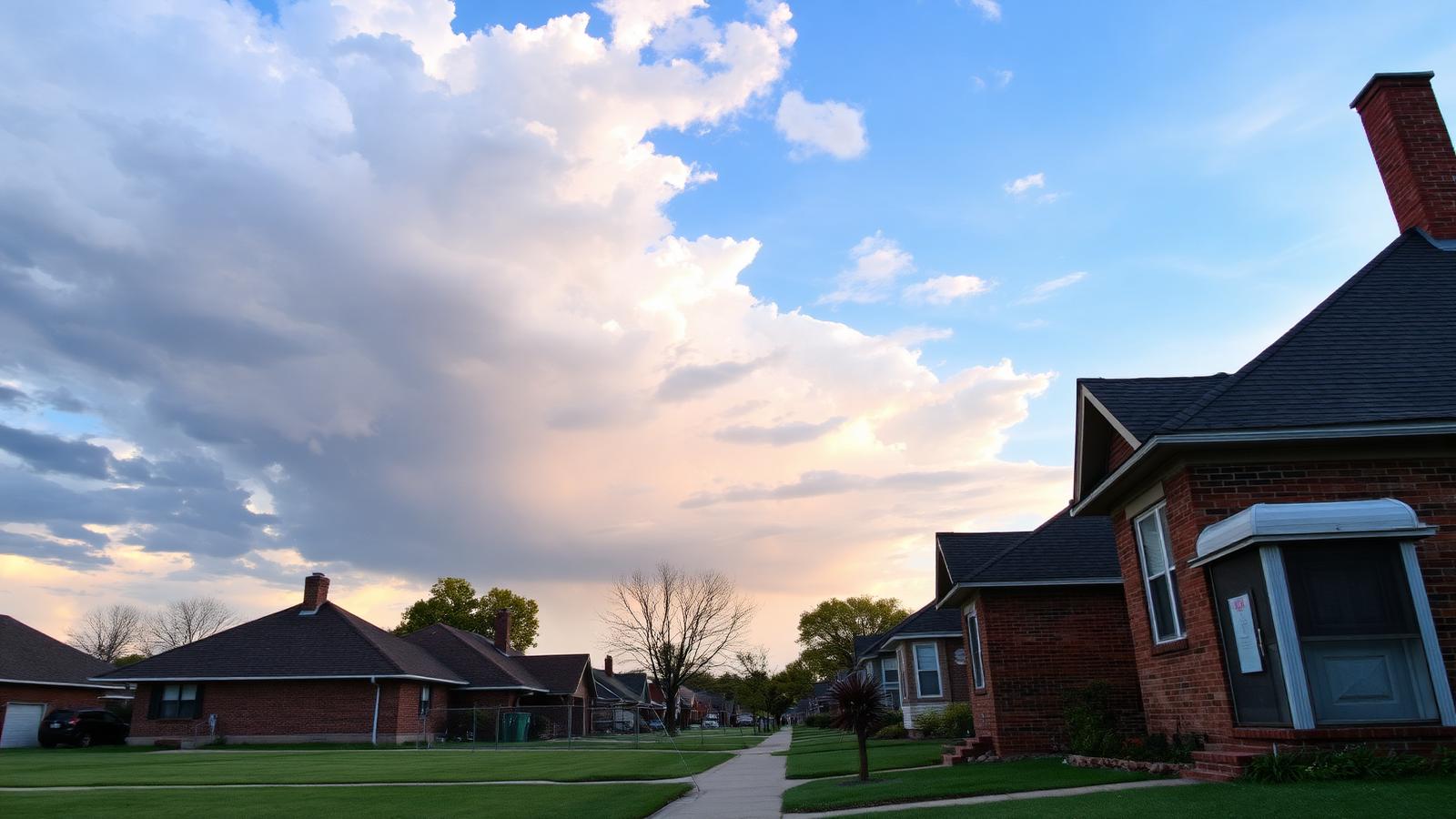
Most of Broken Arrow's housing was built from the 1990s through the present, giving it a newer stock overall than Tulsa proper, with subdivisions of similarly styled single-family homes and a smaller older core near downtown Broken Arrow.
Prices run below national averages and well below California's statewide median, with new construction continuing on the city's south and east edges. Exact current ACS-sourced home value, property tax, and monthly owner cost figures for the city were not available for this page and are omitted rather than estimated.
The market is a normal suburban pace rather than a competitive bidding environment, and buyers moving from California typically find meaningfully more house for the money than in Tulsa's most desirable in-town neighborhoods.
Work and the local economy
Broken Arrow's own employment base includes healthcare, retail, and light manufacturing, but most professional-track residents commute into Tulsa for work at the metro's larger employers in energy, aerospace, finance, and healthcare systems.
The city has worked to build its own commercial base, including a growing retail and restaurant corridor, but it remains primarily a residential complement to Tulsa's job market rather than an independent economic center.
For a household bringing remote income, Broken Arrow offers the cost and school advantages of a suburb without requiring a local job search. For someone needing local employment, plan on commuting into Tulsa.
Climate and severe weather
Broken Arrow shares Tulsa's humid continental to subtropical transition climate: hot, humid summers with many days in the mid to upper 90s, and generally mild winters with occasional ice storms.
As part of the Tulsa metro, it sits within an active severe weather corridor, and spring tornado watches and warnings are a routine, recurring part of the calendar rather than a rare event.
Humidity, more than raw heat, is the main day-to-day climate adjustment for someone coming from California.
Getting around, care, and schools
- Commercial air
- Tulsa International Airport (TUL), roughly 20 to 25 minutes northwest, with nonstop service to major hubs.
- Highways
- US 64/US 51 and the Creek Turnpike provide the main connections into Tulsa.
- Hospital
- Ascension St. John Broken Arrow and Saint Francis Hospital South serve the city, with larger tertiary hospitals in Tulsa.
- Public schools
- Broken Arrow Public Schools, one of Oklahoma's largest and most consistently well-regarded districts.
- Higher education
- Northeastern State University Broken Arrow campus and Tulsa Community College.
- Setting
- Flat to gently rolling terrain southeast of Tulsa.
The trade-offs
- Professional job depth depends on commuting into Tulsa rather than working locally.
- Spring tornado risk is a real, recurring feature of the Tulsa metro, not a rare event.
- The layout is car-dependent with limited walkability outside a small older downtown core.
- Summer humidity is a significant adjustment from a California climate.
Other Oklahoma towns people compare
Edmond
Oklahoma City's most established professional suburb, built around its own school district and a low-crime, low-density reputation.
Tulsa
Oklahoma's second-largest city, with an art deco downtown, a serious philanthropic arts endowment, and a program that pays remote workers to move.
Norman
A university town anchored by the University of Oklahoma, with a walkable historic core and the state's most educated workforce.
Bixby
A riverside Tulsa suburb along the Arkansas River where much of the metro's new home construction is currently going up.
Bartlesville
A small city built by an oil company headquarters, with amenities and architecture its population would not otherwise explain.
Statewide figures, tax detail, and the full Oklahoma picture are on the Oklahoma page. Compare property, income, and sales tax across all 49 destination states on Taxes, and see where Californians are actually moving on Stats.
Sources
- US Census Bureau, American Community Survey 2020 to 2024 5-Year Estimates, table B25077 (median home value), retrieved via Census Reporter, September 3, 2026.
- US Census Bureau, ACS 2020 to 2024 5-Year Estimates, table B25103 (median real estate taxes paid, owner-occupied units with a mortgage), retrieved September 3, 2026.
- US Census Bureau, ACS 2020 to 2024 5-Year Estimates, table B25088 (median selected monthly owner costs, owner-occupied units with a mortgage), retrieved September 3, 2026.
- US Census Bureau, ACS 2020 to 2024 5-Year Estimates, table B01003 (total population), retrieved September 3, 2026.
- Census Reporter, Broken Arrow, OK profile, censusreporter.org.
- Broken Arrow Public Schools, baschools.org.
See what your California equity buys in Broken Arrow
Four short questions. We match you with one local agent and apply a closing cost credit funded from our referral fee.
Start your Broken Arrow move
Four short questions. We use them to decide which agent fits your move, and to build your equity report.