
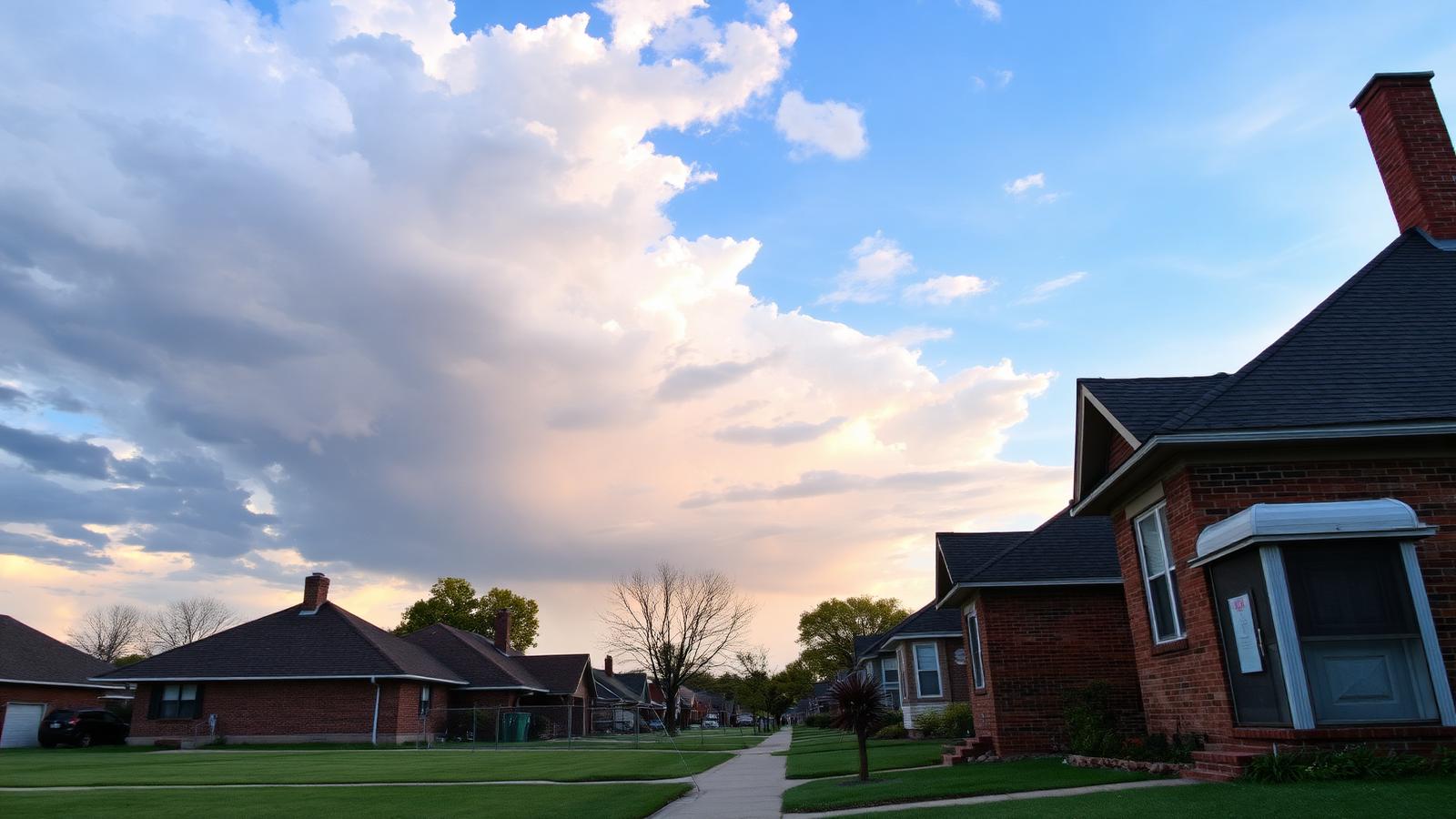
Oklahoma city guide
Moving From California to Tulsa, OK
Oklahoma's second-largest city, with an art deco downtown, a serious philanthropic arts endowment, and a program that pays remote workers to move.
Housing comparison
California versus Tulsa, side by side
- Median home value
- $725,800
- not available
- Median annual property tax
- $5,114
- not available
- Median monthly cost, owners with a mortgage
- $2,844
- not available
- Population
- 39.0 million (state)
- 413,652
Figures are US Census Bureau American Community Survey 2020 to 2024 5-Year Estimates for the city place. Property tax and monthly cost rows cover owner-occupied units with a mortgage, so they describe what current owners pay, not what a new buyer would pay at today's prices. California column is the statewide baseline used across this site.
Why Californians look at Tulsa
Tulsa is a genuine mid-size city with an urban core, not a spread of subdivisions with a downtown attached as an afterthought. Decades of oil wealth left behind an unusually dense concentration of art deco architecture and museum-grade philanthropy for a city its size, funded largely by the George Kaiser Family Foundation and similar endowments.
It became nationally known among remote workers through Tulsa Remote, a program that pays qualifying remote employees a cash grant to relocate and live in the city for a year. That program is a real signal of what Tulsa is selling: a walkable, culturally active downtown at a fraction of the cost of comparable cities on either coast.
The oil and gas industry still matters here but the economy has diversified more than Oklahoma's smaller cities, with aerospace, healthcare, and finance also carrying real weight. It is not a boomtown anymore, but it is not a company town either.
Tulsa fits you if
- You work remotely and want a genuine downtown, museums, and a music and food scene at a low cost of living.
- You want to look into or apply for Tulsa Remote, which offers a relocation grant to eligible remote workers.
- You want a city with real cultural infrastructure, including the Philbrook and Gilcrease museums and the Woody Guthrie Center, without a coastal price tag.
- You are comfortable with a humid continental climate and severe spring weather in exchange for affordability.
Look elsewhere if
- You expect coastal-level restaurant and retail density everywhere in the metro rather than concentrated downtown and in a few districts.
- You need a large, deep job market in a narrow specialized field outside energy, aerospace, or healthcare.
- Tornado risk and hot, humid summers are dealbreakers for you.
- You want mountains or ocean nearby. Tulsa's terrain is river valley and rolling prairie.
Housing in Tulsa
Tulsa's housing ranges from restored bungalows and art deco era homes in midtown neighborhoods like Cherry Street and Brookside, to postwar ranch neighborhoods, to newer construction in south Tulsa and the surrounding suburbs.
Prices remain well below national coastal norms and far below California's statewide median, though downtown-adjacent and historic midtown neighborhoods carry a premium over the city average. Exact current ACS-sourced home value, property tax, and monthly owner cost figures for the city were not available for this page and are omitted rather than estimated.
The Tulsa Remote program has, by its own account, contributed to rising demand in some central neighborhoods, but the market overall remains a buyer's market by California standards.
Work and the local economy
Energy remains a significant employer through companies headquartered or with major operations in Tulsa, but the metro has diversified into aerospace and aviation (American Airlines operates its largest maintenance base in Tulsa), finance, healthcare systems, and a growing technology and startup presence supported by local philanthropic investment.
Tulsa Remote itself is a labor-market signal rather than a job creator in the traditional sense: it exists because local leaders decided attracting remote-employed residents was cheaper than trying to recruit employers directly.
For a Californian bringing portable income, Tulsa offers more local professional infrastructure, coworking space, and networking density than most Oklahoma cities outside Oklahoma City.
Climate and severe weather
Tulsa has hot, humid summers with regular days in the mid to upper 90s, and winters that are generally mild with occasional ice storms and cold snaps rather than sustained deep cold.
The city sits in an active severe weather corridor. Spring brings a real tornado threat, and Tulsa has experienced damaging tornadoes and flooding from the Arkansas River in past decades. Flood-prone low-lying areas are a specific thing to check before buying.
Humidity, not dry heat, is the defining summer discomfort, and it is a bigger adjustment for a California household than the raw temperature numbers suggest.
Getting around, care, and schools
- Commercial air
- Tulsa International Airport (TUL) with nonstop service to major hubs including Dallas, Denver, Chicago, and Atlanta.
- Highways
- Interstates 44 and 244 and US 75 cross the city; the Creek and Gilcrease turnpikes connect to the wider region.
- Hospital
- Saint Francis Health System and Ascension St. John, both large tertiary hospital systems based in Tulsa.
- Public schools
- Tulsa Public Schools, along with several suburban districts serving surrounding neighborhoods.
- Higher education
- University of Tulsa, Oklahoma State University-Tulsa, and Tulsa Community College.
- Setting
- Along the Arkansas River in northeastern Oklahoma, at the edge of the Ozark foothills.
The trade-offs
- Spring tornado risk and river flooding in low-lying areas are real hazards to check before buying.
- Humid summers are a significant adjustment from a California coastal or Central Valley climate.
- The professional job market, while more diverse than most of Oklahoma, is still narrower than a major coastal metro.
- Public transit is limited; a car is effectively required outside downtown and a few walkable districts.
Other Oklahoma towns people compare
Edmond
Oklahoma City's most established professional suburb, built around its own school district and a low-crime, low-density reputation.
Norman
A university town anchored by the University of Oklahoma, with a walkable historic core and the state's most educated workforce.
Broken Arrow
A Tulsa suburb with newer housing stock and consistently strong public schools, popular with families moving out from the city core.
Bixby
A riverside Tulsa suburb along the Arkansas River where much of the metro's new home construction is currently going up.
Bartlesville
A small city built by an oil company headquarters, with amenities and architecture its population would not otherwise explain.
Statewide figures, tax detail, and the full Oklahoma picture are on the Oklahoma page. Compare property, income, and sales tax across all 49 destination states on Taxes, and see where Californians are actually moving on Stats.
Sources
- US Census Bureau, American Community Survey 2020 to 2024 5-Year Estimates, table B25077 (median home value), retrieved via Census Reporter, September 3, 2026.
- US Census Bureau, ACS 2020 to 2024 5-Year Estimates, table B25103 (median real estate taxes paid, owner-occupied units with a mortgage), retrieved September 3, 2026.
- US Census Bureau, ACS 2020 to 2024 5-Year Estimates, table B25088 (median selected monthly owner costs, owner-occupied units with a mortgage), retrieved September 3, 2026.
- US Census Bureau, ACS 2020 to 2024 5-Year Estimates, table B01003 (total population), retrieved September 3, 2026.
- Census Reporter, Tulsa, OK profile, censusreporter.org.
- Tulsa Remote program overview, tulsaremote.com.
- Tulsa International Airport flight information, flytulsa.com.
See what your California equity buys in Tulsa
Four short questions. We match you with one local agent and apply a closing cost credit funded from our referral fee.
Start your Tulsa move
Four short questions. We use them to decide which agent fits your move, and to build your equity report.