
Wisconsin city guide
Moving From California to Eau Claire, WI
A growing western Wisconsin city built around two rivers, a university, and a nationally known music scene, with Minneapolis-St. Paul about ninety minutes away.
Housing comparison
California versus Eau Claire, side by side
- Median home value
- $725,800
- $247,600
- Median annual property tax
- $5,114
- not available
- Median monthly cost, owners with a mortgage
- $2,844
- not available
- Population
- 39.0 million (state)
- 70,322
Figures are US Census Bureau American Community Survey 2020 to 2024 5-Year Estimates for the city place. Property tax and monthly cost rows cover owner-occupied units with a mortgage, so they describe what current owners pay, not what a new buyer would pay at today's prices. California column is the statewide baseline used across this site.
Why Californians look at Eau Claire
Eau Claire sits at the confluence of the Chippewa and Eau Claire Rivers in west-central Wisconsin, close enough to the Twin Cities, roughly 90 minutes by interstate, to draw some Minnesota commuters and cultural spillover, while remaining its own distinct, affordable city.
The city has grown steadily on the strength of the University of Wisconsin-Eau Claire, a substantial regional healthcare presence, and a music and arts scene built in part around musician Justin Vernon of Bon Iver, who is from the area and has invested in local venues and a recording studio.
For a California buyer, Eau Claire offers the lowest home values of the larger cities in this state guide, a young population skewed by the university, and a genuinely walkable historic downtown along the river, at a real distance from major air travel infrastructure.
Eau Claire fits you if
- You want the lowest home prices among Wisconsin's larger cities with a real downtown and cultural scene.
- You want access to Minneapolis-St. Paul, its airport, and its healthcare and cultural institutions within about ninety minutes.
- You are interested in the local music, arts, and brewing scene that has grown around the university and river district.
- You want a college-town energy with a younger population than the Wisconsin average.
Look elsewhere if
- You need a large local airport with broad nonstop service. Eau Claire's regional airport has limited routes.
- You want extensive local specialty medical services beyond what a regional hospital system provides.
- You need a deep, diverse private-sector job market outside healthcare, education, and light manufacturing.
- You dislike long winters. Eau Claire's winters are cold and snowy, typical of western Wisconsin.
Housing in Eau Claire
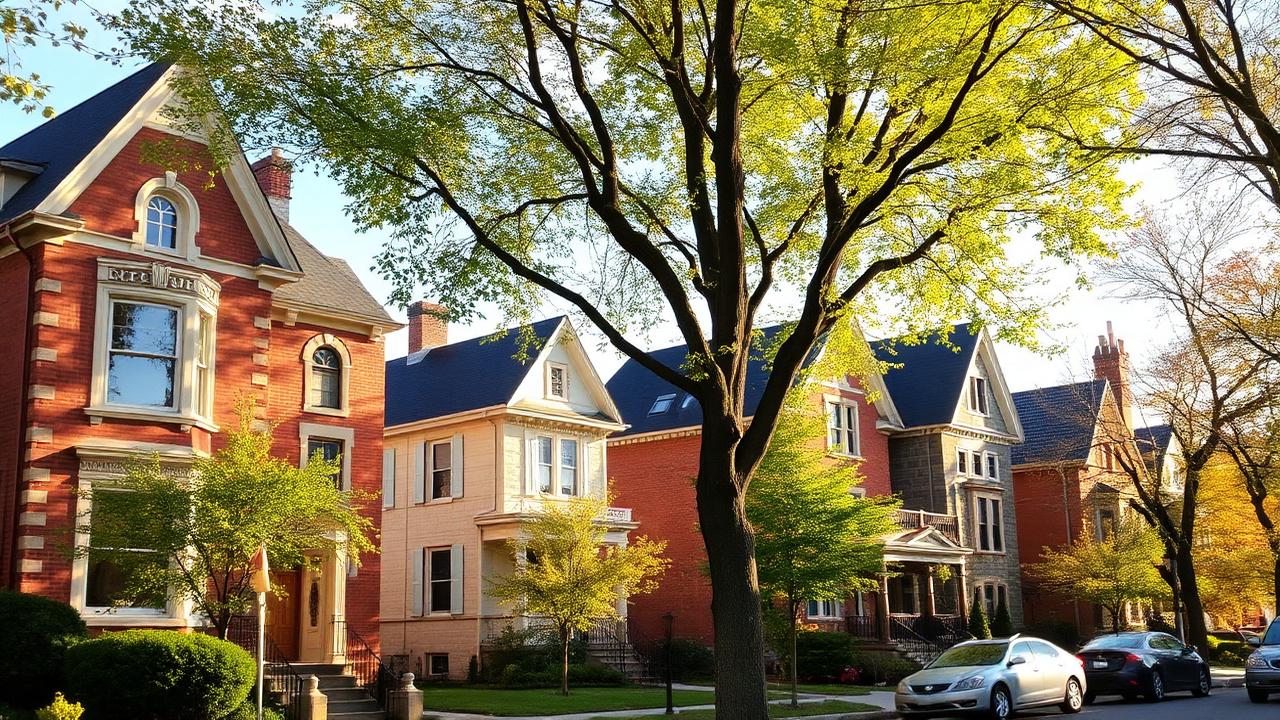
Eau Claire's housing includes an older historic core near downtown and the rivers, established mid-century neighborhoods, and newer subdivisions on the city's north and southeast sides. Student rental demand is significant near the university campus.
The ACS median home value for the city is $247,600, the lowest among the larger cities profiled in this state guide and well below both the Wisconsin and California figures. Population has grown modestly and steadily over the past decade.
Because prices are comparatively low and inventory reasonably broad, a California buyer with meaningful equity is typically negotiating from a position of strength rather than competing in a tight market.
Work and the local economy
The University of Wisconsin-Eau Claire is a major local employer and shapes much of the city's downtown and cultural character. Healthcare is the other major pillar, with Mayo Clinic Health System and HSHS Sacred Heart Hospital both maintaining a substantial presence in the city.
Manufacturing retains a role in the local economy, along with retail, education, and a growing tourism and hospitality sector tied to the music and brewing scene.
As with most mid-sized Wisconsin cities, the private-sector job market outside healthcare, education, and manufacturing is narrower than a California metro. Remote income or a role within one of the anchor institutions is the most reliable path in.
Climate and setting
Eau Claire sits inland in west-central Wisconsin, away from Lake Michigan's moderating influence, which means sharper winter cold and less cloud cover than the lakeside cities in the eastern part of the state.
Winters are cold and snowy from roughly November through March, with periods of sustained sub-zero cold typical most years. Summers are warm and humid with regular thunderstorms.
The Chippewa and Eau Claire Rivers running through downtown support kayaking, tubing, and riverside trails in the warmer months, and the surrounding countryside offers hunting and fishing access typical of western Wisconsin.
Getting around, care, and schools
- Commercial air
- Chippewa Valley Regional Airport (EAU) offers limited direct service; Minneapolis-St. Paul International, about 90 minutes northwest, is the practical airport for most trips.
- Highways
- Interstate 94 runs through the city, connecting west to the Twin Cities and east to Madison and Milwaukee.
- Hospital
- Mayo Clinic Health System-Eau Claire and HSHS Sacred Heart Hospital.
- Public schools
- Eau Claire Area School District.
- Higher education
- University of Wisconsin-Eau Claire and Chippewa Valley Technical College.
- Setting
- At the confluence of the Chippewa and Eau Claire Rivers.
The trade-offs
- Air service is limited locally, and most longer trips mean driving to Minneapolis-St. Paul.
- The private-sector job market outside healthcare, education, and manufacturing is narrow.
- Winters are cold and snowy, with less lake moderation than eastern Wisconsin cities.
- Specialty medical care beyond the regional hospital systems usually means a trip to Minneapolis-St. Paul or Rochester, Minnesota.
Other Wisconsin towns people compare
Madison
Wisconsin's capital and second largest city, built around the university, state government, and a chain of lakes, and the most expensive housing market in the state.
Waukesha
Milwaukee's western suburb and Waukesha County's seat, with strong schools and quick access to both downtown Milwaukee and the lake country to the west.
Mequon
The premium address on Milwaukee's North Shore, with large lots, top-rated schools, and the highest home values of the metro's suburbs.
Green Bay
Wisconsin's third largest city and the cheapest real housing market among the state's larger metros, built on a stable manufacturing and paper-industry base.
Door County
A peninsula second-home and retirement market on Lake Michigan and Green Bay, with a seasonal tourism economy and pricing that runs well above the rest of rural Wisconsin.
Statewide figures, tax detail, and the full Wisconsin picture are on the Wisconsin page. Compare property, income, and sales tax across all 49 destination states on Taxes, and see where Californians are actually moving on Stats.
Sources
- US Census Bureau, American Community Survey 2020 to 2024 5-Year Estimates, table B25077 (median home value), retrieved via Census Reporter, September 3, 2026.
- US Census Bureau, ACS 2020 to 2024 5-Year Estimates, table B25103 (median real estate taxes paid, owner-occupied units with a mortgage), retrieved September 3, 2026.
- US Census Bureau, ACS 2020 to 2024 5-Year Estimates, table B25088 (median selected monthly owner costs, owner-occupied units with a mortgage), retrieved September 3, 2026.
- US Census Bureau, ACS 2020 to 2024 5-Year Estimates, table B01003 (total population), retrieved September 3, 2026.
- US Census Bureau, ACS 2020 to 2024 5-Year Estimates for Eau Claire city, Wisconsin, retrieved via datausa.io.
- Mayo Clinic Health System-Eau Claire, mayoclinichealthsystem.org.
- University of Wisconsin-Eau Claire, uwec.edu.
See what your California equity buys in Eau Claire
Four short questions. We match you with one local agent and apply a closing cost credit funded from our referral fee.
Start your Eau Claire move
Four short questions. We use them to decide which agent fits your move, and to build your equity report.