
Indiana city guide
Moving From California to Fort Wayne, IN
Indiana's second-largest city, at the confluence of three rivers, with the lowest home prices of any full-service city in this guide and a revived downtown riverfront.
Housing comparison
California versus Fort Wayne, side by side
- Median home value
- $725,800
- $188,900
- Median annual property tax
- $5,114
- not available
- Median monthly cost, owners with a mortgage
- $2,844
- not available
- Population
- 39.0 million (state)
- 268,589
Figures are US Census Bureau American Community Survey 2020 to 2024 5-Year Estimates for the city place. Property tax and monthly cost rows cover owner-occupied units with a mortgage, so they describe what current owners pay, not what a new buyer would pay at today's prices. California column is the statewide baseline used across this site.
Why Californians look at Fort Wayne
Fort Wayne is Indiana's second-largest city, sitting in the northeast part of the state at the confluence of the St. Joseph, St. Marys, and Maumee rivers. It is the cheapest full-service city in this guide by a wide margin, with a median home value roughly a third of Carmel's, while still offering a real downtown, a regional hospital system, multiple colleges, and its own commercial airport.
The city has spent the last decade and a half redeveloping its downtown riverfront, adding Parkview Field, the minor-league baseball stadium that anchors the district, along with new apartments, restaurants, and the Promenade Park riverfront development, reversing decades of decline in the urban core.
For a California seller focused purely on stretching home equity as far as possible while still landing in a real city rather than a small town, Fort Wayne is the strongest match on this list. It is not a boutique suburb; it is a working Midwestern city with the amenities and the limitations that come with that.
Fort Wayne fits you if
- You want the lowest possible home prices among full-service Indiana cities and plan to buy outright or nearly so with California equity.
- You want a real downtown with a revived riverfront, sports, and restaurants rather than a small-town main street.
- You want multiple hospital systems, several colleges, and a diversified manufacturing and logistics job base.
- You are retiring or bringing remote income and want the state's lowest cost of living among its larger cities.
Look elsewhere if
- You want a polished, affluent suburb feel. Fort Wayne is a working city with older neighborhoods in need of investment alongside newer development.
- You need a major hub airport. Fort Wayne International has limited service compared with Indianapolis or Chicago.
- You want mountains, coastline, or dramatic scenery. Fort Wayne sits on flat river-confluence terrain.
- You need a deep, specialized private-sector labor market in a narrow professional field.
Housing in Fort Wayne
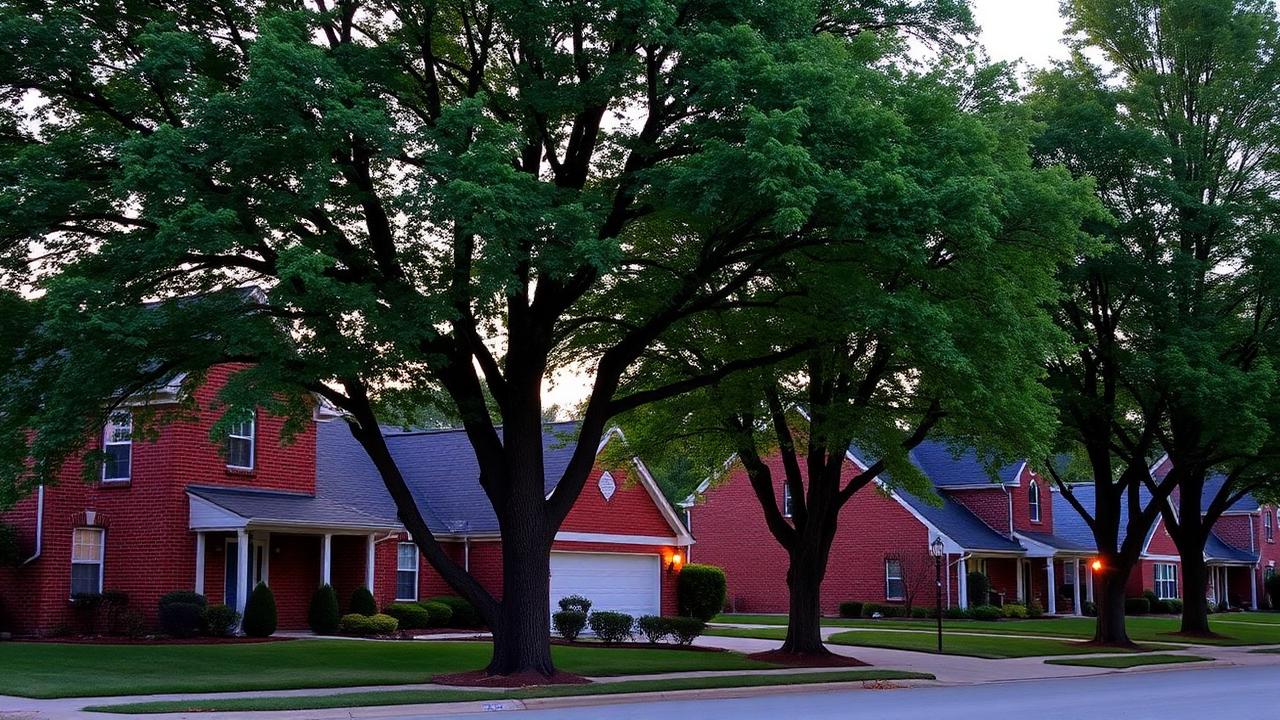
Fort Wayne's housing stock spans historic neighborhoods like West Central and Forest Park near downtown, mid-century subdivisions across the city's north and southwest sides, and newer construction on the city's growing northeast and southwest edges.
The median home value for the city is $188,900, the lowest figure in this guide by a substantial margin and a small fraction of the typical California price. Indiana's homestead property tax cap of 1 percent of assessed value keeps the ongoing carrying cost low as well, especially relative to a comparably sized California city.
Because prices are low and inventory spans everything from fixer-upper historic homes to new suburban construction, a California buyer with meaningful home equity has more flexibility here than almost anywhere else on this list, including the option to buy well below market and renovate.
Work and the local economy
Fort Wayne's economy is more diversified than a typical Midwestern manufacturing city. Parkview Health and Lutheran Health Network, both large hospital systems, are among the city's largest employers, alongside General Motors, Sweetwater Sound, insurance companies including Lincoln Financial's local operations, and a broad base of logistics and distribution firms drawn by the city's position on Interstate 69.
Multiple colleges, including Purdue University Fort Wayne, Indiana Tech, and IU Fort Wayne, add both employment and a modest student population, though nothing close to the scale of a dedicated college town.
The manufacturing base that once defined Fort Wayne has diversified into healthcare, insurance, and logistics over the past two decades, giving the city a broader employment base than its Rust Belt reputation might suggest, though wages remain well below coastal California levels.
Climate and setting
Fort Wayne sits at roughly 790 feet at the confluence of three rivers, on largely flat terrain typical of northeast Indiana. Summers are warm and humid with highs in the 80s, and winters are cold, with more lake-effect influence from Lake Erie and Lake Michigan than central Indiana sees, adding to snow totals in some years.
Flooding along the three rivers is a known local risk in wet springs, and the city has invested in flood control and the Promenade Park riverfront design partly with that history in mind.
There is no wildfire or earthquake exposure. The main weather adjustments for a California household are humid summers, cold and sometimes heavy-snow winters, and periodic river flooding risk in low-lying areas near downtown.
Getting around, care, and schools
- Commercial air
- Fort Wayne International Airport (FWA), with limited domestic service; Chicago and Indianapolis provide broader connections.
- Highways
- Interstate 69, US 30, and US 24 serve Fort Wayne.
- Hospital
- Parkview Regional Medical Center and Lutheran Hospital of Indiana, both major regional systems.
- Public schools
- Fort Wayne Community Schools, the largest district in the city.
- Higher education
- Purdue University Fort Wayne, Indiana Tech, and Indiana University Fort Wayne.
- Setting
- Flat terrain at the confluence of three rivers, elevation about 790 feet.
The trade-offs
- Fort Wayne's own airport has limited service. Frequent or long-haul flyers will often drive to Chicago or Indianapolis instead.
- Some neighborhoods, particularly older ones outside the revived downtown core, still show the effects of decades of underinvestment.
- Wages are well below coastal California levels, which matters if you need to find new local work rather than bringing portable income.
- River flooding is a known risk in low-lying areas during wet springs, worth checking before buying near the downtown riverfront.
Other Indiana towns people compare
Carmel
The highest-income, highest-priced suburb north of Indianapolis, known for roundabouts, top-rated schools, and a walkable Arts and Design District.
Fishers
A fast-growing Hamilton County suburb just east of Carmel, slightly cheaper, newer, and popular with young families.
Zionsville
A brick-street village core in Boone County with large lots and the most rural feel of any Indianapolis-area suburb, at the metro's highest prices outside Carmel.
Bloomington
Home to Indiana University, set in wooded hills unusual for the state, and the most walkable college town in Indiana.
Valparaiso
A Porter County city in northwest Indiana with a South Shore Line commuter rail connection into downtown Chicago.
Statewide figures, tax detail, and the full Indiana picture are on the Indiana page. Compare property, income, and sales tax across all 49 destination states on Taxes, and see where Californians are actually moving on Stats.
Sources
- US Census Bureau, American Community Survey 2020 to 2024 5-Year Estimates, table B25077 (median home value), retrieved via Census Reporter, September 3, 2026.
- US Census Bureau, ACS 2020 to 2024 5-Year Estimates, table B25103 (median real estate taxes paid, owner-occupied units with a mortgage), retrieved September 3, 2026.
- US Census Bureau, ACS 2020 to 2024 5-Year Estimates, table B25088 (median selected monthly owner costs, owner-occupied units with a mortgage), retrieved September 3, 2026.
- US Census Bureau, ACS 2020 to 2024 5-Year Estimates, table B01003 (total population), retrieved September 3, 2026.
- Census Reporter, Fort Wayne, IN profile, censusreporter.org.
- Data USA, Fort Wayne, IN profile, datausa.io.
- Indiana Department of Local Government Finance, property tax circuit breaker overview, in.gov.
See what your California equity buys in Fort Wayne
Four short questions. We match you with one local agent and apply a closing cost credit funded from our referral fee.
Start your Fort Wayne move
Four short questions. We use them to decide which agent fits your move, and to build your equity report.