
Indiana city guide
Moving From California to Zionsville, IN
A brick-street village core in Boone County with large lots and the most rural feel of any Indianapolis-area suburb, at the metro's highest prices outside Carmel.
Housing comparison
California versus Zionsville, side by side
- Median home value
- $725,800
- $587,800
- Median annual property tax
- $5,114
- not available
- Median monthly cost, owners with a mortgage
- $2,844
- not available
- Population
- 39.0 million (state)
- 32,095
Figures are US Census Bureau American Community Survey 2020 to 2024 5-Year Estimates for the city place. Property tax and monthly cost rows cover owner-occupied units with a mortgage, so they describe what current owners pay, not what a new buyer would pay at today's prices. California column is the statewide baseline used across this site.
Why Californians look at Zionsville
Zionsville sits northwest of Indianapolis in Boone County and trades on a genuinely different identity than Carmel or Fishers. Its historic Main Street is paved in brick and lined with shops and restaurants in nineteenth-century storefronts, and the surrounding township is dotted with large-lot horse properties and newer executive subdivisions rather than dense subdivision tracts.
It is the smallest and most expensive of the Indianapolis-area suburbs on this list by home value, and it draws a buyer who wants space, a slower pace, and a village center rather than a big-box commercial corridor. It is also the furthest of the three Hamilton and Boone County suburbs from the interstate grid, which keeps it quieter but adds a few minutes to every commute.
For a California family selling an expensive home and wanting acreage, Zionsville is usually the closest match to a semi-rural lifestyle within a reasonable drive of a major airport and a full-service metro.
Zionsville fits you if
- You want a large lot, an equestrian property, or acreage while staying within commuting distance of Indianapolis.
- You want a walkable historic village core with local shops rather than a shopping-center downtown.
- You want strong public schools and are willing to pay the area's highest prices outside Carmel to get them.
- You value quiet and lower density over proximity to big-box retail and dense commercial corridors.
Look elsewhere if
- You are budget constrained. Zionsville's median home value is the highest of any city in this guide.
- You want walkable big-city amenities or a wide restaurant and retail scene beyond the historic Main Street.
- You need a short commute. Zionsville is set back from the interstate grid relative to Carmel and Fishers.
- You want mountains, coastline, or elevation change. This is flat farmland turned exurb.
Housing in Zionsville
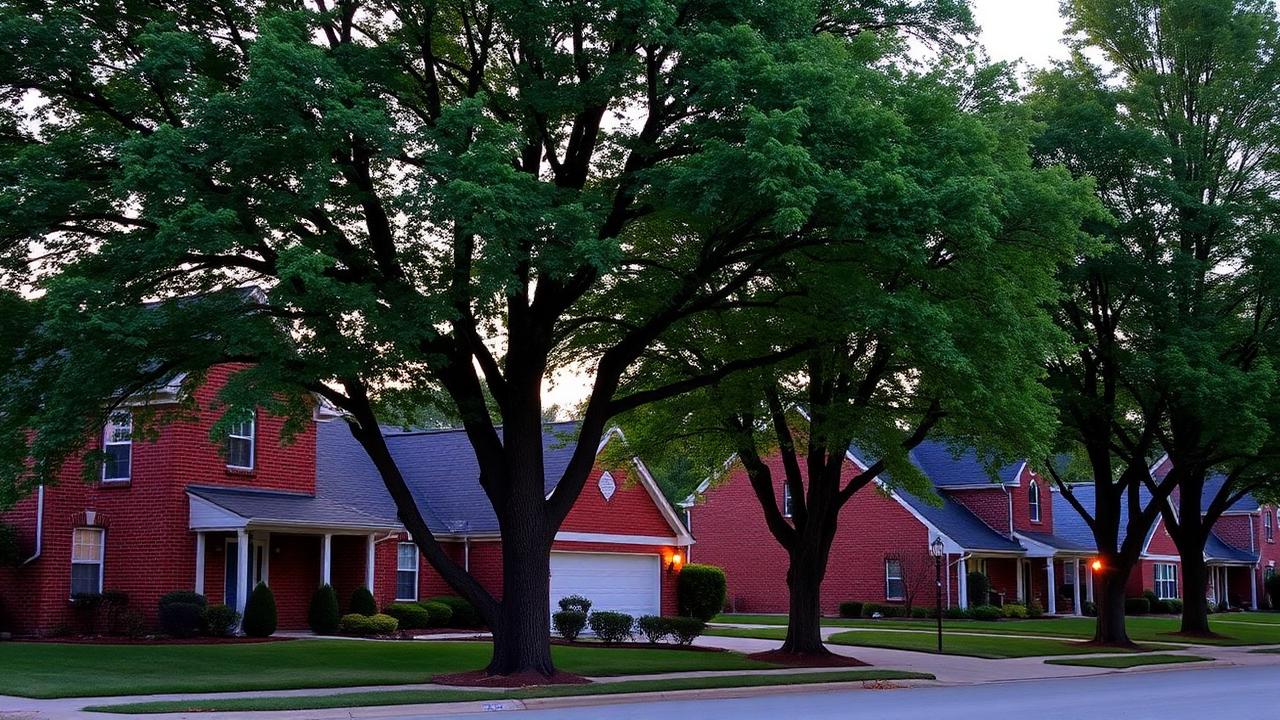
The historic village core holds nineteenth-century brick homes on small in-town lots, while the surrounding township is dominated by large-lot subdivisions, horse properties, and custom executive homes, many on an acre or more.
The median home value for the town is $587,800, the highest figure in this guide and well above the Indiana statewide median, reflecting both the larger average lot sizes and the premium buyers pay for the historic core and top schools. Indiana's 1 percent homestead property tax cap still keeps the ongoing carrying cost well below what a comparably priced California home would generate in a first-year tax bill.
Because lots are larger and inventory is thinner than in Carmel or Fishers, buyers should expect a more competitive market for the most desirable in-town and near-town properties, even though overall sale volume is much lower than in the larger suburbs.
Work and the local economy
Zionsville itself has a limited local job base, mostly small businesses, professional offices, and services supporting the town and surrounding township. Most working residents commute into Indianapolis, Carmel, or the Zionsville-adjacent commercial corridors along US 421 and I-65 in Boone County.
Boone County has drawn substantial new industrial and logistics investment in recent years along the I-65 corridor, adding some local jobs, but the town of Zionsville remains primarily a bedroom community for professionals working elsewhere in the metro.
This makes Zionsville a strong fit for remote workers and executives with an established commute, and a weaker fit for anyone who needs to find new local employment on arrival.
Climate and setting
Zionsville sits on flat to gently rolling farmland typical of Boone County, at an elevation of roughly 900 feet. Summers are warm and humid with highs in the 80s, and winters are cold, with routine snow and occasional ice storms from December through March.
Being further from the urban heat island of Indianapolis, Zionsville can run a few degrees cooler on winter nights than the city center, a minor but noticeable difference for gardeners and anyone heating a large rural-style property.
There is no wildfire or earthquake risk. Spring severe thunderstorms and occasional tornado watches are the primary weather hazard, consistent with the rest of central Indiana.
Getting around, care, and schools
- Commercial air
- Indianapolis International Airport (IND), roughly 20 to 25 miles southeast.
- Highways
- Interstate 65 and US 421 serve Boone County; Interstate 865 connects toward Indianapolis.
- Hospital
- Witham Health Services in nearby Lebanon; full-service hospitals are a short drive into Indianapolis or Carmel.
- Public schools
- Zionsville Community Schools.
- Higher education
- No university in Zionsville itself; IU Indianapolis and Butler University are within a 25-mile drive.
- Setting
- Flat to gently rolling farmland, elevation about 900 feet.
The trade-offs
- Zionsville carries the highest home prices in this guide, driven by lot sizes and the historic core.
- It sits further from the interstate grid than Carmel or Fishers, adding a few minutes to most commutes.
- The local job base is thin. Most residents commute elsewhere in the metro for work.
- Full-service hospital care means a drive into Indianapolis or Carmel rather than a hospital in town.
Other Indiana towns people compare
Carmel
The highest-income, highest-priced suburb north of Indianapolis, known for roundabouts, top-rated schools, and a walkable Arts and Design District.
Fishers
A fast-growing Hamilton County suburb just east of Carmel, slightly cheaper, newer, and popular with young families.
Bloomington
Home to Indiana University, set in wooded hills unusual for the state, and the most walkable college town in Indiana.
Valparaiso
A Porter County city in northwest Indiana with a South Shore Line commuter rail connection into downtown Chicago.
Fort Wayne
Indiana's second-largest city, at the confluence of three rivers, with the lowest home prices of any full-service city in this guide and a revived downtown riverfront.
Statewide figures, tax detail, and the full Indiana picture are on the Indiana page. Compare property, income, and sales tax across all 49 destination states on Taxes, and see where Californians are actually moving on Stats.
Sources
- US Census Bureau, American Community Survey 2020 to 2024 5-Year Estimates, table B25077 (median home value), retrieved via Census Reporter, September 3, 2026.
- US Census Bureau, ACS 2020 to 2024 5-Year Estimates, table B25103 (median real estate taxes paid, owner-occupied units with a mortgage), retrieved September 3, 2026.
- US Census Bureau, ACS 2020 to 2024 5-Year Estimates, table B25088 (median selected monthly owner costs, owner-occupied units with a mortgage), retrieved September 3, 2026.
- US Census Bureau, ACS 2020 to 2024 5-Year Estimates, table B01003 (total population), retrieved September 3, 2026.
- Census Reporter, Zionsville town, Boone County, IN profile, censusreporter.org.
- Data USA, Zionsville, IN profile, datausa.io.
- Indiana Department of Local Government Finance, property tax circuit breaker overview, in.gov.
See what your California equity buys in Zionsville
Four short questions. We match you with one local agent and apply a closing cost credit funded from our referral fee.
Start your Zionsville move
Four short questions. We use them to decide which agent fits your move, and to build your equity report.