
Florida city guide
Moving From California to Gainesville, FL
A university town well inland, anchored by the University of Florida, and the best housing value among the real cities on this list.
Housing comparison
California versus Gainesville, side by side
- Median home value
- $725,800
- $247,500
- Median annual property tax
- $5,114
- $2,434
- Median monthly cost, owners with a mortgage
- $2,844
- $1,599
- Population
- 39.0 million (state)
- 145,702
Figures are US Census Bureau American Community Survey 2020 to 2024 5-Year Estimates for the city place. Property tax and monthly cost rows cover owner-occupied units with a mortgage, so they describe what current owners pay, not what a new buyer would pay at today's prices. California column is the statewide baseline used across this site.
Why Californians look at Gainesville
Gainesville is a university city in north central Florida, built around the University of Florida, one of the largest public universities in the country, with a population that skews young and a home value well below every other city on this list. The ACS median home value here is $247,500, roughly half of Tampa's and a fraction of Naples'.
The city sits inland, about 70 miles southwest of Jacksonville and well away from either coast, which removes direct hurricane storm surge exposure and generally moderates hurricane wind impacts relative to coastal Florida, though the region still sees tropical storm remnants and heavy rain events.
For a California household, Gainesville is the value play on this list: lower home prices, lower property tax bills, and a stable university and hospital-driven economy, at the cost of distance from the Gulf or Atlantic coast and a much smaller, more homogenous local culture built around the academic calendar.
Gainesville fits you if
- You want the lowest home prices and property tax bills among the real cities on this list.
- You want a university town's cultural amenities: sports, lectures, a bookstore and coffee culture, and continuing education.
- You want reduced hurricane storm surge risk by being well inland, while staying in Florida for tax purposes.
- You are connected to UF or UF Health, or you want access to a major academic medical center.
Look elsewhere if
- You want beach access as part of daily life. Gainesville is roughly 60 to 90 minutes from the nearest Gulf beaches.
- You dislike college-town rhythms: football weekends, a large student population, and a local economy that leans on the university calendar.
- You need a private-sector job market outside healthcare, education, and government.
- You want a large, dense metro with extensive nonstop flight options.
Housing in Gainesville
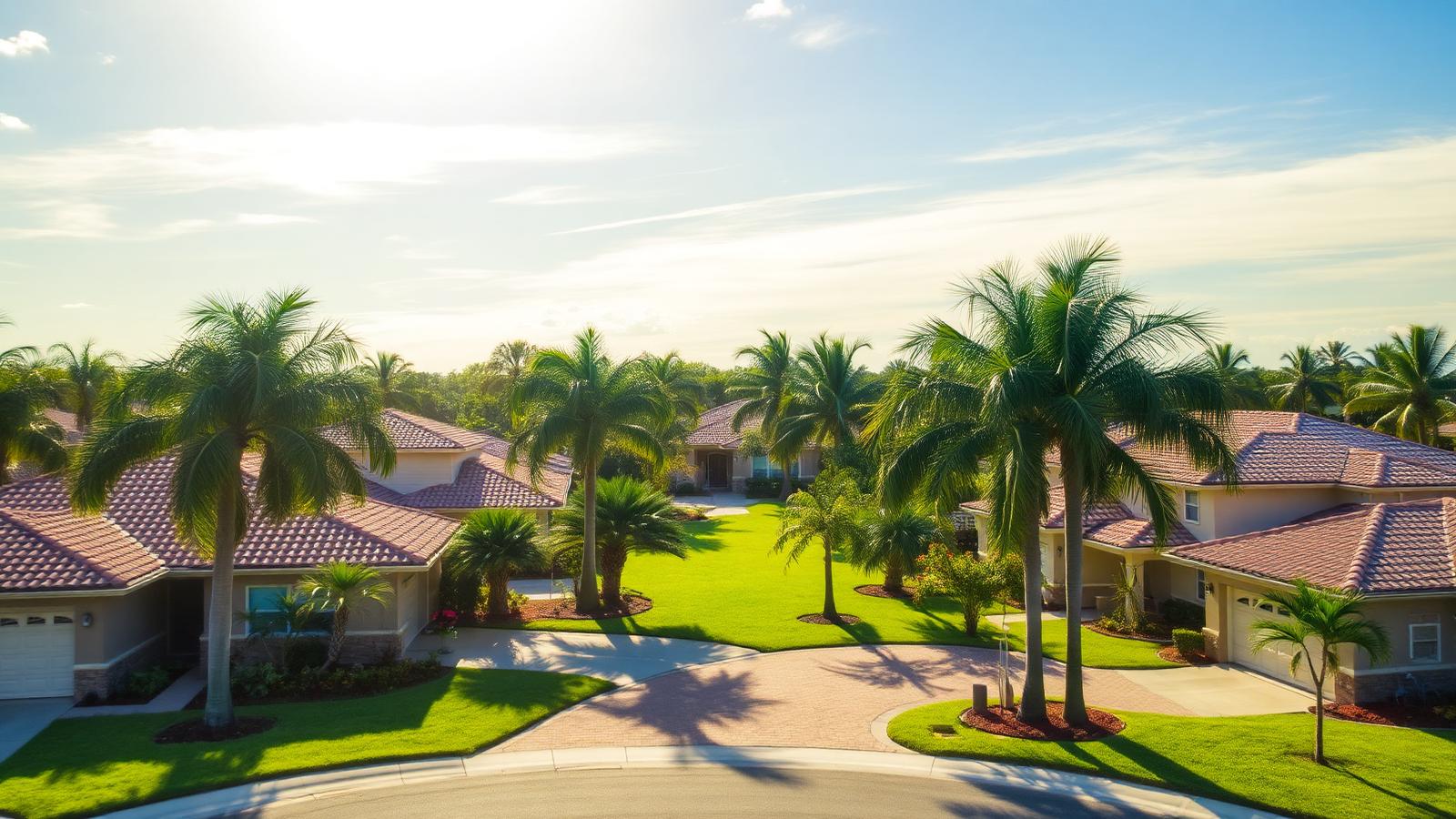
Gainesville's housing includes historic homes near downtown and the UF campus in neighborhoods like Duckpond, mid-century ranch homes further out, and a large stock of newer subdivisions and student-oriented apartment and rental development, particularly close to campus.
The ACS median home value for the city is $247,500, the median annual real estate tax bill for owners with a mortgage is $2,434, and the median monthly owner cost with a mortgage is $1,599. These are the lowest figures of any city covered on this list, reflecting both a large student rental market that holds down owner-occupied values and a genuinely more affordable regional cost structure.
Neighborhoods close to campus see heavy student rental turnover, which affects both noise and long-term appreciation patterns differently than in owner-occupant-dominated suburbs. Families often look slightly further out, toward Haile Plantation or the northwest side of the city, for a more traditional owner-occupied market.
Work and the local economy
The University of Florida is by a wide margin the dominant employer and economic driver in Gainesville, with tens of thousands of faculty, staff, and affiliated positions, and UF Health Shands Hospital, the university's academic medical center, is a major regional referral hospital and a large employer in its own right.
Beyond the university and its health system, the city's economy includes a modest biotech and research cluster tied to UF's research programs, along with the school district, city and county government, and retail and services supporting a large student population.
As with any single-dominant-employer town, state budget decisions and university enrollment trends move Gainesville's economy more directly than they would in a more diversified city. A household bringing portable income avoids this exposure; one needing local private-sector work outside healthcare or education should look carefully at the field first.
Climate and inland setting
Gainesville has a humid subtropical climate with hot, humid summers with highs near 90 and mild winters with highs typically in the 60s and 70s, with occasional nights near or just below freezing in January.
Being well inland removes direct storm surge risk, a meaningful advantage over the coastal cities on this list. The region still experiences heavy rain and wind from tropical systems and their remnants, and Hurricane Idalia in 2023 brought significant rainfall and wind to north central Florida even after making landfall well to the south and east.
Summer afternoon thunderstorms are common from June through September, consistent with the rest of Florida, and the area sees more nights with cooler winter temperatures than the Gulf Coast cities further south on this list.
Getting around, care, and schools
- Commercial air
- Gainesville Regional Airport (GNV) offers limited commercial service; Jacksonville International Airport and Orlando International Airport, both roughly 90 minutes away, offer far more nonstop options.
- Highways
- Interstate 75 runs along the western edge of the city.
- Hospital
- UF Health Shands Hospital, a large academic medical center and regional referral hospital.
- Public schools
- Alachua County Public Schools.
- Higher education
- University of Florida, one of the largest public universities in the country, plus Santa Fe College.
- Setting
- Inland north central Florida, well away from coastal storm surge, gently rolling terrain by Florida standards.
The trade-offs
- Air service is limited locally. Plan on driving to Jacksonville or Orlando for most nonstop flight options.
- The local economy leans heavily on the University of Florida and its health system, which creates single-employer concentration risk.
- The nearest beaches are 60 to 90 minutes away, unlike the coastal cities on this list.
- Student rental turnover shapes many neighborhoods close to campus, which some buyers will want to avoid and others will use for investment purposes.
Other Florida towns people compare
Sarasota
Gulf Coast beach town with a genuine arts scene and an older population, the most common landing spot on this list for California retirees.
Tampa
The state's most balanced big-city job market, with a real financial services and healthcare base rather than only tourism.
Naples
Where high-equity California sellers buy outright, and the most expensive housing market of any city on this list.
St. Petersburg
A walkable downtown and waterfront across the bay from Tampa, with a younger population than the rest of the Gulf Coast.
Winter Garden
Inland Orlando suburb with a historic main street and a trail network, well away from direct storm surge exposure.
Statewide figures, tax detail, and the full Florida picture are on the Florida page. Compare property, income, and sales tax across all 49 destination states on Taxes, and see where Californians are actually moving on Stats.
Sources
- US Census Bureau, American Community Survey 2020 to 2024 5-Year Estimates, table B25077 (median home value), retrieved via Census Reporter, September 3, 2026.
- US Census Bureau, ACS 2020 to 2024 5-Year Estimates, table B25103 (median real estate taxes paid, owner-occupied units with a mortgage), retrieved September 3, 2026.
- US Census Bureau, ACS 2020 to 2024 5-Year Estimates, table B25088 (median selected monthly owner costs, owner-occupied units with a mortgage), retrieved September 3, 2026.
- US Census Bureau, ACS 2020 to 2024 5-Year Estimates, table B01003 (total population), retrieved September 3, 2026.
- UF Health Shands Hospital, ufhealth.org.
- University of Florida economic impact report, economicimpact.ufl.edu.
- Gainesville Regional Airport profile, Florida Department of Transportation, fdot.gov.
See what your California equity buys in Gainesville
Four short questions. We match you with one local agent and apply a closing cost credit funded from our referral fee.
Start your Gainesville move
Four short questions. We use them to decide which agent fits your move, and to build your equity report.