
Connecticut city guide
Moving From California to Guilford, CT
A Long Island Sound shoreline town built around a historic green, quieter and more affordable than Fairfield County but further from Manhattan.
Housing comparison
California versus Guilford, side by side
- Median home value
- $725,800
- not available
- Median annual property tax
- $5,114
- not available
- Median monthly cost, owners with a mortgage
- $2,844
- not available
- Population
- 39.0 million (state)
- not available
Figures are US Census Bureau American Community Survey 2020 to 2024 5-Year Estimates for the city place. Property tax and monthly cost rows cover owner-occupied units with a mortgage, so they describe what current owners pay, not what a new buyer would pay at today's prices. California column is the statewide baseline used across this site.
Why Californians look at Guilford
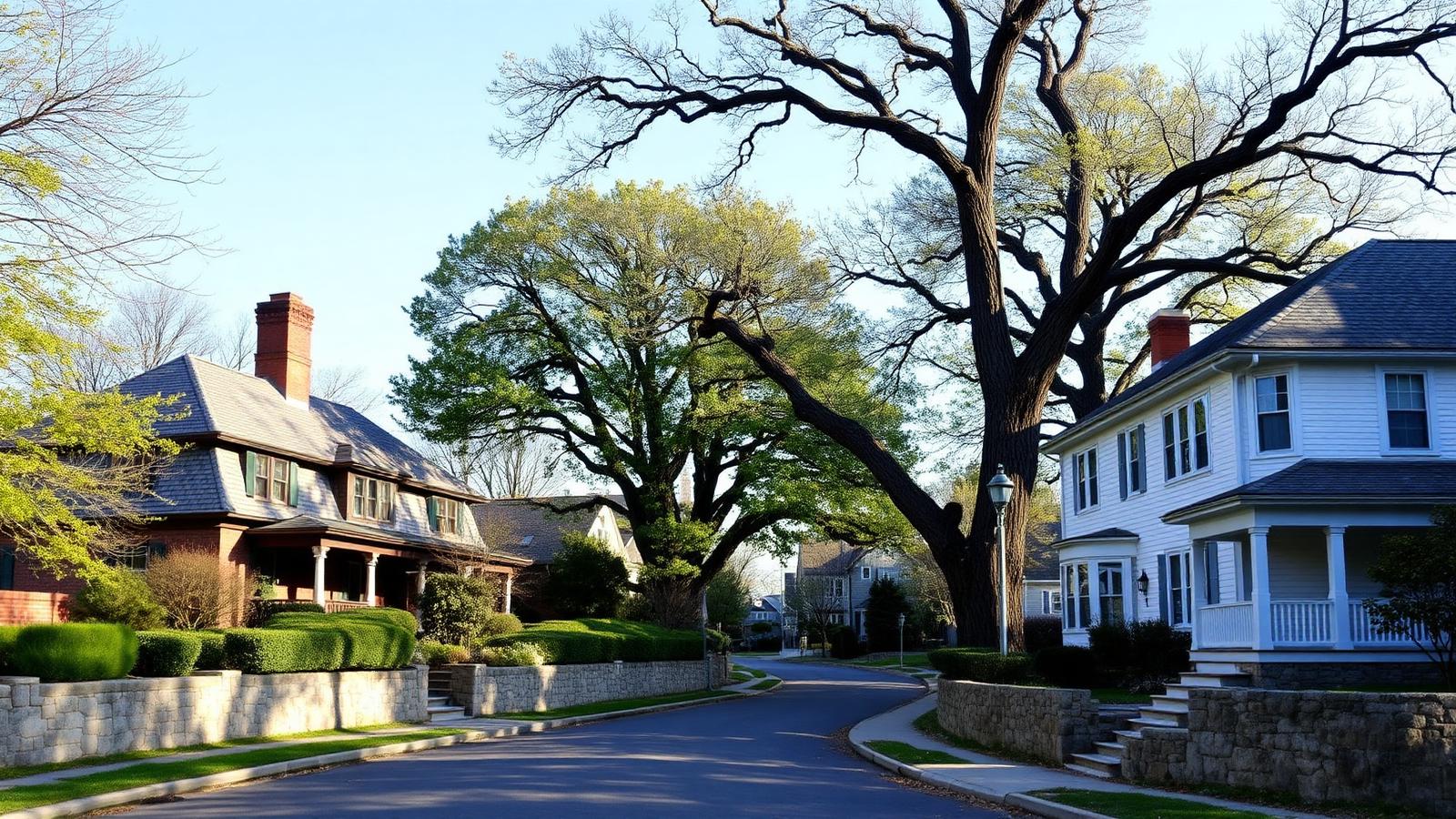
Guilford sits on the Connecticut shoreline east of New Haven, built around one of the largest and best preserved town greens in New England, ringed by colonial-era homes, a library, churches, and small shops. It reads as an old New England town because it is one, settled in 1639.
The town's identity is shoreline rather than commuter-corridor. Guilford has its own small harbor, several beaches and coastal parks, and a slower pace than the towns closer to New York. Its Metro-North New Haven Line station puts Manhattan within reach, but the ride is close to two hours, long enough that Guilford draws far fewer daily Manhattan commuters than Fairfield or Westport.
For a California household, Guilford is the choice for people who want New England charm and water access without paying Fairfield County prices, and who are willing to accept a longer commute or work locally around New Haven and the shoreline instead.
Guilford fits you if
- You want a historic New England town center and a slower pace than lower Fairfield County.
- You want shoreline access, beaches, and boating without Fairfield County pricing.
- Your work is centered on New Haven, Yale, or the shoreline rather than Manhattan.
- You want a strong public school system in a smaller, closer-knit town.
Look elsewhere if
- You need a fast daily commute into New York City. Guilford to Grand Central is a long ride, well over an hour and a half.
- You want dense retail, nightlife, or a large restaurant scene. Guilford is a small town, not a downtown.
- You want low property taxes. Connecticut shoreline towns carry the same reassessment-driven tax structure as the rest of the state.
- You want a fast-growing local job market. Guilford's own economy is small and service-oriented.
Housing in Guilford
Guilford's housing runs from colonial homes right on or near the green, to shoreline cottages and larger homes along the coast, to more ordinary suburban construction inland toward Interstate 95 and the North Guilford countryside. Waterfront and near-green properties command a real premium over the town's inland stock.
As with the rest of Connecticut, property tax is set by the town's mill rate against assessed value and moves with periodic town-wide revaluations rather than being capped at the purchase price, so buyers should model the ongoing bill rather than assume it is fixed.
Guilford is generally less expensive than the well-known Fairfield County commuter towns, which is a core part of its appeal for buyers who do not need the fast Manhattan train.
Work and the local economy
Guilford's own economy is small, centered on local retail, services, and tourism tied to the shoreline and the green. It is not a job center in its own right.
The realistic economic draw of Guilford is proximity to New Haven, about 15 miles west, home to Yale University and Yale New Haven Health, both major regional employers, along with the shoreline's own healthcare and education institutions.
Households relying on a Manhattan salary should think hard about whether they want that commute from this far out. Guilford suits remote workers, New Haven-area professionals, and retirees far better than daily Manhattan commuters.
Climate on the shoreline
Guilford's coastal position on Long Island Sound moderates temperatures somewhat compared with inland Connecticut, with summer highs typically in the low eighties and cooler nights near the water.
Winters bring real cold and regular snow, with January highs generally in the mid thirties, and nor'easters can bring coastal flooding to low-lying shoreline neighborhoods and the town's beaches.
Fall is a strong season here, with foliage inland and mild, clear weather along the coast, and it is a big part of why residents describe Guilford as a place they enjoy year-round rather than only in summer.
Getting around, care, and schools
- Commercial air
- Tweed New Haven Airport is about 15 miles away with limited service; Bradley International near Hartford offers more routes at roughly an hour's drive.
- Rail
- Metro-North New Haven Line station in town, with service to New Haven and on to Grand Central, roughly 1 hour 45 minutes to 2 hours to Manhattan.
- Highways
- Interstate 95 runs through the northern part of town.
- Hospital
- Yale New Haven Hospital's Shoreline Medical Center is in town, with the main Yale New Haven campus about 15 miles west.
- Public schools
- Guilford Public Schools.
- Setting
- Long Island Sound shoreline town, about 15 miles east of New Haven and roughly 100 miles from Manhattan.
The trade-offs
- The Manhattan commute is long enough that most residents do not do it daily. This is a shoreline town, not a bedroom suburb of New York.
- Retail and dining options are those of a small town. New Haven is the nearest real city for a wider selection.
- Property taxes follow the same reassessment-driven structure as the rest of Connecticut, with no cap on increases.
- Coastal storms and occasional flooding affect the shoreline neighborhoods and beaches during major nor'easters.
Other Connecticut towns people compare
Fairfield
A beach town on Long Island Sound with express Metro-North service into Grand Central, strong public schools, and prices that track the rest of lower Fairfield County.
West Hartford
A walkable Hartford suburb with a genuine town center, excellent public schools, and the best value among Connecticut's top-rated districts.
Stamford
Connecticut's most urban city, with a genuine downtown, corporate headquarters, a 45-minute express train to Manhattan, and the state's most active rental market.
Glastonbury
A family-oriented Hartford suburb east of the Connecticut River, with large lots, consistently high school ratings, and a quieter pace than the river's west bank.
Statewide figures, tax detail, and the full Connecticut picture are on the Connecticut page. Compare property, income, and sales tax across all 49 destination states on Taxes, and see where Californians are actually moving on Stats.
Sources
- US Census Bureau, American Community Survey 2020 to 2024 5-Year Estimates, table B25077 (median home value), retrieved via Census Reporter, September 3, 2026.
- US Census Bureau, ACS 2020 to 2024 5-Year Estimates, table B25103 (median real estate taxes paid, owner-occupied units with a mortgage), retrieved September 3, 2026.
- US Census Bureau, ACS 2020 to 2024 5-Year Estimates, table B25088 (median selected monthly owner costs, owner-occupied units with a mortgage), retrieved September 3, 2026.
- US Census Bureau, ACS 2020 to 2024 5-Year Estimates, table B01003 (total population), retrieved September 3, 2026.
- Town of Guilford, Connecticut official website, ci.guilford.ct.us.
- Metropolitan Transportation Authority, Metro-North Railroad New Haven Line schedules, mta.info.
- Yale New Haven Health, ynhh.org.
See what your California equity buys in Guilford
Four short questions. We match you with one local agent and apply a closing cost credit funded from our referral fee.
Start your Guilford move
Four short questions. We use them to decide which agent fits your move, and to build your equity report.