
North Carolina city guide
Moving From California to Huntersville, NC
A Lake Norman suburb north of Charlotte with a straight commute into uptown, chosen for water access and newer housing on the metro's fast-growing edge.
Housing comparison
California versus Huntersville, side by side
- Median home value
- $725,800
- $472,900
- Median annual property tax
- $5,114
- $3,233
- Median monthly cost, owners with a mortgage
- $2,844
- $2,159
- Population
- 39.0 million (state)
- 63,969
Figures are US Census Bureau American Community Survey 2020 to 2024 5-Year Estimates for the city place. Property tax and monthly cost rows cover owner-occupied units with a mortgage, so they describe what current owners pay, not what a new buyer would pay at today's prices. California column is the statewide baseline used across this site.
Why Californians look at Huntersville
Huntersville sits on the north shore of Lake Norman, about 15 miles north of uptown Charlotte along Interstate 77. It has grown from a small rural town into one of the Charlotte metro's largest suburbs over the last three decades, driven almost entirely by lake access and a workable commute into the city's banking and corporate core.
The appeal for a California household is straightforward: a real body of water for boating and lake life, newer housing built to accommodate that lifestyle, and a highway commute into uptown Charlotte that, outside of peak congestion, runs under 30 minutes.
Huntersville is not a self-contained job center. Most residents commute into Charlotte proper for banking, corporate, and healthcare employment, and the town's own economy is built around retail, services, and the lake-driven tourism and recreation economy.
Huntersville fits you if
- You want lake access. Homes on or near Lake Norman for boating, fishing, and waterfront living are the town's defining feature.
- You work in uptown Charlotte and want a suburban commute that is manageable outside peak hours.
- You want newer construction. Most of Huntersville's housing was built from the 1990s onward.
- You want big-box retail, chain restaurants, and suburban conveniences close to home rather than a downtown core.
Look elsewhere if
- You need a short commute regardless of traffic. Interstate 77 through this corridor has some of the worst peak-hour congestion in the Charlotte metro.
- You want a distinct downtown or walkable core. Huntersville is built around subdivisions and shopping centers, not a town center.
- You are not interested in lake life. Non-waterfront Huntersville is a fairly generic Charlotte-area suburb.
- You want to avoid toll roads. The I-77 corridor here includes managed toll lanes.
Housing in Huntersville
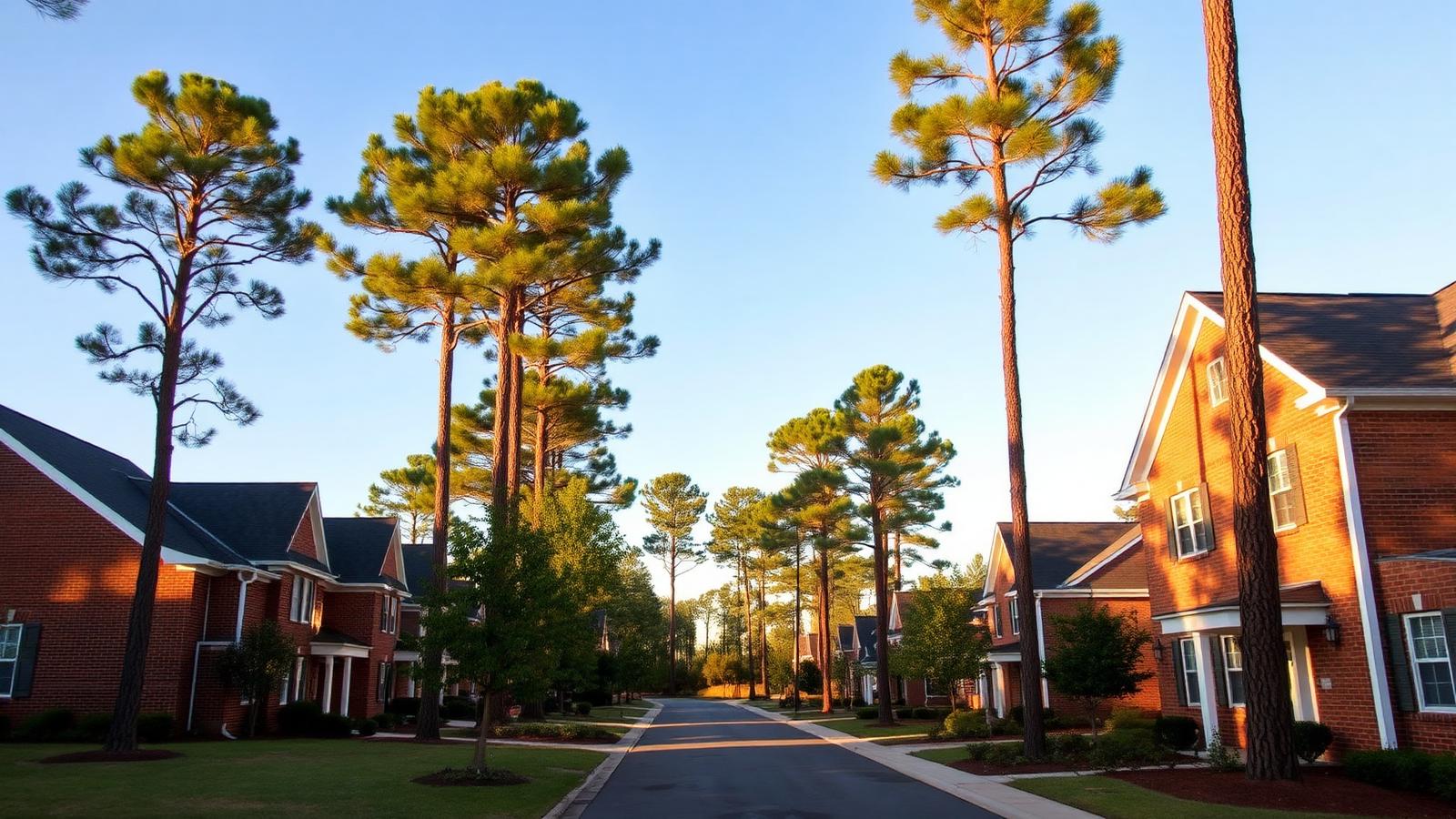
Huntersville's housing is dominated by subdivisions built from the 1990s onward, ranging from mid-size production homes away from the water to larger custom and semi-custom homes on or near Lake Norman. Waterfront and water-view lots carry a significant premium over inland Huntersville.
The ACS median home value is $472,900, and the median annual property tax on a mortgaged home is $3,233. The median monthly owner cost with a mortgage is $2,159.
New construction continues on the town's outer edges as Charlotte's metro growth pushes north, and buyers should expect ongoing development traffic and new subdivisions filling in nearby land for the foreseeable future.
Work and the local economy
Huntersville itself is primarily a retail, services, and residential town, anchored by shopping centers along the NC-115 and I-77 corridors rather than large corporate campuses. Local employment centers on retail, healthcare, and small business.
The dominant economic pull is uptown Charlotte, roughly 15 to 20 miles south, home to major bank headquarters including Bank of America and Truist, along with a large corporate, legal, and healthcare employment base.
Lake Norman itself supports a real tourism and recreation economy, from marinas and boat sales to restaurants and seasonal service jobs, giving the area a summer-driven commercial rhythm on top of its suburban commuter base.
Climate and setting
Huntersville sits in the Piedmont at roughly 750 feet elevation. Summers are hot and humid, with July highs typically in the low 90s, and winters are mild with occasional snow or ice storms.
Humidity is a real adjustment for California transplants, particularly in July and August, and afternoon thunderstorms are common in summer.
The lake moderates very little of the regional climate; it primarily adds recreation value rather than cooling effect, and lake-adjacent humidity can feel slightly heavier on still summer evenings.
Getting around, care, and schools
- Commercial air
- Charlotte Douglas International Airport (CLT), a major hub, roughly 30 to 40 minutes by car.
- Highways
- Interstate 77, including managed toll express lanes through this corridor.
- Hospital
- Novant Health Huntersville Medical Center, with Atrium Health and Novant systems in Charlotte nearby.
- Public schools
- Charlotte-Mecklenburg Schools.
- Higher education
- UNC Charlotte and Central Piedmont Community College, both within about 30 minutes.
- Setting
- Piedmont, roughly 750 feet elevation, on the north shore of Lake Norman.
The trade-offs
- I-77 congestion at peak commute times into uptown Charlotte can turn a 20-minute drive into 45 minutes or more.
- The town has no real walkable downtown; daily life runs through subdivisions and shopping centers.
- Waterfront premiums are steep, and non-waterfront Huntersville does not carry the same appeal that draws people to the area.
- Growth has been rapid and continuous for years, meaning ongoing construction traffic and changing surroundings.
Other North Carolina towns people compare
Cary
The Triangle suburb where the largest share of Bay Area tech transfers land, built around top-rated schools and an employer base that already looks like California's.
Wake Forest
A fast-growing town on the north edge of the Triangle, offering newer construction at a real discount to Cary without Cary's bidding pressure.
Wilmington
A coastal city with a genuine historic downtown and riverfront, chosen by movers who want water without Florida heat or California wildfire risk.
Hendersonville
A small mountain town near Asheville with a genuine four-season climate and a large, established retiree community.
Winston-Salem
The cheapest Piedmont city in this guide, anchored by a major academic hospital system and a historic downtown that has been rebuilt around it.
Statewide figures, tax detail, and the full North Carolina picture are on the North Carolina page. Compare property, income, and sales tax across all 49 destination states on Taxes, and see where Californians are actually moving on Stats.
Sources
- US Census Bureau, American Community Survey 2020 to 2024 5-Year Estimates, table B25077 (median home value), retrieved via Census Reporter, September 3, 2026.
- US Census Bureau, ACS 2020 to 2024 5-Year Estimates, table B25103 (median real estate taxes paid, owner-occupied units with a mortgage), retrieved September 3, 2026.
- US Census Bureau, ACS 2020 to 2024 5-Year Estimates, table B25088 (median selected monthly owner costs, owner-occupied units with a mortgage), retrieved September 3, 2026.
- US Census Bureau, ACS 2020 to 2024 5-Year Estimates, table B01003 (total population), retrieved September 3, 2026.
- Town of Huntersville, community and economic development information, huntersville.org.
- Charlotte Douglas International Airport, flight and destination information, cltairport.com.
- Charlotte-Mecklenburg Schools, district overview, cms.k12.nc.us.
See what your California equity buys in Huntersville
Four short questions. We match you with one local agent and apply a closing cost credit funded from our referral fee.
Start your Huntersville move
Four short questions. We use them to decide which agent fits your move, and to build your equity report.