
North Carolina city guide
Moving From California to Wake Forest, NC
A fast-growing town on the north edge of the Triangle, offering newer construction at a real discount to Cary without Cary's bidding pressure.
Housing comparison
California versus Wake Forest, side by side
- Median home value
- $725,800
- $474,500
- Median annual property tax
- $5,114
- $3,786
- Median monthly cost, owners with a mortgage
- $2,844
- $2,272
- Population
- 39.0 million (state)
- 52,844
Figures are US Census Bureau American Community Survey 2020 to 2024 5-Year Estimates for the city place. Property tax and monthly cost rows cover owner-occupied units with a mortgage, so they describe what current owners pay, not what a new buyer would pay at today's prices. California column is the statewide baseline used across this site.
Why Californians look at Wake Forest
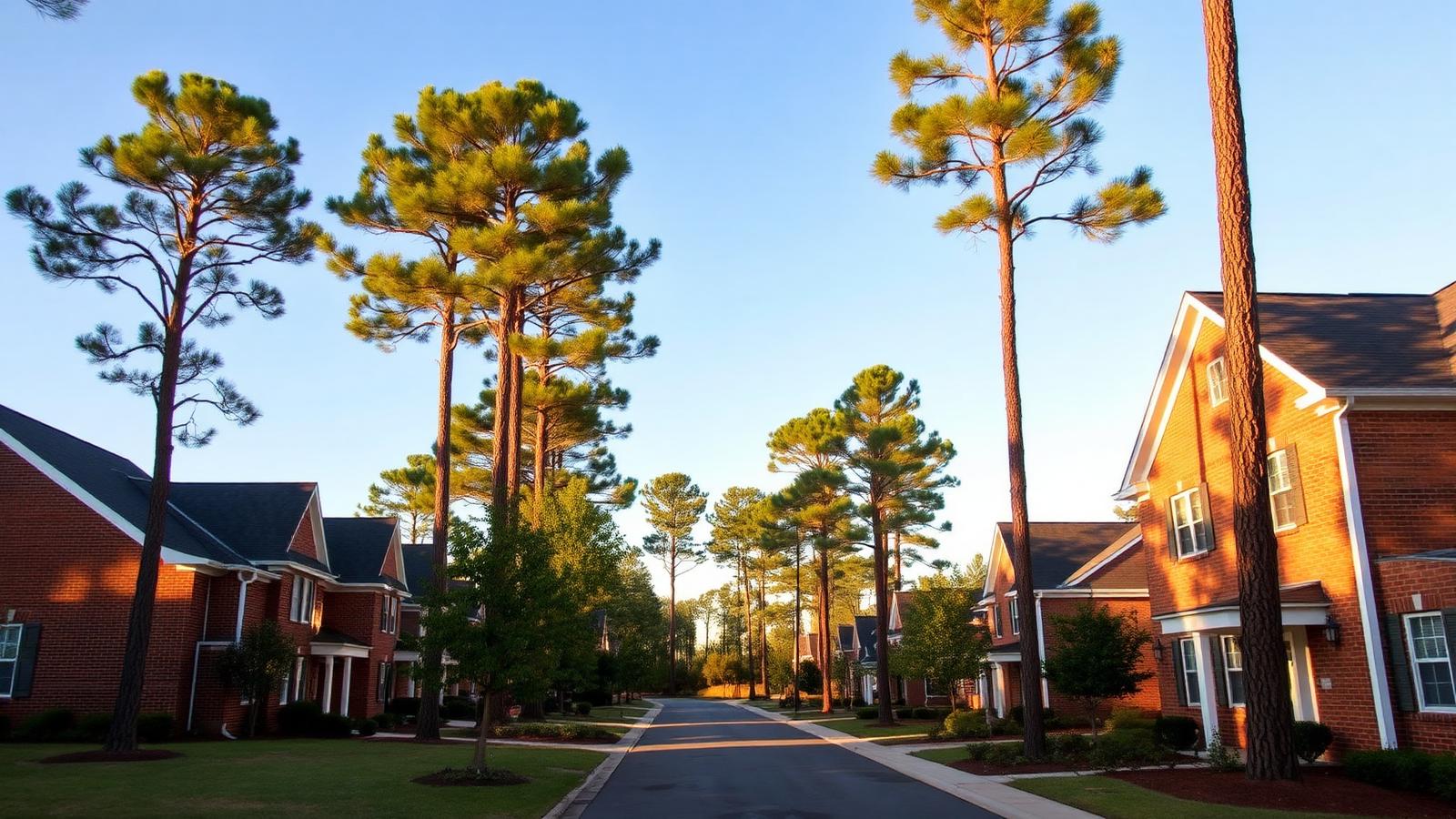
Wake Forest sits about 20 miles north of downtown Raleigh, and it has been one of the fastest-growing towns in the Triangle for the last two decades. Most of the housing stock is new, built in large subdivisions from the 2000s through today, which is the core of its appeal against Cary: similar Triangle job access, meaningfully newer homes, and a lower entry price.
The town has an old core, home to Wake Forest University before it relocated to Winston-Salem in the 1950s, with a walkable historic downtown of shops and restaurants. Around that core, the newer growth has been almost entirely suburban subdivision development.
For a California household comparing Triangle towns, Wake Forest is the answer if you want new construction, a lower price than Cary, and are willing to accept a longer commute to RTP or downtown Raleigh in exchange.
Wake Forest fits you if
- You want newer construction and are comparing directly against Cary's older, pricier inventory.
- You still want Triangle job access but are willing to commute 25 to 35 minutes to RTP or downtown Raleigh.
- You like a small walkable historic downtown alongside newer suburban neighborhoods.
- You are raising a family and want Wake County schools without Cary's price premium.
Look elsewhere if
- You need a short commute to RTP or downtown Raleigh. Wake Forest is at the far edge of a reasonable daily drive.
- You want an established, mature neighborhood rather than a large share of recently built subdivisions.
- You want walkability across the whole town rather than just the small historic core.
- You want mountains or coast nearby. Wake Forest is firmly inland Piedmont.
Housing in Wake Forest
Most of Wake Forest's housing was built from the 2000s onward in large planned subdivisions, with a smaller historic core of early twentieth-century homes near the old university campus and downtown. New construction is still ongoing on the town's edges.
The ACS median home value is $474,500, meaningfully below Cary's, and the median annual property tax on a mortgaged home is $3,786. The median monthly owner cost with a mortgage is $2,272.
Because so much of the stock is newer, buyers get modern floor plans, updated systems, and larger lots for the price compared with older Triangle towns, though it also means less architectural variety outside the historic district.
Work and the local economy
Wake Forest itself is primarily residential, with local employment concentrated in healthcare, retail, and town and county government. WakeMed has expanded its footprint in town with a medical park, adding local healthcare jobs.
The town's real economic draw is proximity to the broader Triangle job market. Research Triangle Park, downtown Raleigh, and North Raleigh's corporate and medical employers are all within a 25 to 40 minute drive depending on traffic.
This works well for remote workers and for anyone whose job is elsewhere in the Triangle, but Wake Forest is not itself a job center, and residents commute out for the bulk of Triangle-area employment.
Climate and setting
Wake Forest shares the Piedmont climate of the rest of the Triangle: hot, humid summers with July highs typically in the upper 80s, and mild winters with occasional snow or ice.
Humidity and afternoon summer thunderstorms are the norm from late spring through early fall, and California transplants generally cite the humidity as the biggest daily adjustment.
Hurricane impact here is limited to heavy rain and occasional flooding from storm remnants, since the town is well inland from the coast.
Getting around, care, and schools
- Commercial air
- Raleigh-Durham International Airport (RDU), roughly 30 to 40 minutes by car depending on traffic.
- Highways
- US Highway 1 and the Capital Boulevard corridor connect to downtown Raleigh.
- Hospital
- WakeMed Medical Park in Wake Forest, with full hospital campuses in Raleigh a short drive away.
- Public schools
- Wake County Public School System.
- Higher education
- NC State and Shaw University in Raleigh, Duke and UNC Chapel Hill within about 40 minutes.
- Setting
- Piedmont plateau, roughly 350 feet elevation, on the northern edge of the Raleigh metro.
The trade-offs
- The commute to RTP or downtown Raleigh is longer than from Cary, typically 25 to 40 minutes depending on traffic and destination.
- Most of the town is recently built subdivision, which some buyers like and others find lacking in character outside the small historic downtown.
- Local job opportunities are limited; most residents commute elsewhere in the Triangle for work.
- Growth has been rapid, and traffic on the main corridors into Raleigh has increased noticeably over the last decade.
Other North Carolina towns people compare
Cary
The Triangle suburb where the largest share of Bay Area tech transfers land, built around top-rated schools and an employer base that already looks like California's.
Huntersville
A Lake Norman suburb north of Charlotte with a straight commute into uptown, chosen for water access and newer housing on the metro's fast-growing edge.
Wilmington
A coastal city with a genuine historic downtown and riverfront, chosen by movers who want water without Florida heat or California wildfire risk.
Hendersonville
A small mountain town near Asheville with a genuine four-season climate and a large, established retiree community.
Winston-Salem
The cheapest Piedmont city in this guide, anchored by a major academic hospital system and a historic downtown that has been rebuilt around it.
Statewide figures, tax detail, and the full North Carolina picture are on the North Carolina page. Compare property, income, and sales tax across all 49 destination states on Taxes, and see where Californians are actually moving on Stats.
Sources
- US Census Bureau, American Community Survey 2020 to 2024 5-Year Estimates, table B25077 (median home value), retrieved via Census Reporter, September 3, 2026.
- US Census Bureau, ACS 2020 to 2024 5-Year Estimates, table B25103 (median real estate taxes paid, owner-occupied units with a mortgage), retrieved September 3, 2026.
- US Census Bureau, ACS 2020 to 2024 5-Year Estimates, table B25088 (median selected monthly owner costs, owner-occupied units with a mortgage), retrieved September 3, 2026.
- US Census Bureau, ACS 2020 to 2024 5-Year Estimates, table B01003 (total population), retrieved September 3, 2026.
- Wake Forest Business & Industry Partnership, WakeMed Medical Park announcement, discoverwakeforest.org.
- Raleigh-Durham International Airport, flight and destination information, rdu.com.
- Wake County Public School System, district overview, wcpss.net.
See what your California equity buys in Wake Forest
Four short questions. We match you with one local agent and apply a closing cost credit funded from our referral fee.
Start your Wake Forest move
Four short questions. We use them to decide which agent fits your move, and to build your equity report.