
New Mexico city guide
Moving From California to Las Cruces, NM
New Mexico's second largest city, home to New Mexico State University, with the lowest prices of any full-service market in this guide and mild winters.
Housing comparison
California versus Las Cruces, side by side
- Median home value
- $725,800
- $231,700
- Median annual property tax
- $5,114
- $1,571
- Median monthly cost, owners with a mortgage
- $2,844
- not available
- Population
- 39.0 million (state)
- 116,992
Figures are US Census Bureau American Community Survey 2020 to 2024 5-Year Estimates for the city place. Property tax and monthly cost rows cover owner-occupied units with a mortgage, so they describe what current owners pay, not what a new buyer would pay at today's prices. California column is the statewide baseline used across this site.
Why Californians look at Las Cruces
Las Cruces sits in the Mesilla Valley in the far south of New Mexico, at the crossroads of Interstate 10 and Interstate 25, less than an hour from El Paso, Texas and the Mexican border at Santa Teresa. It is New Mexico's second largest city and carries the lowest home prices of any city in this guide with a genuinely full range of services.
New Mexico State University gives the city a steady employment and cultural base that smaller southern New Mexico towns lack, and the growing Santa Teresa/El Paso border trade and manufacturing corridor has added logistics and industrial jobs to the traditional mix of agriculture, government, and education.
For a California household focused on cost above all else, Las Cruces is the strongest arithmetic in this guide: a median home value under half the statewide New Mexico figure quoted for cities like Santa Fe, combined with real hospital, university, and airport infrastructure.
Las Cruces fits you if
- You want the lowest home prices of any full-service city in this guide.
- You want mild winters; Las Cruces sits at lower elevation and latitude than Albuquerque or Santa Fe.
- You value a university town's amenities, including NMSU athletics, continuing education, and a diverse student population.
- You want easy access to El Paso's larger airport and retail base without living in Texas.
Look elsewhere if
- You need a major international airport; Las Cruces International Airport has minimal scheduled passenger service.
- You want four distinct seasons; summers are hot and long.
- You need deep specialty medical care beyond what a mid-size regional hospital offers.
- You want a large, diversified private-sector job market outside of the university, agriculture, and border trade.
Housing in Las Cruces
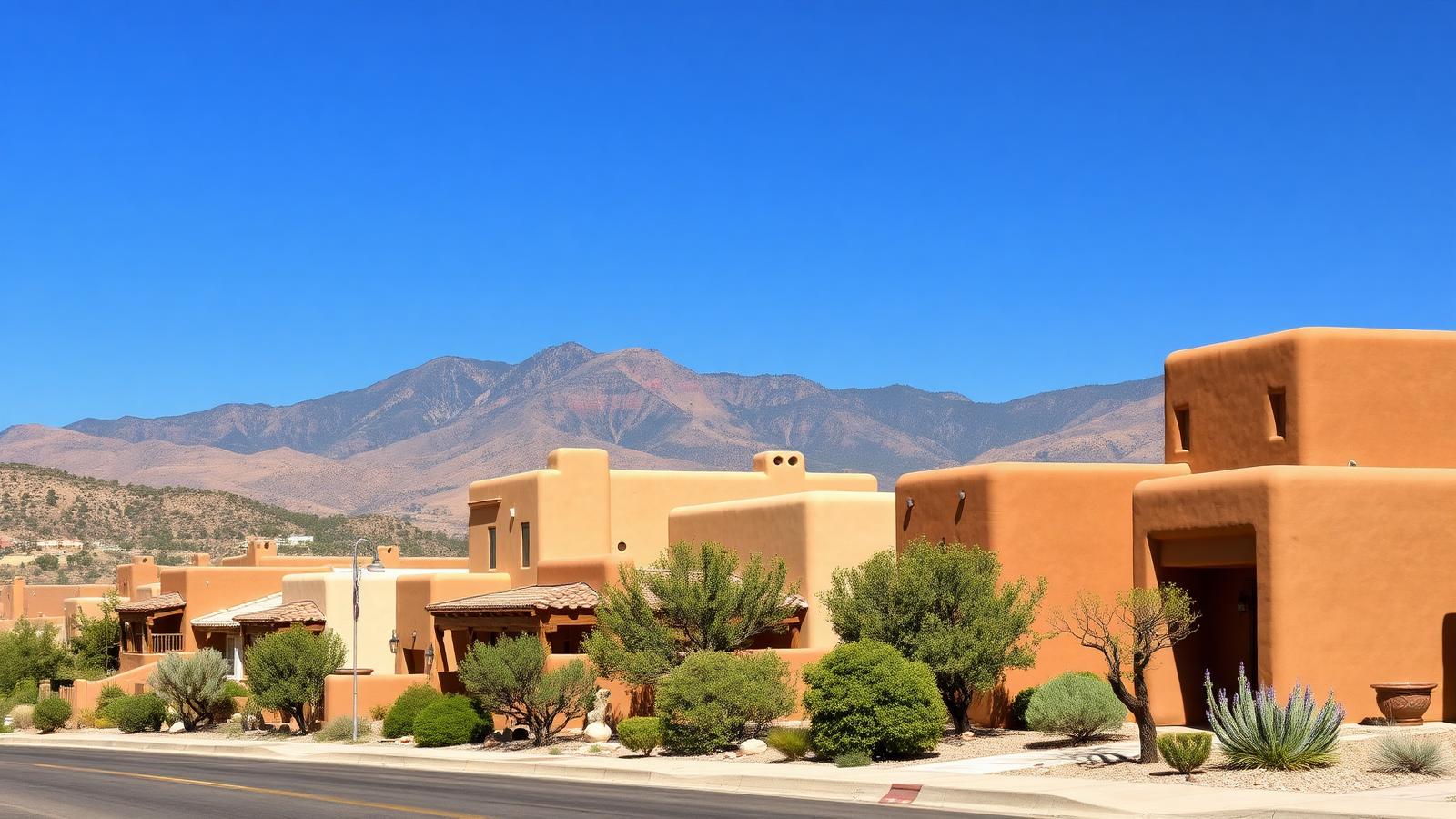
Las Cruces housing ranges from historic adobe and territorial-style homes in the Mesilla and downtown areas to large tracts of 1980s through 2020s subdivision construction spreading east and north of the city core. New construction remains active given the city's continued population growth.
The ACS median home value is $231,700, and the median annual real estate tax bill for owners is $1,571, both meaningfully below Albuquerque and far below Santa Fe or Los Alamos. This is the most affordable full-service market covered in this guide.
Because the city continues to grow, buyers should expect ongoing new-home competition on the outskirts alongside a resale market concentrated closer to the university and historic Mesilla.
Work and the local economy
New Mexico State University is the city's largest single employer, supporting thousands of faculty, staff, and student jobs and anchoring a research and agricultural extension presence tied to the surrounding Mesilla Valley farmland.
Government employment, healthcare through MountainView Regional Medical Center and Memorial Medical Center, and a growing logistics and manufacturing sector near the Santa Teresa border crossing round out the base. White Sands Missile Range, nearby, also draws defense-related employment into the area.
The private job market is real but concentrated in a handful of sectors. Households moving without portable income should research openings in these specific fields before committing.
Climate and setting
Las Cruces sits at roughly 3,900 feet in the Chihuahuan Desert along the Rio Grande. Summers are long and hot, with many days over 95 degrees, while winters are short and mild, with daytime highs commonly in the 50s and 60s and only occasional light snow.
Low humidity year round makes summer heat more tolerable than in humid climates, and clear skies are the norm for most of the year, which is part of the draw for retirees seeking a low-snow alternative to northern New Mexico.
The Organ Mountains rise directly east of the city, providing a dramatic backdrop and nearby hiking within the Organ Mountains-Desert Peaks National Monument, without adding significant weather variation to the valley floor.
Getting around, care, and schools
- Commercial air
- Las Cruces International Airport has minimal scheduled passenger service; El Paso International Airport, about 45 miles south, is the practical airport for most travel.
- Highways
- Interstate 10 east to west and Interstate 25 north to south meet at Las Cruces.
- Hospital
- MountainView Regional Medical Center and Memorial Medical Center.
- Public schools
- Las Cruces Public Schools.
- Higher education
- New Mexico State University.
- Elevation
- About 3,900 feet.
The trade-offs
- There is no significant local commercial airport; most air travel means driving to El Paso.
- Summer heat is intense and prolonged, with many days above 95 degrees.
- Specialty medical care beyond the two regional hospitals generally means a trip to El Paso or Albuquerque.
- The local economy leans heavily on the university, government, and border trade rather than a broad private sector.
Other New Mexico towns people compare
Santa Fe
New Mexico's capital and cultural center, at 7,000 feet, with strict architectural rules and the most expensive housing market in the state.
Albuquerque
New Mexico's largest city and only broad housing market, anchored by Kirtland Air Force Base, Sandia National Laboratories, and the state's main airport and hospitals.
Los Alamos
A national laboratory town on the Pajarito Plateau with the highest household incomes in New Mexico and very little housing inventory.
Rio Rancho
A fast-growing planned city on Albuquerque's west side, built largely since the 1990s, with its own school district and Intel's largest New Mexico plant.
Silver City
A small arts and university town near the Gila Wilderness at roughly 5,900 feet, with the lowest home prices in this guide and cool summers that draw retirees.
Statewide figures, tax detail, and the full New Mexico picture are on the New Mexico page. Compare property, income, and sales tax across all 49 destination states on Taxes, and see where Californians are actually moving on Stats.
Sources
- US Census Bureau, American Community Survey 2020 to 2024 5-Year Estimates, table B25077 (median home value), retrieved via Census Reporter, September 3, 2026.
- US Census Bureau, ACS 2020 to 2024 5-Year Estimates, table B25103 (median real estate taxes paid, owner-occupied units with a mortgage), retrieved September 3, 2026.
- US Census Bureau, ACS 2020 to 2024 5-Year Estimates, table B25088 (median selected monthly owner costs, owner-occupied units with a mortgage), retrieved September 3, 2026.
- US Census Bureau, ACS 2020 to 2024 5-Year Estimates, table B01003 (total population), retrieved September 3, 2026.
- GeoStat.org, Las Cruces, New Mexico home values and property tax data drawn from the American Community Survey, geostat.org.
- City of Las Cruces, About Las Cruces and Airport Master Plan, lascruces.gov.
- New Mexico State University, general enrollment and campus information, nmsu.edu.
See what your California equity buys in Las Cruces
Four short questions. We match you with one local agent and apply a closing cost credit funded from our referral fee.
Start your Las Cruces move
Four short questions. We use them to decide which agent fits your move, and to build your equity report.