
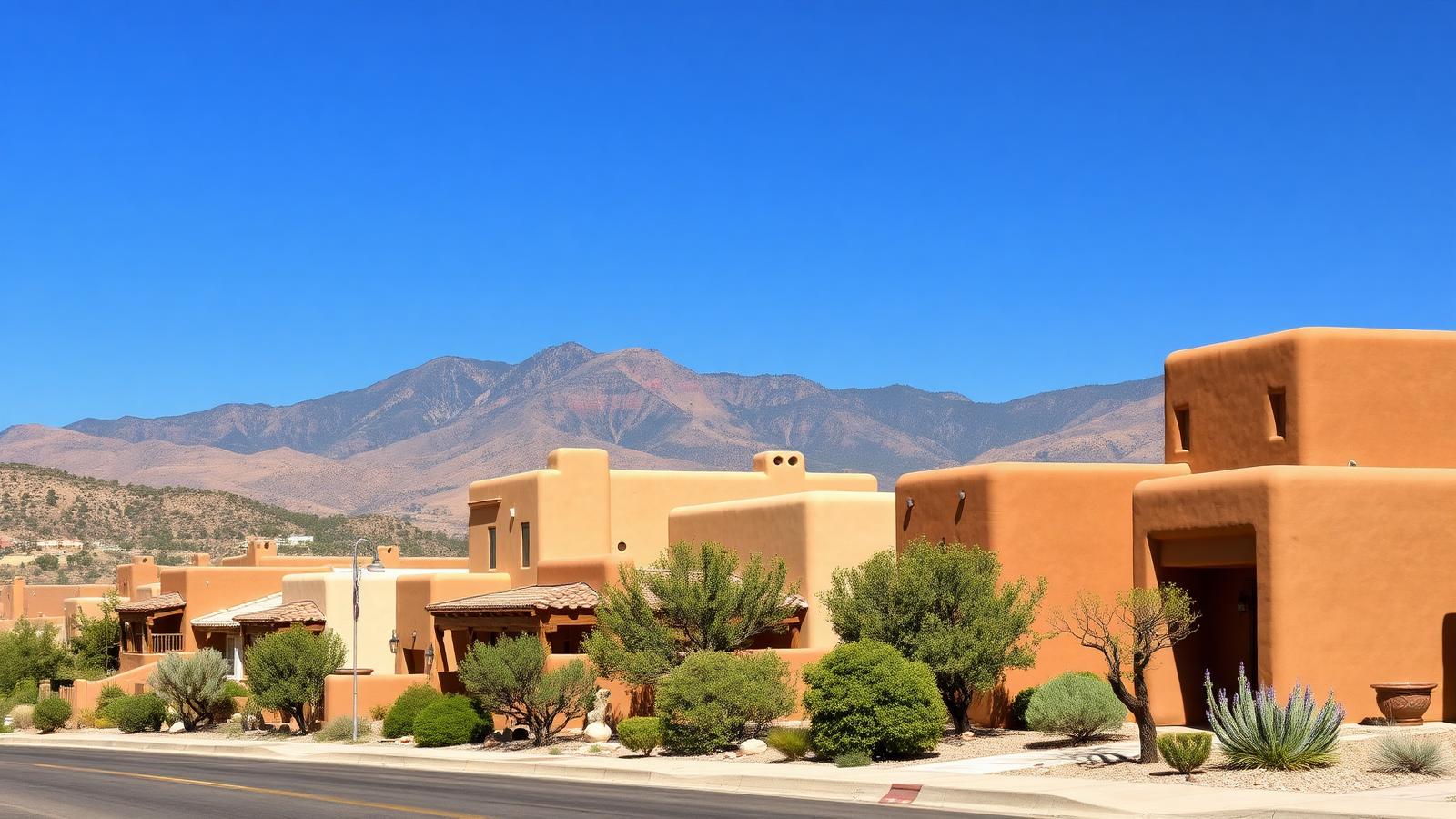
New Mexico city guide
Moving From California to Rio Rancho, NM
A fast-growing planned city on Albuquerque's west side, built largely since the 1990s, with its own school district and Intel's largest New Mexico plant.
Housing comparison
California versus Rio Rancho, side by side
- Median home value
- $725,800
- $310,200
- Median annual property tax
- $5,114
- $2,293
- Median monthly cost, owners with a mortgage
- $2,844
- not available
- Population
- 39.0 million (state)
- 112,518
Figures are US Census Bureau American Community Survey 2020 to 2024 5-Year Estimates for the city place. Property tax and monthly cost rows cover owner-occupied units with a mortgage, so they describe what current owners pay, not what a new buyer would pay at today's prices. California column is the statewide baseline used across this site.
Why Californians look at Rio Rancho
Rio Rancho grew from a planned subdivision in the 1960s into New Mexico's third largest city, sitting immediately northwest of Albuquerque across the Rio Grande in Sandoval County. Most of its housing was built from the 1990s onward, so the stock reads newer and more uniform than Albuquerque's older core.
The city functions as a bedroom community for Albuquerque's job market while also hosting its own major employer: Intel operates a large semiconductor manufacturing site here, one of the company's most significant facilities in the country. That single plant has an outsized effect on the local economy and on local anxiety whenever the chip industry cycles down.
For a California buyer, Rio Rancho offers newer construction, a separate school district from Albuquerque, and access to the broader Albuquerque metro's airport and hospitals, at a price between Albuquerque's citywide median and Santa Fe's premium.
Rio Rancho fits you if
- You want newer construction and a more suburban, planned layout than Albuquerque's older neighborhoods offer.
- You want a separate school district and city government from Albuquerque while staying inside the same metro.
- You or a household member works in semiconductor manufacturing or a related technical field.
- You want Albuquerque's airport, hospitals, and job market within a short commute.
Look elsewhere if
- You want walkable urban character or a historic downtown; Rio Rancho is a car-dependent suburban city.
- You are wary of single-employer risk; Intel's local hiring and layoff decisions ripple through the community.
- You want mature tree cover and older established neighborhoods rather than newer subdivisions.
- You need direct access to cultural institutions concentrated in central Albuquerque or Santa Fe.
Housing in Rio Rancho
Rio Rancho's housing stock is dominated by single-family subdivisions built from the 1990s through the present, with larger, newer homes concentrated in the northern and eastern parts of the city closer to the escarpment overlooking the Rio Grande valley.
The ACS median home value is $310,200, and the median annual real estate tax bill for owners is $2,293, both between Albuquerque's citywide figures and Santa Fe's premium. Because so much of the stock is newer, buyers should expect fewer of the deferred-maintenance issues common in older cities, but also less architectural variety.
Continued new-home construction on the city's edges means resale competes directly with builder inventory in some price bands, which can moderate price growth compared with supply-constrained markets.
Work and the local economy
Intel's Rio Rancho campus is the city's largest private employer and one of the largest employers in the state, drawing engineers, technicians, and operations staff. The company has gone through hiring cycles tied to the broader semiconductor industry, including periods of layoffs, so treat this as cyclical rather than guaranteed employment.
Presbyterian Rust Medical Center serves as the city's major hospital and healthcare employer, and Rio Rancho Public Schools, with roughly 17,000 students, is one of the larger employers as well.
Beyond Intel and healthcare, many residents commute into Albuquerque proper for work, effectively treating Rio Rancho as a residential extension of the larger metro's labor market.
Climate and setting
Rio Rancho shares Albuquerque's high desert climate, with hot, dry summers, cool nights, and short, mild winters with occasional snow. Its position on the West Mesa above the Rio Grande valley gives it slightly cooler summer evenings than the river valley floor.
Wind and blowing dust in spring affect Rio Rancho the same way they affect greater Albuquerque, and the escarpment areas overlooking the valley offer views but also more direct wind exposure.
Low humidity year round is consistent with the rest of the middle Rio Grande valley, and heating and cooling costs sit closer to Albuquerque's than to higher-elevation Santa Fe.
Getting around, care, and schools
- Commercial air
- Albuquerque International Sunport, roughly 20 miles away, serves as Rio Rancho's airport.
- Highways
- US 550 and NM 528 are the primary arterials connecting to Interstate 25 in Albuquerque.
- Hospital
- Presbyterian Rust Medical Center.
- Public schools
- Rio Rancho Public Schools, separate from Albuquerque Public Schools.
- Higher education
- University of New Mexico and Central New Mexico Community College, both a short drive in Albuquerque.
- Elevation
- About 5,300 to 5,700 feet.
The trade-offs
- A large share of high-skill local employment is tied to a single company, Intel, whose hiring cycles move with the global chip industry.
- The city is car-dependent, with few walkable commercial districts.
- Cultural and dining variety is thinner than central Albuquerque's; many residents drive in for both.
- Newer subdivisions mean less mature landscaping and shade than older Albuquerque or Santa Fe neighborhoods.
Other New Mexico towns people compare
Santa Fe
New Mexico's capital and cultural center, at 7,000 feet, with strict architectural rules and the most expensive housing market in the state.
Albuquerque
New Mexico's largest city and only broad housing market, anchored by Kirtland Air Force Base, Sandia National Laboratories, and the state's main airport and hospitals.
Los Alamos
A national laboratory town on the Pajarito Plateau with the highest household incomes in New Mexico and very little housing inventory.
Las Cruces
New Mexico's second largest city, home to New Mexico State University, with the lowest prices of any full-service market in this guide and mild winters.
Silver City
A small arts and university town near the Gila Wilderness at roughly 5,900 feet, with the lowest home prices in this guide and cool summers that draw retirees.
Statewide figures, tax detail, and the full New Mexico picture are on the New Mexico page. Compare property, income, and sales tax across all 49 destination states on Taxes, and see where Californians are actually moving on Stats.
Sources
- US Census Bureau, American Community Survey 2020 to 2024 5-Year Estimates, table B25077 (median home value), retrieved via Census Reporter, September 3, 2026.
- US Census Bureau, ACS 2020 to 2024 5-Year Estimates, table B25103 (median real estate taxes paid, owner-occupied units with a mortgage), retrieved September 3, 2026.
- US Census Bureau, ACS 2020 to 2024 5-Year Estimates, table B25088 (median selected monthly owner costs, owner-occupied units with a mortgage), retrieved September 3, 2026.
- US Census Bureau, ACS 2020 to 2024 5-Year Estimates, table B01003 (total population), retrieved September 3, 2026.
- GeoStat.org, Rio Rancho, New Mexico home values and property tax data drawn from the American Community Survey, geostat.org.
- Intel Corporation, Intel in New Mexico, intel.com.
- Presbyterian Rust Medical Center, phs.org.
See what your California equity buys in Rio Rancho
Four short questions. We match you with one local agent and apply a closing cost credit funded from our referral fee.
Start your Rio Rancho move
Four short questions. We use them to decide which agent fits your move, and to build your equity report.