
Nebraska city guide
Moving From California to Lincoln, NE
Nebraska's capital and second-largest city, built around state government and the University of Nebraska, with a walkable core and consistently low unemployment.
Housing comparison
California versus Lincoln, side by side
- Median home value
- $725,800
- $264,000
- Median annual property tax
- $5,114
- not available
- Median monthly cost, owners with a mortgage
- $2,844
- not available
- Population
- 39.0 million (state)
- 294,856
Figures are US Census Bureau American Community Survey 2020 to 2024 5-Year Estimates for the city place. Property tax and monthly cost rows cover owner-occupied units with a mortgage, so they describe what current owners pay, not what a new buyer would pay at today's prices. California column is the statewide baseline used across this site.
Why Californians look at Lincoln
Lincoln is the state capital and home to the University of Nebraska's flagship campus, which gives it a younger population, a genuinely walkable downtown around the Haymarket district, and an economy that leans on government and education rather than a single private industry.
The combination of state government payroll, the university, and an insurance and financial-services cluster gives Lincoln one of the steadiest local job markets in the state. It does not boom, but it also does not swing hard with commodity or energy cycles the way some Plains cities do.
For a California seller, the numbers are straightforward. The ACS median home value in Lincoln is a fraction of California's statewide figure, and the city is compact enough that most commutes run well under thirty minutes even with the drive-everywhere Plains layout.
Lincoln fits you if
- You want a walkable downtown, a university town's cultural life, and Husker football as a genuine community anchor.
- You value government and education employment stability over a boom-or-bust private sector.
- You want low unemployment and a manageable commute in a real city rather than a small town.
- You are bringing portable income and want an affordable, full-service state capital.
Look elsewhere if
- You need a large, diverse private-sector job market outside government, education, and insurance.
- You want coastal-style nightlife, dining variety, or a big-league professional sports scene.
- You dislike cold winters and humid summers.
- You need frequent long-haul nonstop flights; most travel routes through Omaha or connects through a hub.
Housing in Lincoln
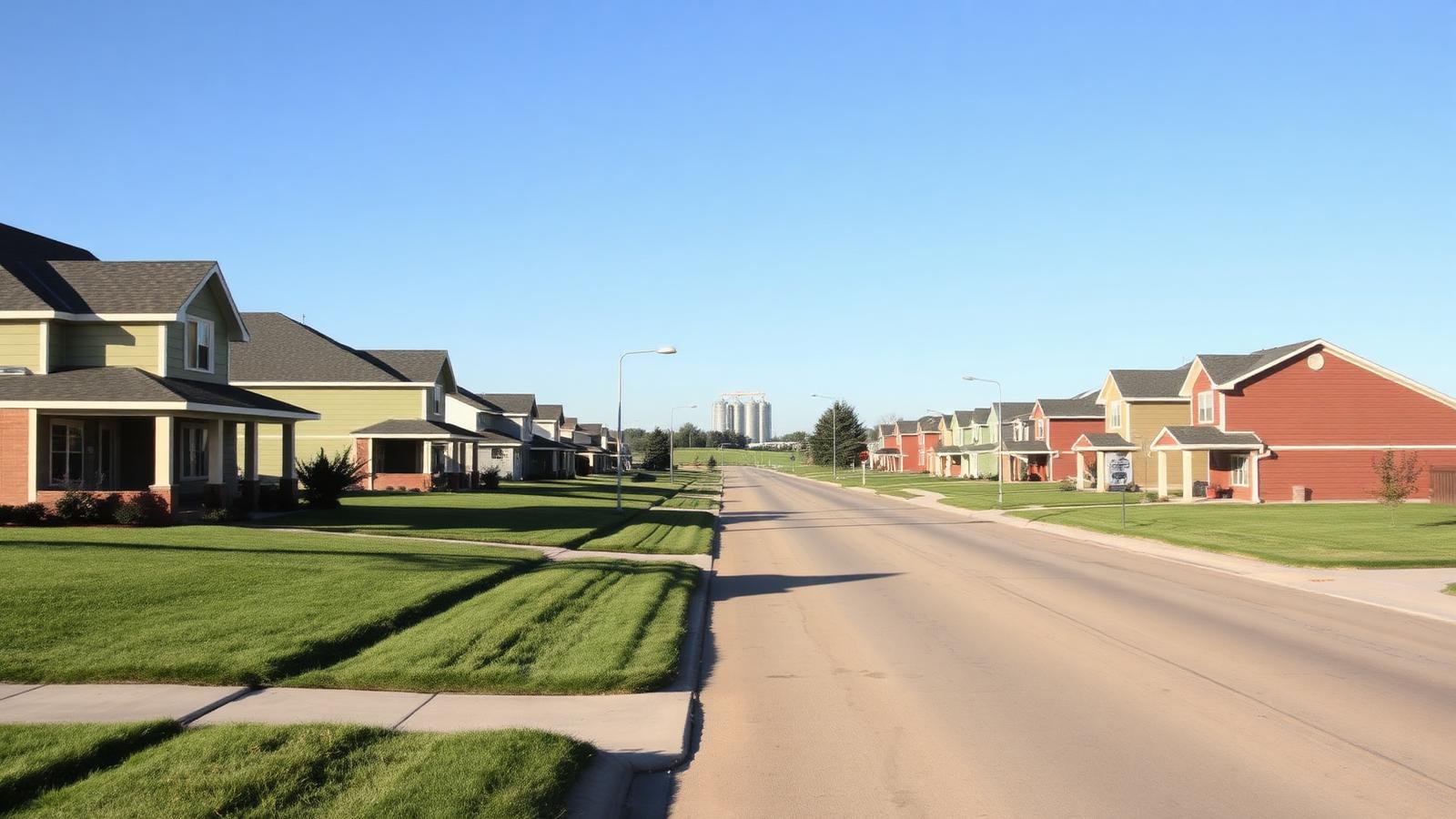
Lincoln's older core near the university and the Near South and Near South neighborhoods holds early twentieth-century homes on tree-lined streets, while the south and southeast sides carry newer subdivisions built over the last three decades. Growth continues to push toward the southeast and northwest edges of the city.
The ACS median home value is $264,000. As in the rest of Nebraska, property tax bills are a meaningful part of ownership cost and track assessed value directly, so budget for a real annual bill rather than assuming a California-style cap on increases.
Rental demand from the university's roughly 25,000 students supports a active rental market near campus, which can mean more turnover and student housing on blocks close to downtown. Neighborhoods farther out are dominated by owner-occupants.
Work and the local economy
State government, based in Lincoln as the capital, and the University of Nebraska-Lincoln are the two largest employment anchors, together accounting for a large share of local payroll. That combination gives the city unusual stability through national downturns.
Beyond those two, insurance and financial services have a long history in Lincoln, and the city has attracted some data-center and technology back-office investment in recent years. Agriculture-adjacent business, including seed and equipment companies, also has a presence given the surrounding farmland.
The trade-off is breadth. If your field is not government, higher education, insurance, or a related service industry, do real research before assuming Lincoln has a deep local market in it.
Climate and setting
Lincoln shares Nebraska's full four-season continental climate. Summers are warm and humid with July highs typically near 90, and severe thunderstorms with tornado risk are part of spring and early summer.
Winters bring sustained cold, with January highs often in the 30s and occasional stretches of subzero wind chill, along with periodic snow and ice. Wind is a near-constant feature of the open plains surrounding the city.
The city sits on gently rolling terrain along Salt Creek at a modest elevation, without the dramatic bluffs of Omaha but with mature tree cover in its older neighborhoods.
Getting around, care, and schools
- Commercial air
- Lincoln Airport (LNK) has limited scheduled service; most residents drive about 55 miles to Eppley Airfield in Omaha for broader nonstop options.
- Highways
- Interstate 80 runs along the north side of the city, with US 77 and Nebraska Highway 2 as principal arterials.
- Hospital
- Bryan Health and CHI Health St. Elizabeth operate the city's major hospital systems.
- Public schools
- Lincoln Public Schools, the state's second-largest district.
- Higher education
- University of Nebraska-Lincoln, Nebraska Wesleyan University, and Southeast Community College.
- Setting
- Rolling plains along Salt Creek at roughly 1,170 feet elevation.
The trade-offs
- The job market outside government, education, and insurance is comparatively narrow.
- Most long-haul air travel means driving to Omaha or connecting through a hub from Lincoln Airport.
- Property taxes track current value closely, with no California-style assessment cap.
- Winters are genuinely cold and spring severe weather, including tornado risk, is a real seasonal fact.
Other Nebraska towns people compare
Omaha
Nebraska's largest city and the deepest job market in the state, anchored by Berkshire Hathaway, Union Pacific, and a diversified Fortune 500 base.
Papillion
A southwest Omaha suburb in Sarpy County consistently cited among the best places to raise a family, with strong schools and a short commute into Omaha.
Elkhorn
A west Omaha growth corridor, formally annexed into the city of Omaha but retaining its own identity, ZIP code, and rapidly expanding schools.
Kearney
A central Nebraska hub city on Interstate 80, built around the University of Nebraska at Kearney and a regional hospital, with some of the lowest entry prices in the state.
Statewide figures, tax detail, and the full Nebraska picture are on the Nebraska page. Compare property, income, and sales tax across all 49 destination states on Taxes, and see where Californians are actually moving on Stats.
Sources
- US Census Bureau, American Community Survey 2020 to 2024 5-Year Estimates, table B25077 (median home value), retrieved via Census Reporter, September 3, 2026.
- US Census Bureau, ACS 2020 to 2024 5-Year Estimates, table B25103 (median real estate taxes paid, owner-occupied units with a mortgage), retrieved September 3, 2026.
- US Census Bureau, ACS 2020 to 2024 5-Year Estimates, table B25088 (median selected monthly owner costs, owner-occupied units with a mortgage), retrieved September 3, 2026.
- US Census Bureau, ACS 2020 to 2024 5-Year Estimates, table B01003 (total population), retrieved September 3, 2026.
- University of Nebraska-Lincoln enrollment and facts, unl.edu.
- Lincoln Airport service information, lincolnairport.com.
See what your California equity buys in Lincoln
Four short questions. We match you with one local agent and apply a closing cost credit funded from our referral fee.
Start your Lincoln move
Four short questions. We use them to decide which agent fits your move, and to build your equity report.