
Massachusetts city guide
Moving From California to Plymouth, MA
A large, spread-out coastal town best known for Plymouth Rock, offering bigger lots and lower prices than towns closer to Boston at the cost of a long commute.
Housing comparison
California versus Plymouth, side by side
- Median home value
- $725,800
- not available
- Median annual property tax
- $5,114
- not available
- Median monthly cost, owners with a mortgage
- $2,844
- not available
- Population
- 39.0 million (state)
- not available
Figures are US Census Bureau American Community Survey 2020 to 2024 5-Year Estimates for the city place. Property tax and monthly cost rows cover owner-occupied units with a mortgage, so they describe what current owners pay, not what a new buyer would pay at today's prices. California column is the statewide baseline used across this site.
Why Californians look at Plymouth
Plymouth is geographically the largest town in Massachusetts by land area, stretching from a historic waterfront downtown built around Plymouth Rock and the Mayflower story out through pine barrens, cranberry bogs, and beach neighborhoods along Cape Cod Bay. That size means lot sizes and price per square foot look more like a rural or exurban market than a dense Massachusetts town.
It sits about 40 miles southeast of Boston, which is close enough for an occasional trip but too far for most people to consider a daily Red Line-adjacent commute. MBTA commuter rail does reach Plymouth, but the trip into Boston is long, and most residents who work in Boston accept a substantial daily commitment or work remotely instead.
For a California buyer who wants coastal New England without eastern Massachusetts's density and price intensity, Plymouth offers real space and water access, with the trade-off being distance from the region's job center.
Plymouth fits you if
- You want larger lots and more space than a typical eastern Massachusetts town offers.
- You want coastal access, beaches, and a historic downtown without Cape Cod's peak-season crowding.
- You are retired or working remotely and do not need a daily Boston commute.
- You want lower prices than towns closer to Boston, even if it means a longer trip in.
Look elsewhere if
- You need a daily Boston commute. It is a long trip by any mode.
- You want a compact, walkable town center as your everyday setting rather than a spread-out one.
- You want a deep local job market outside tourism, healthcare, and services.
- You dislike seasonal tourist traffic; downtown Plymouth gets busy with visitors in summer and around Thanksgiving.
Housing in Plymouth
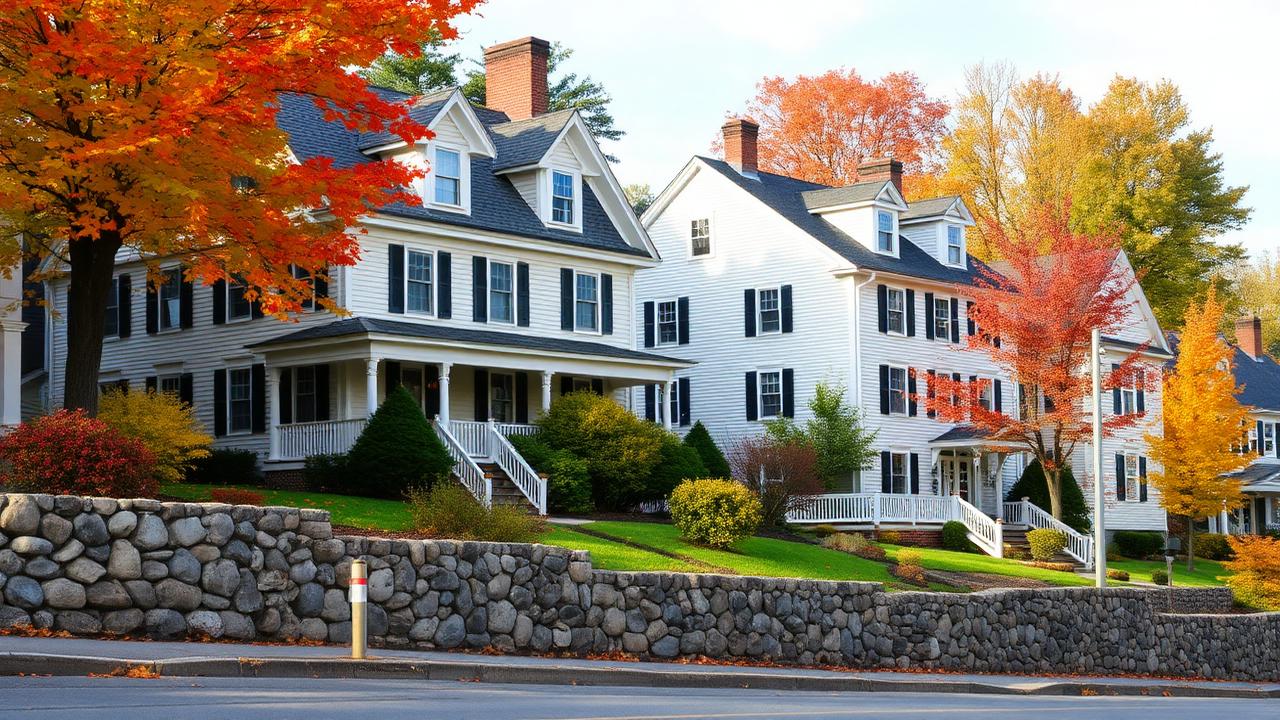
Plymouth's housing stock ranges from historic homes near the waterfront downtown, to mid-century ranch and colonial neighborhoods inland, to newer construction in developments carved out of former pine barrens and cranberry land, plus a substantial number of seasonal and year-round cottages along the shoreline villages.
Because the town is so large, prices and character vary enormously by village: downtown Plymouth, the White Horse Beach and Manomet shoreline areas, and inland neighborhoods near the Pine Hills each function almost like separate small towns.
Property tax rates are set locally and Plymouth's are generally moderate relative to towns closer to Boston, part of the appeal for buyers trading commute time for more space and a lower overall cost of ownership.
Work and the local economy
Tourism tied to the town's Pilgrim history and waterfront is a significant part of the local economy, along with healthcare through Beth Israel Deaconess Hospital-Plymouth and a growing base of retail and services supporting the town's large year-round and seasonal population.
The Pilgrim Nuclear Power Station, once a major local employer, completed decommissioning in recent years, removing a source of well-paying industrial jobs that the town had relied on for decades, a genuine local economic transition worth knowing about.
Most residents with professional careers commute out of town, toward Boston, the South Shore, or Cape Cod, and a portable or remote income is the practical way to enjoy Plymouth's space and setting without depending on the local job market.
Climate and setting
Plymouth sits on Cape Cod Bay, giving its shoreline villages a maritime climate that moderates summer heat and winter cold somewhat compared to inland Massachusetts, though the effect is smaller than on the Cape itself.
Winters bring regular snow and occasional coastal nor'easters, with shoreline homes exposed to storm surge and beach erosion in the more exposed villages like White Horse Beach.
Summers are the town's high season, with warm days, cooler ocean-moderated evenings, and heavy tourist traffic downtown and on the roads leading to the beaches.
Getting around, care, and schools
- Commercial air
- Boston Logan International, about 45 miles north, is the practical airport for most trips.
- Highways
- Route 3 is the main corridor connecting Plymouth to Boston and to Cape Cod via the Sagamore Bridge.
- Hospital
- Beth Israel Deaconess Hospital-Plymouth.
- Public schools
- Plymouth Public Schools.
- Higher education
- No four-year university is based in Plymouth; Bridgewater State University is roughly 20 minutes away.
- Rail to Boston
- MBTA commuter rail serves Plymouth, though the trip to Boston is long relative to closer suburbs.
The trade-offs
- The Boston commute is long by any mode and is the central trade-off of living here.
- The town's large size means services, schools, and character vary significantly by village.
- The local economy lost a major employer with the closure of the Pilgrim nuclear plant.
- Shoreline neighborhoods carry real storm and erosion exposure.
Other Massachusetts towns people compare
Worcester
The state's second largest city, an hour west of Boston by highway or commuter rail, with a growing hospital and biotech sector and prices well under the eastern Massachusetts market.
Northampton
A Pioneer Valley college city built around Smith College, walkable and culturally active, well west of Boston and priced far below the eastern part of the state.
Newburyport
A restored seaport downtown on the Merrimack River, about 40 miles north of Boston with direct commuter rail, popular with out-of-state buyers and priced accordingly.
Quincy
A dense city on Boston's southern edge with its own MBTA Red Line stations, offering Boston access at a discount to the city itself, still a real premium by national standards.
Amherst
Home to UMass Amherst and Amherst College, a Five College town with a stable rental market and a rural western Massachusetts setting, well removed from Boston.
Statewide figures, tax detail, and the full Massachusetts picture are on the Massachusetts page. Compare property, income, and sales tax across all 49 destination states on Taxes, and see where Californians are actually moving on Stats.
Sources
- US Census Bureau, American Community Survey 2020 to 2024 5-Year Estimates, table B25077 (median home value), retrieved via Census Reporter, September 3, 2026.
- US Census Bureau, ACS 2020 to 2024 5-Year Estimates, table B25103 (median real estate taxes paid, owner-occupied units with a mortgage), retrieved September 3, 2026.
- US Census Bureau, ACS 2020 to 2024 5-Year Estimates, table B25088 (median selected monthly owner costs, owner-occupied units with a mortgage), retrieved September 3, 2026.
- US Census Bureau, ACS 2020 to 2024 5-Year Estimates, table B01003 (total population), retrieved September 3, 2026.
- US Census Bureau QuickFacts, Plymouth town, Plymouth County, Massachusetts, census.gov.
- Beth Israel Deaconess Hospital-Plymouth information, bidplymouth.org.
See what your California equity buys in Plymouth
Four short questions. We match you with one local agent and apply a closing cost credit funded from our referral fee.
Start your Plymouth move
Four short questions. We use them to decide which agent fits your move, and to build your equity report.