
Ohio city guide
Moving From California to Rocky River, OH
A lakefront Cleveland suburb with mature housing stock, a short commute into downtown, and Lake Erie at its doorstep.
Housing comparison
California versus Rocky River, side by side
- Median home value
- $725,800
- not available
- Median annual property tax
- $5,114
- not available
- Median monthly cost, owners with a mortgage
- $2,844
- not available
- Population
- 39.0 million (state)
- 21,490
Figures are US Census Bureau American Community Survey 2020 to 2024 5-Year Estimates for the city place. Property tax and monthly cost rows cover owner-occupied units with a mortgage, so they describe what current owners pay, not what a new buyer would pay at today's prices. California column is the statewide baseline used across this site.
Why Californians look at Rocky River
Rocky River sits on Lake Erie just west of Cleveland, at the mouth of the river it is named for, and it has functioned as one of Cleveland's premier west-side suburbs for most of the twentieth century. Its housing stock, its schools, and its small, walkable downtown along Detroit Road all reflect that long history rather than recent suburban growth.
The city's biggest asset for a relocating family is location: Rocky River is roughly 15 minutes from downtown Cleveland, sits on the lake with its own Metroparks reservation, and has a settled, low-turnover housing market rather than a fast-growing one.
Compared with the Columbus suburbs on this list, Rocky River is smaller, older, and more built out, with far less new construction and a housing market defined by resale of homes that were often built between the 1920s and 1960s.
Rocky River fits you if
- You want a short commute into downtown Cleveland with lake access built into daily life.
- You prefer a settled, established suburb over a fast-growing one.
- You want strong public schools in a smaller, tight-knit community.
- You value proximity to Cleveland's hospital systems, museums, and cultural institutions without living downtown.
Look elsewhere if
- You want new construction; Rocky River's housing stock is overwhelmingly older and resale-driven.
- You are drawn to Ohio for warm weather; Cleveland's lake-effect winters are among the more demanding in the state.
- You need frequent long-haul nonstop flights; Cleveland Hopkins has fewer direct options than it once did.
- You want the lowest possible price point; Rocky River carries a premium over many other Cleveland-area suburbs.
Housing in Rocky River
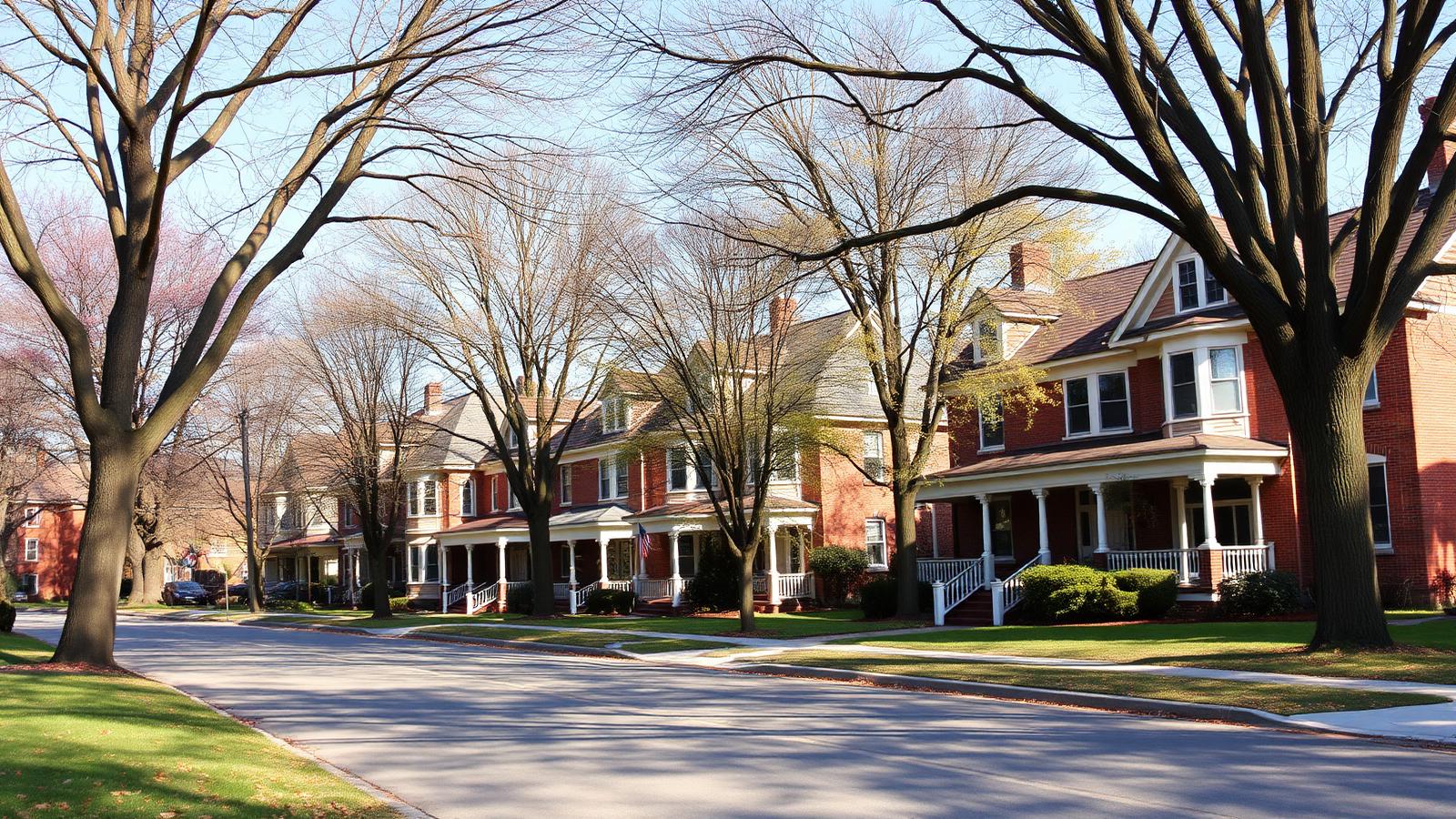
Rocky River's housing stock is dominated by homes built from the 1920s through the 1960s, colonials, Tudors, and mid-century ranches, on established, tree-lined streets close to the lake and the river. Turnover is relatively low because many owners stay long term.
The city is fully built out, so new construction is limited to occasional infill and teardown-rebuilds rather than subdivision development, which keeps the housing character consistent but also limits the newest-home options for buyers who want them.
As with the rest of Ohio, property tax bills track current assessed value with no cap tied to purchase price, and Cuyahoga County's tax rates, along with local school levies, are worth checking directly against the specific parcel before buying.
Work and the local economy
Rocky River itself is primarily residential, but its location inside Greater Cleveland puts residents within a short commute of the Cleveland Clinic and University Hospitals health systems, downtown Cleveland's financial and legal sector, and the broader manufacturing and logistics base along the lake.
Cleveland's economy has diversified over recent decades away from heavy manufacturing toward healthcare, biotech, and financial and insurance services, and Rocky River's west-side location is a reasonable commute to most of those job centers.
As with any Cleveland suburb, a household relocating without a job lined up should expect the local market to be smaller and slower-growing than a major California metro, and should weigh that against the lower cost of living.
Climate and lake effect
Rocky River sits directly on Lake Erie, which moderates summer heat somewhat but drives significant lake-effect snow in winter, particularly from November through January when cold air crosses the relatively warm lake.
Summers are warm and humid, with July highs typically in the low 80s, while winters are cold and gray, with lake-effect cloud cover common even on days without snow.
Spring on the lake can be windy and slow to warm, and residents commonly note that Rocky River's spring lags a few weeks behind areas farther from the shoreline, while fall lingers a bit longer for the same reason.
Getting around, care, and schools
- Commercial air
- Cleveland Hopkins International Airport (CLE) is about 20 minutes away with a range of domestic nonstops.
- Highways
- Interstate 90 and State Route 2 both run along the lakefront through the area.
- Hospital
- Cleveland Clinic Fairview Hospital is adjacent in nearby Fairview Park.
- Public schools
- Rocky River City School District.
- Higher education
- Baldwin Wallace University and Cleveland's cluster of universities are within a short drive.
- Setting
- On Lake Erie at the mouth of the Rocky River, roughly 10 to 15 miles west of downtown Cleveland.
The trade-offs
- Lake-effect snow is a real winter feature here, heavier at times than inland Columbus or Cincinnati.
- Housing stock is old and mostly resale, so buyers should budget for updates to systems and roofs on homes built decades ago.
- Cleveland's job market has diversified but remains smaller and slower-growing than a major coastal metro.
- Long-haul nonstop flight options from Cleveland Hopkins are more limited than from a hub airport.
Other Ohio towns people compare
Dublin
A Columbus suburb built around corporate headquarters and top-rated schools, with the highest home prices among Columbus-area suburbs but still a fraction of California's.
Cincinnati
A major Ohio River city with a deep corporate employment base, distinctive nineteenth century neighborhoods, and the lowest big-city housing costs on this list.
Westerville
A walkable historic downtown north of Columbus that draws relocating families for its schools and its Uptown district, at prices below Dublin's.
Powell
A newer, fast-growing suburb north of Columbus for buyers who want recent construction rather than a century-old house.
Statewide figures, tax detail, and the full Ohio picture are on the Ohio page. Compare property, income, and sales tax across all 49 destination states on Taxes, and see where Californians are actually moving on Stats.
Sources
- US Census Bureau, American Community Survey 2020 to 2024 5-Year Estimates, table B25077 (median home value), retrieved via Census Reporter, September 3, 2026.
- US Census Bureau, ACS 2020 to 2024 5-Year Estimates, table B25103 (median real estate taxes paid, owner-occupied units with a mortgage), retrieved September 3, 2026.
- US Census Bureau, ACS 2020 to 2024 5-Year Estimates, table B25088 (median selected monthly owner costs, owner-occupied units with a mortgage), retrieved September 3, 2026.
- US Census Bureau, ACS 2020 to 2024 5-Year Estimates, table B01003 (total population), retrieved September 3, 2026.
- Census Reporter, Rocky River city, Cuyahoga County, OH profile, censusreporter.org.
- Cleveland Clinic Fairview Hospital, my.clevelandclinic.org.
See what your California equity buys in Rocky River
Four short questions. We match you with one local agent and apply a closing cost credit funded from our referral fee.
Start your Rocky River move
Four short questions. We use them to decide which agent fits your move, and to build your equity report.