
Hawaii city guide
Moving From California to Waimea, Hawaii Island, HI
An upcountry ranch town at roughly 2,670 feet, cooler and greener than the coast, built around Parker Ranch, a regional hospital, and the Mauna Kea observatories.
Housing comparison
California versus Waimea, Hawaii Island, side by side
- Median home value
- $725,800
- $677,400
- Median annual property tax
- $5,114
- $1,638
- Median monthly cost, owners with a mortgage
- $2,844
- $2,382
- Population
- 39.0 million (state)
- 9,286
Figures are US Census Bureau American Community Survey 2020 to 2024 5-Year Estimates for the city place. Property tax and monthly cost rows cover owner-occupied units with a mortgage, so they describe what current owners pay, not what a new buyer would pay at today's prices. California column is the statewide baseline used across this site.
Why Californians look at Waimea, Hawaii Island
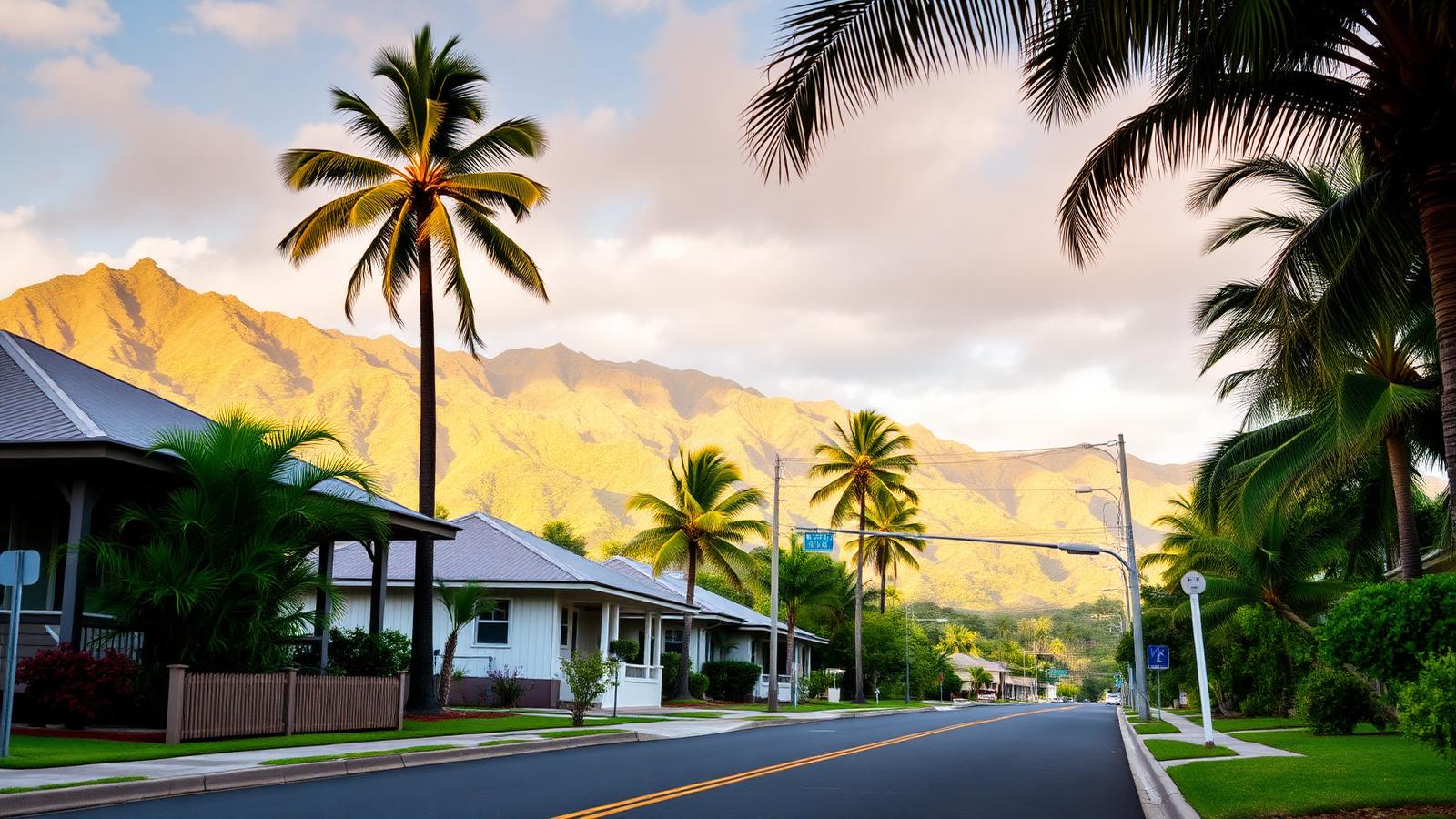
Waimea, also called Kamuela on the postal system to avoid confusion with the Waimea towns on Kauai and Oahu, sits in an upland valley between Mauna Kea and the Kohala mountains at roughly 2,670 feet. The elevation changes everything: pastures instead of palm trees, cool mornings, and a climate closer to inland Central California than to tropical Hawaii.
The town grew up around Parker Ranch, one of the largest historic cattle ranches in the country, and that paniolo, or Hawaiian cowboy, heritage is still visible in the working ranchland around town. Waimea is also the base for many workers and scientists connected to the Mauna Kea Observatories and to Queen's North Hawaii Community Hospital.
For a California buyer, Waimea offers a genuinely different Hawaii, cooler, greener, and quieter than the beach towns, with a smaller but real local economy and prices below Oahu or Maui's coastal markets.
Waimea, Hawaii Island fits you if
- You want Hawaii's climate variety more than its beaches; cool, green upcountry living appeals to you.
- You have a professional tie to the Mauna Kea Observatories, Parker Ranch, or Queen's North Hawaii Community Hospital.
- You want a small town with a real Main Street rather than a resort strip or condo corridor.
- You are comfortable driving 40 minutes to an hour to reach a beach, a larger airport, or bigger-box shopping.
Look elsewhere if
- You moved to Hawaii specifically for beach access at your doorstep. Waimea is inland and up in elevation.
- You need a large local job market outside ranching, science, healthcare, and tourism support.
- You dislike cool, damp mornings and fog. Waimea's upcountry weather can feel more like Northern California than a tropical island.
- You need major commercial air service nearby. The town relies on smaller regional airports or a drive to Kona or Hilo.
Housing in Waimea
Waimea's housing mixes older plantation and ranch-era homes near the town center with newer subdivisions on its outskirts, many built on larger lots reflecting the town's rural surroundings. Horse property and small acreage parcels are more common here than almost anywhere else on this site.
The ACS median home value is $677,400, the median monthly owner cost for a mortgaged home is $2,382, and the median annual property tax for a mortgaged home is $1,638. Those figures sit below Oahu and Maui prices while still requiring meaningful California-scale equity.
Because Waimea is a genuine small town rather than a resort market, inventory turns more slowly and there is less speculative or vacation-driven demand than in coastal Hawaii Island towns, which can mean more room to negotiate.
Work and the local economy
Parker Ranch remains a significant local landholder and employer, and ranching and agriculture-support businesses form part of the town's identity and payroll. Queen's North Hawaii Community Hospital is a major employer and the primary source of acute care for the surrounding upcountry and coastal areas.
The Mauna Kea Observatories, headquartered administratively in Waimea and Hilo with the telescopes themselves atop the mountain, employ scientists, engineers, and support staff who often live in Waimea for its proximity and cooler climate.
Beyond those anchors, the town runs on small retail, restaurants, schools, and services for the surrounding ranch and rural community. It is not a place to arrive without a plan for income; the local private-sector job market outside those anchor institutions is narrow.
Climate at 2,670 feet
Waimea sits at roughly 2,670 feet in a saddle between Mauna Kea and the Kohala mountains, which gives it noticeably cooler temperatures than coastal Hawaii Island. State climate records put Waimea's coolest month averaging in the low 60s and its warmest month in the high 70s, a much narrower and cooler range than Kona or Hilo.
Fog and low cloud are common in the mornings and evenings, and the town gets meaningfully more rain than the dry Kona coast a short drive downhill, though far less than wet Hilo on the windward side.
The result is green pastureland rather than tropical beach scenery, and a climate some transplants find refreshingly familiar and others find surprisingly cool and damp for Hawaii.
Getting around, care, and schools
- Commercial air
- Waimea-Kohala Airport (MUE) has limited service. Ellison Onizuka Kona International Airport, about 40 minutes away, is the practical airport for most travel.
- Highways
- Highway 19 and Highway 190 connect Waimea to Kona, Hilo, and the Kohala coast.
- Hospital
- Queen's North Hawaii Community Hospital, the main acute-care hospital for upcountry Hawaii Island.
- Public schools
- Hawaii Department of Education, Waimea complex area schools.
- Higher education
- Hawaii Community College's Palamanui campus is near Kailua-Kona, about 40 minutes away.
- Elevation
- Approximately 2,670 feet in an upland saddle between Mauna Kea and Kohala.
The trade-offs
- Beach access requires a real drive downhill to the Kohala coast or Kona.
- Commercial air options are thin locally; plan on Kona or Hilo for most flights.
- The local job market outside ranching, the observatories, and the hospital is narrow.
- Weather is cooler, foggier, and damper than the tropical image most people have of Hawaii.
Other Hawaii towns people compare
Kailua, Oahu
A windward Oahu beach town with the state's highest home prices outside resort areas, built around Marine Corps Base Hawaii and a regional hospital.
Mililani
A planned central Oahu community on a cooler plateau, the closest layout on the island to a mainland suburban subdivision.
Kihei, Maui
Maui's driest, sunniest shore, with the island's deepest condo inventory and the clearest local rules on short-term rentals.
Hilo
The most affordable real town in Hawaii, a genuine working city with a university and a regional hospital, and the rainfall that keeps prices down.
Lihue, Kauai
Kauai's county seat and practical base, near the island's only major airport and its main hospital, rather than a resort address.
Statewide figures, tax detail, and the full Hawaii picture are on the Hawaii page. Compare property, income, and sales tax across all 49 destination states on Taxes, and see where Californians are actually moving on Stats.
Sources
- US Census Bureau, American Community Survey 2020 to 2024 5-Year Estimates, table B25077 (median home value), retrieved via Census Reporter, September 3, 2026.
- US Census Bureau, ACS 2020 to 2024 5-Year Estimates, table B25103 (median real estate taxes paid, owner-occupied units with a mortgage), retrieved September 3, 2026.
- US Census Bureau, ACS 2020 to 2024 5-Year Estimates, table B25088 (median selected monthly owner costs, owner-occupied units with a mortgage), retrieved September 3, 2026.
- US Census Bureau, ACS 2020 to 2024 5-Year Estimates, table B01003 (total population), retrieved September 3, 2026.
- Hawaii State Department of Business, Economic Development and Tourism, Table 5.46, Temperatures and Precipitation for Selected Places, files.hawaii.gov.
- Queen's North Hawaii Community Hospital, queens.org.
See what your California equity buys in Waimea, Hawaii Island
Four short questions. We match you with one local agent and apply a closing cost credit funded from our referral fee.
Start your Waimea, Hawaii Island move
Four short questions. We use them to decide which agent fits your move, and to build your equity report.