
Virginia city guide
Moving From California to Williamsburg, VA
A small, retiree-heavy historic city built around Colonial Williamsburg and the College of William and Mary, with steady demand from out-of-state buyers.
Housing comparison
California versus Williamsburg, side by side
- Median home value
- $725,800
- $428,100
- Median annual property tax
- $5,114
- not available
- Median monthly cost, owners with a mortgage
- $2,844
- not available
- Population
- 39.0 million (state)
- 15,798
Figures are US Census Bureau American Community Survey 2020 to 2024 5-Year Estimates for the city place. Property tax and monthly cost rows cover owner-occupied units with a mortgage, so they describe what current owners pay, not what a new buyer would pay at today's prices. California column is the statewide baseline used across this site.
Why Californians look at Williamsburg
Williamsburg is a small, walkable historic city on the Virginia Peninsula, built around Colonial Williamsburg's restored historic area and the College of William and Mary. It draws a steady stream of tourists and a large population of retirees who move here specifically for the historic district, the college town amenities, and the golf and gated communities in the surrounding area.
The city itself is tiny, but it functions as the hub of a much larger area that includes James City County and York County, where most residential growth and retiree communities are actually located. Someone moving to "Williamsburg" is often really moving to one of these surrounding communities rather than the compact historic city.
For a California retiree or remote worker, Williamsburg offers a walkable historic core, cultural programming tied to the college and Colonial Williamsburg, and prices well below the California coast, with steady demand from other out-of-state buyers making the same move.
Williamsburg fits you if
- You are retiring and want a walkable historic district, golf communities, and cultural programming nearby.
- You want college-town amenities from the College of William and Mary without a large city's scale.
- You value steady demand and resale liquidity driven by consistent out-of-state retiree interest.
- You want coastal Virginia access, with Virginia Beach and the Chesapeake Bay within an hour's drive.
Look elsewhere if
- You need a broad local job market. Williamsburg's economy leans heavily on tourism and the college.
- You want a lower-cost option. Williamsburg carries a price premium over Richmond or Roanoke tied to its tourism draw and retiree demand.
- You need a large hospital system in town. Williamsburg relies on a smaller regional hospital and Peninsula-area facilities for specialty care.
- You want a young, diverse population. The city and surrounding retiree communities skew notably older.
Housing in Williamsburg
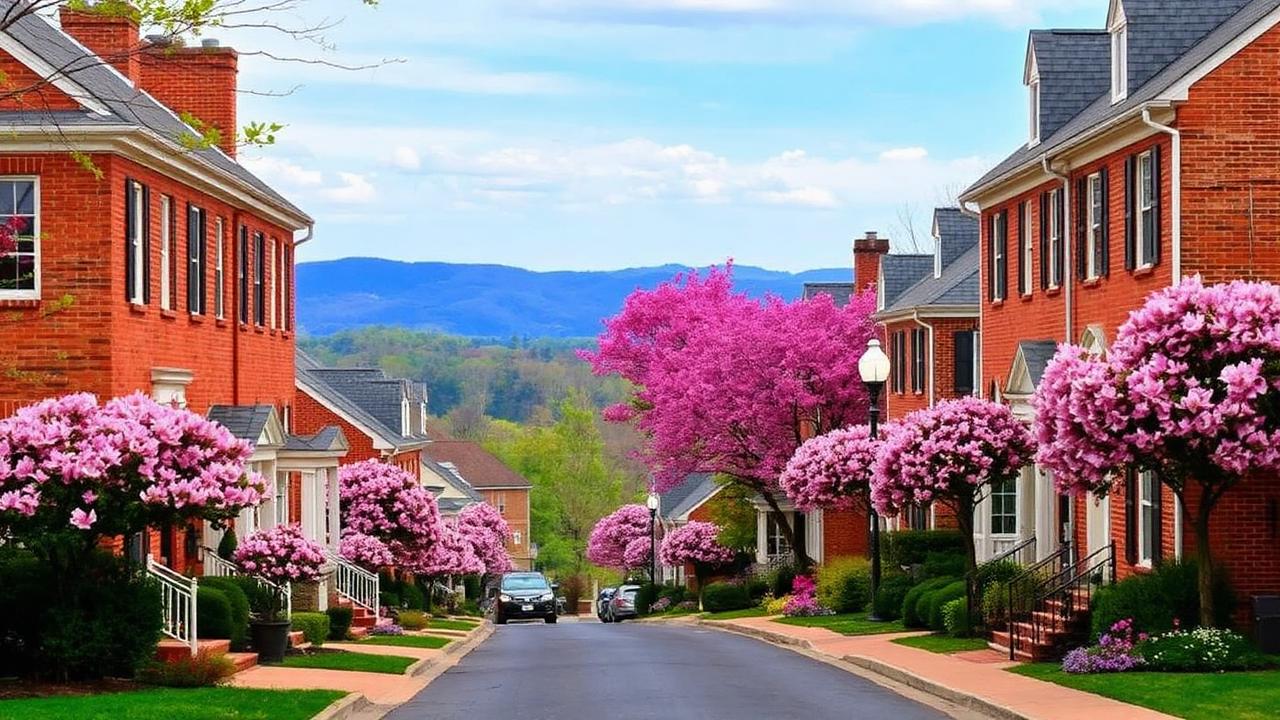
The compact historic city has a mix of college-adjacent housing and reproduction colonial-style homes near the restored historic area, while most of the broader area's housing, including large retiree and golf communities, sits in surrounding James City and York counties.
The ACS median home value for the city is $428,100, reflecting the small city's tourism and retiree draw rather than a broader regional average. Homes in the surrounding counties can be less expensive depending on the community and amenities included.
Because so much of the housing stock here is aimed at retirees and second-home buyers, buyers should expect a market shaped by HOA-governed communities and age-restricted developments alongside the historic core.
Work and the local economy
Tourism tied to Colonial Williamsburg, Busch Gardens, and the broader Historic Triangle is the dominant local industry, supporting hospitality, retail, and food service jobs, many of them seasonal.
The College of William and Mary is the other major anchor, providing education and research jobs and drawing a younger population that offsets some of the area's retiree skew.
Beyond tourism and the college, healthcare and retail serving the area's large retiree population round out local employment. A household relying on local wage income should research their field carefully, since the job market here is narrower than in Richmond or Hampton Roads generally.
Climate and setting
Williamsburg has a humid subtropical climate similar to the rest of coastal Virginia, with hot, humid summers and mild winters that occasionally bring snow or ice.
Its inland position on the Peninsula, between the James and York rivers, gives it slightly less direct hurricane exposure than the oceanfront in Virginia Beach, though tropical storm rainfall and wind still reach the area regularly.
The historic district and surrounding forested land give the area a leafy, low-density feel that many retirees find appealing after leaving denser markets.
Getting around, care, and schools
- Commercial air
- Newport News/Williamsburg International Airport (PHF) offers limited direct service; Norfolk International and Richmond International are alternatives within an hour's drive.
- Highways
- Interstate 64 runs through the area, connecting Richmond to Hampton Roads.
- Hospital
- Sentara Williamsburg Regional Medical Center serves the immediate area.
- Public schools
- Williamsburg-James City County Public Schools.
- Higher education
- College of William and Mary.
- Setting
- Small historic city on the Virginia Peninsula, between the James and York rivers.
The trade-offs
- The local job market leans heavily on tourism and the college; wage-earning newcomers should research their specific field.
- Prices carry a premium over Richmond or Roanoke tied to tourism and retiree demand.
- Specialty medical care beyond the regional hospital typically means a drive to Norfolk or Richmond.
- The population, both in the city and in many surrounding communities, skews notably older than the state average.
Other Virginia towns people compare
Richmond
Virginia's capital, a real city with historic neighborhoods, a growing finance and government job base, and the best housing value of any Virginia metro.
Charlottesville
A university town anchored by the University of Virginia, surrounded by wine country and the Blue Ridge, and the most desirable small city in the state.
Roanoke
The largest city in southwest Virginia, built around the Blue Ridge and a regional healthcare and logistics economy, at Appalachian prices.
Virginia Beach
Virginia's largest city, a coastal community built around a major military presence, oceanfront tourism, and a broad regional job base.
Fredericksburg
A historic small city halfway between Washington, D.C. and Richmond, with VRE commuter rail access and lower prices than the inner Northern Virginia suburbs.
Statewide figures, tax detail, and the full Virginia picture are on the Virginia page. Compare property, income, and sales tax across all 49 destination states on Taxes, and see where Californians are actually moving on Stats.
Sources
- US Census Bureau, American Community Survey 2020 to 2024 5-Year Estimates, table B25077 (median home value), retrieved via Census Reporter, September 3, 2026.
- US Census Bureau, ACS 2020 to 2024 5-Year Estimates, table B25103 (median real estate taxes paid, owner-occupied units with a mortgage), retrieved September 3, 2026.
- US Census Bureau, ACS 2020 to 2024 5-Year Estimates, table B25088 (median selected monthly owner costs, owner-occupied units with a mortgage), retrieved September 3, 2026.
- US Census Bureau, ACS 2020 to 2024 5-Year Estimates, table B01003 (total population), retrieved September 3, 2026.
- Data USA, Williamsburg city, VA profile, datausa.io.
- Colonial Williamsburg Foundation visitor and community information, colonialwilliamsburg.org.
See what your California equity buys in Williamsburg
Four short questions. We match you with one local agent and apply a closing cost credit funded from our referral fee.
Start your Williamsburg move
Four short questions. We use them to decide which agent fits your move, and to build your equity report.