
Colorado city guide
Moving From California to Fort Collins, CO
A university town at the north end of the Front Range, built around Colorado State University, with the strongest walkability and mountain access combination among the state's larger cities.
Housing comparison
California versus Fort Collins, side by side
- Median home value
- $725,800
- $577,900
- Median annual property tax
- $5,114
- $2,907
- Median monthly cost, owners with a mortgage
- $2,844
- $2,287
- Population
- 39.0 million (state)
- 170,229
Figures are US Census Bureau American Community Survey 2020 to 2024 5-Year Estimates for the city place. Property tax and monthly cost rows cover owner-occupied units with a mortgage, so they describe what current owners pay, not what a new buyer would pay at today's prices. California column is the statewide baseline used across this site.
Why Californians look at Fort Collins
Fort Collins sits about an hour north of Denver on Interstate 25, at the mouth of the Cache la Poudre River canyon, and it has built a reputation as one of the more livable mid-size cities on the Front Range. Colorado State University anchors both the local economy and the character of the place, with a young population, a compact and genuinely walkable Old Town core, and a well-developed bike network.
The city has also become a craft brewing hub, home to New Belgium Brewing and Odell Brewing among others, and that industry plus CSU research spending has diversified the economy beyond a typical college town's dependence on tuition and state appropriations alone.
For a Californian, Fort Collins reads as a smaller, greener, more outdoorsy alternative to Boulder at a somewhat lower price point, though prices have risen substantially over the last decade and it is no longer a bargain relative to much of the country.
Fort Collins fits you if
- You want a walkable historic downtown, a university's cultural offerings, and quick access to Rocky Mountain National Park and the Poudre Canyon.
- You value an established bike and trail network and a city government that has invested in both for decades.
- You want a Front Range city with a real craft beverage and food scene rather than commuting to Denver for it.
- You are comfortable with a still-growing, still-appreciating market rather than a genuine bargain.
Look elsewhere if
- You need the lowest possible price point in Colorado; Fort Collins carries a premium over Colorado Springs, Loveland, or Grand Junction.
- You dislike student-driven rental turnover near campus and seasonal fluctuations tied to the university calendar.
- You need frequent long-haul nonstop flights; the nearest major airport is Denver, over an hour south.
- You want a private-sector job market untethered to the university or to state government.
Housing in Fort Collins
Old Town holds early twentieth-century homes on small lots close to campus and downtown, commanding a premium for walkability. Surrounding that core are mid-century neighborhoods, and newer development has pushed toward the southeast and northeast edges of the city, including large planned communities like Harmony and Mosaic.
The ACS median home value for the city is $577,900, the median annual real estate tax for owners with a mortgage is $2,907, and the median monthly owner cost with a mortgage is $2,287. That tax figure is meaningfully higher than in Colorado Springs or Loveland, reflecting both higher assessed values and local mill levies.
Rental demand near campus, driven by roughly 34,000 CSU students, keeps a portion of the housing stock in investor hands rather than owner-occupied, so buyers should look closely at a neighborhood's owner-occupancy rate before assuming it behaves like a typical residential block.
Work and the local economy
Colorado State University is the largest employer in the city, with thousands of faculty, staff, and research positions, and its research spending supports a cluster of agricultural technology, veterinary science, and clean energy startups that have grown out of university programs.
UCHealth Poudre Valley Hospital and the broader UCHealth Northern Colorado system are major healthcare employers, and the craft brewing industry, led by New Belgium and Odell, gives the city a manufacturing and hospitality base beyond the university.
As with any college town, state appropriations and enrollment trends carry real weight in the local economy. A household bringing remote income avoids that exposure; one looking for local private-sector work should confirm the specific field exists here.
Climate and setting
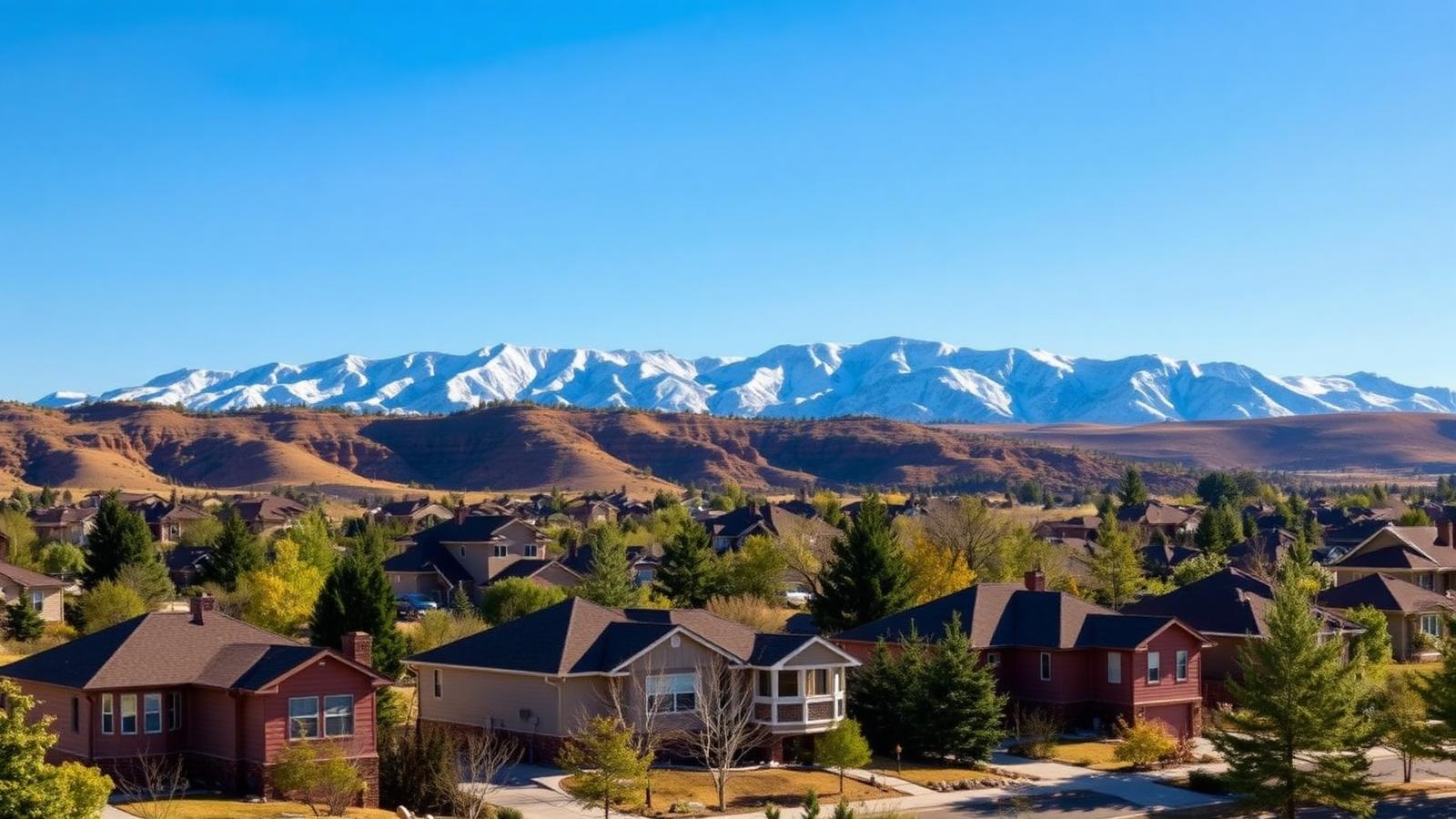
Fort Collins sits at roughly 5,003 feet at the foot of the Front Range foothills. Winters bring regular snow and cold snaps, but as elsewhere on the Front Range, high-altitude sun melts much of it within days rather than letting it accumulate all season.
Summers are warm and dry with cool nights, and the city is close enough to the mountains that afternoon thunderstorms are common from late spring through summer, occasionally with hail.
The Cache la Poudre Canyon west of town gives quick access to fishing, hiking, and skiing in the surrounding national forest, a genuine amenity for outdoor-oriented households moving from California.
Getting around, care, and schools
- Commercial air
- Fort Collins-Loveland Municipal Airport (FNL) has limited service; Denver International Airport, about 65 miles south, is the practical airport for most travel.
- Highways
- Interstate 25 runs along the east side of the city; US 287 runs through the center.
- Hospital
- UCHealth Poudre Valley Hospital.
- Public schools
- Poudre School District.
- Higher education
- Colorado State University, with roughly 34,000 students.
- Elevation
- About 5,003 feet.
The trade-offs
- Home values and property taxes here run higher than in Colorado Springs, Loveland, or Grand Junction, a real premium for the walkability and university amenities.
- The nearest major airport is over an hour away in Denver, so frequent flyers should plan around that drive.
- Neighborhoods near campus see real rental turnover tied to the academic calendar.
- The local economy leans on university and state funding, which is a different kind of risk than a commodity-driven town but a risk nonetheless.
Other Colorado towns people compare
Colorado Springs
Colorado's second largest city, built around Fort Carson, Peterson and Schriever Space Force Base, and the Air Force Academy, at roughly a third less housing cost than Denver.
Littleton
An established south Denver metro suburb along the South Platte River, with mature neighborhoods, light rail into downtown Denver, and no metro district assessments on most existing homes.
Loveland
A quieter northern Front Range market between Fort Collins and the mountains, with strong medical-sector employment and a lower entry price than its university neighbor.
Grand Junction
The main city of Colorado's Western Slope, with a mild high-desert climate, wine country nearby, and home prices roughly half of many Front Range and California markets.
Castle Rock
A fast-growing Douglas County town between Denver and Colorado Springs, known for top-rated schools and heavy new construction, at the highest price point among Colorado's Front Range secondary markets.
Statewide figures, tax detail, and the full Colorado picture are on the Colorado page. Compare property, income, and sales tax across all 49 destination states on Taxes, and see where Californians are actually moving on Stats.
Sources
- US Census Bureau, American Community Survey 2020 to 2024 5-Year Estimates, table B25077 (median home value), retrieved via Census Reporter, September 3, 2026.
- US Census Bureau, ACS 2020 to 2024 5-Year Estimates, table B25103 (median real estate taxes paid, owner-occupied units with a mortgage), retrieved September 3, 2026.
- US Census Bureau, ACS 2020 to 2024 5-Year Estimates, table B25088 (median selected monthly owner costs, owner-occupied units with a mortgage), retrieved September 3, 2026.
- US Census Bureau, ACS 2020 to 2024 5-Year Estimates, table B01003 (total population), retrieved September 3, 2026.
- Colorado State University enrollment and facts, colostate.edu.
- UCHealth Poudre Valley Hospital, uchealth.org.
- NOAA National Centers for Environmental Information, 1991 to 2020 climate normals for Fort Collins, CO station USC00053005, ncei.noaa.gov.
See what your California equity buys in Fort Collins
Four short questions. We match you with one local agent and apply a closing cost credit funded from our referral fee.
Start your Fort Collins move
Four short questions. We use them to decide which agent fits your move, and to build your equity report.