
Colorado city guide
Moving From California to Littleton, CO
An established south Denver metro suburb along the South Platte River, with mature neighborhoods, light rail into downtown Denver, and no metro district assessments on most existing homes.
Housing comparison
California versus Littleton, side by side
- Median home value
- $725,800
- $630,600
- Median annual property tax
- $5,114
- $3,359
- Median monthly cost, owners with a mortgage
- $2,844
- $2,437
- Population
- 39.0 million (state)
- 44,710
Figures are US Census Bureau American Community Survey 2020 to 2024 5-Year Estimates for the city place. Property tax and monthly cost rows cover owner-occupied units with a mortgage, so they describe what current owners pay, not what a new buyer would pay at today's prices. California column is the statewide baseline used across this site.
Why Californians look at Littleton
Littleton is one of the older suburbs in the Denver metro area, incorporated in the 1890s along the South Platte River south of downtown Denver, and it reads as a settled, tree-shaded community rather than a fast-growing exurb. Historic downtown Littleton, with its brick storefronts and walkable core, is the center of the city's identity.
Because most of Littleton was built out decades ago, buyers here largely avoid the metro district and special assessment fees that stack on top of property tax in many newer Douglas County developments; what you see on the tax bill is closer to the whole recurring cost.
For a Californian, Littleton offers a genuinely suburban, established feel with light rail access into downtown Denver, at prices that remain well below the priciest close-in Denver neighborhoods but above the outer metro and Front Range secondary cities.
Littleton fits you if
- You want an established, tree-lined Denver metro suburb rather than new construction on the urban edge.
- You want RTD light rail access into downtown Denver without living in the city itself.
- You work in aerospace, defense, or federal government; the area has a strong concentration of both.
- You want to avoid metro district taxes and special assessments common in newer Douglas County subdivisions.
Look elsewhere if
- You need the lowest price point in the metro; Littleton is a premium established suburb, not a bargain.
- You want new construction with modern floor plans; most of the housing stock here predates 2000.
- You need frequent long commutes to job centers north of Denver; Littleton sits south of downtown.
- You want a rural or semi-rural feel; Littleton is fully built-out suburban.
Housing in Littleton
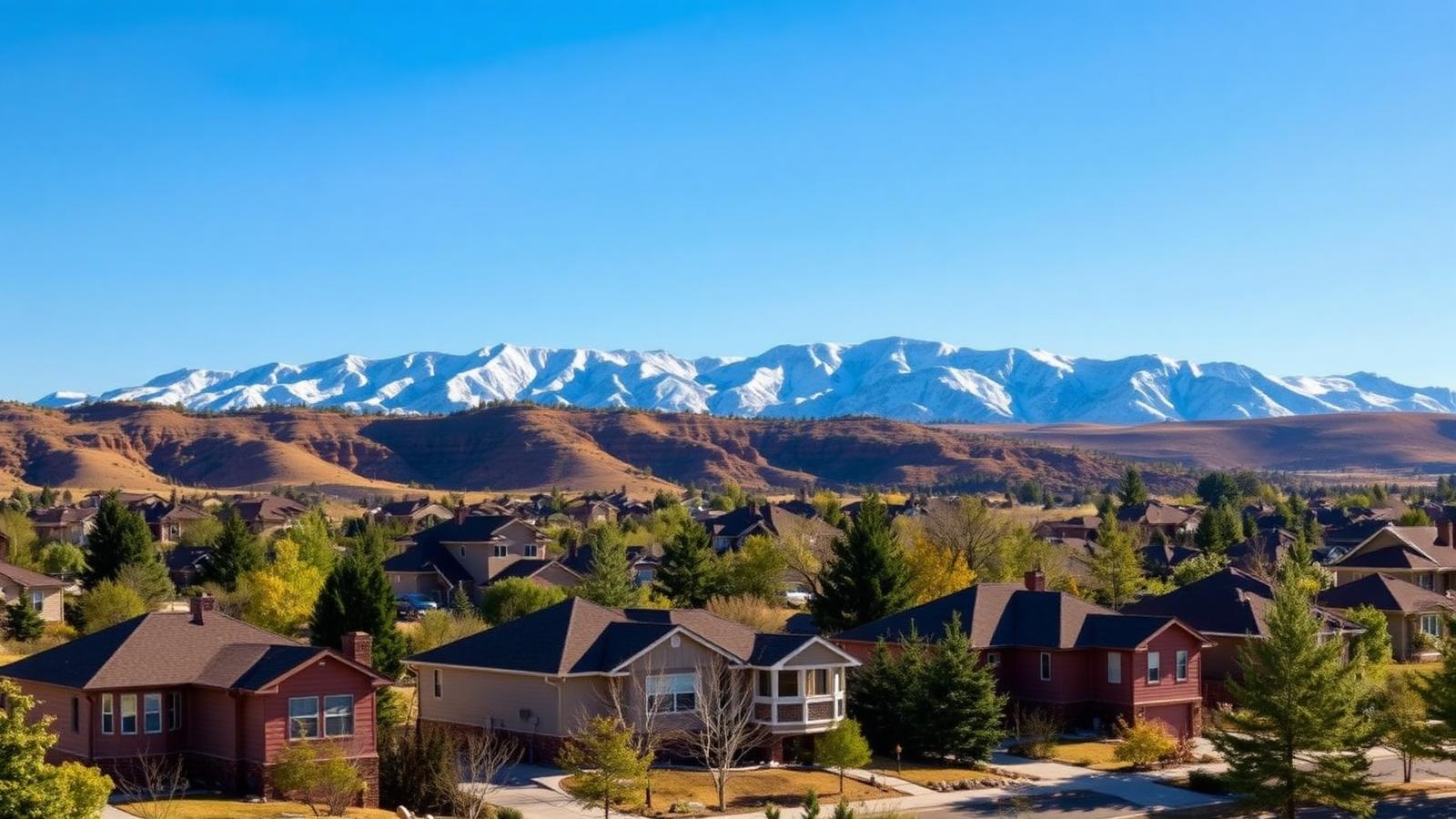
The housing stock is dominated by mid-century ranches and split-levels close to downtown and the South Platte, with larger executive homes in neighborhoods like Southglenn and Ken Caryl Valley toward the west and south. Mature trees and larger lots than newer Denver metro suburbs are a defining feature.
The ACS median home value is $630,600, the median annual real estate tax for owners with a mortgage is $3,359, and the median monthly owner cost with a mortgage is $2,437. That tax figure is among the highest of the Colorado cities in this guide, reflecting both higher home values and the absence of newer-development tax abatements.
Because most of Littleton was platted before metro districts became common financing tools in Colorado, buyers here largely avoid the additional special district mill levies that can add materially to the tax bill in newer Douglas County communities like parts of Castle Rock.
Work and the local economy
Littleton sits close to a concentration of aerospace and defense employment, including Lockheed Martin's Waterton campus just outside the city and other defense contractors along the Santa Fe corridor. The nearby Denver Federal Center in Lakewood adds a substantial federal government employment base within commuting distance.
Locally, Littleton Public Schools, Littleton Adventist Hospital, and a historic downtown retail and restaurant district round out the employment base, along with a meaningful number of residents who commute into downtown Denver via light rail.
This is a suburb built for commuters and for households with portable income rather than a self-contained job market, and most residents' work is elsewhere in the metro.
Climate and setting
Littleton sits at roughly 5,350 feet in the South Platte River valley, sharing the Denver metro's high-plains semi-arid climate: cold, sunny winters with periodic heavy snow, warm dry summers, and large daily temperature swings because of low humidity and elevation.
Like the rest of the Front Range, the city sees occasional severe hailstorms and afternoon thunderstorms in late spring and summer, a factor in homeowners insurance costs across the metro.
Proximity to the foothills, just west of the city, gives quick access to Chatfield State Park, Waterton Canyon, and the trailheads into the mountains without living in the mountains themselves.
Getting around, care, and schools
- Commercial air
- Denver International Airport, roughly 30 miles northeast, is the metro's primary airport.
- Highways
- US 85 (Santa Fe Drive) and C-470 serve the city; Interstate 25 is a short drive east.
- Hospital
- Littleton Adventist Hospital.
- Public schools
- Littleton Public Schools.
- Higher education
- Arapahoe Community College, in the Littleton area.
- Transit
- RTD light rail (D and E lines) connects Littleton to downtown Denver.
- Elevation
- About 5,350 feet.
The trade-offs
- Property taxes here run higher than in most of the other Colorado cities in this guide, a function of high home values in an already-built-out suburb.
- Most jobs are elsewhere in the metro; Littleton is a place to live and commute from, not a self-contained job center.
- Housing stock skews older; buyers wanting new construction should look further out toward Douglas County.
- Hail and severe spring storms affect the whole Denver metro, Littleton included, and show up in insurance costs.
Other Colorado towns people compare
Colorado Springs
Colorado's second largest city, built around Fort Carson, Peterson and Schriever Space Force Base, and the Air Force Academy, at roughly a third less housing cost than Denver.
Fort Collins
A university town at the north end of the Front Range, built around Colorado State University, with the strongest walkability and mountain access combination among the state's larger cities.
Loveland
A quieter northern Front Range market between Fort Collins and the mountains, with strong medical-sector employment and a lower entry price than its university neighbor.
Grand Junction
The main city of Colorado's Western Slope, with a mild high-desert climate, wine country nearby, and home prices roughly half of many Front Range and California markets.
Castle Rock
A fast-growing Douglas County town between Denver and Colorado Springs, known for top-rated schools and heavy new construction, at the highest price point among Colorado's Front Range secondary markets.
Statewide figures, tax detail, and the full Colorado picture are on the Colorado page. Compare property, income, and sales tax across all 49 destination states on Taxes, and see where Californians are actually moving on Stats.
Sources
- US Census Bureau, American Community Survey 2020 to 2024 5-Year Estimates, table B25077 (median home value), retrieved via Census Reporter, September 3, 2026.
- US Census Bureau, ACS 2020 to 2024 5-Year Estimates, table B25103 (median real estate taxes paid, owner-occupied units with a mortgage), retrieved September 3, 2026.
- US Census Bureau, ACS 2020 to 2024 5-Year Estimates, table B25088 (median selected monthly owner costs, owner-occupied units with a mortgage), retrieved September 3, 2026.
- US Census Bureau, ACS 2020 to 2024 5-Year Estimates, table B01003 (total population), retrieved September 3, 2026.
- City of Littleton, Data and Demographics, littletonco.gov.
- Regional Transportation District (RTD) light rail system map, rtd-denver.com.
See what your California equity buys in Littleton
Four short questions. We match you with one local agent and apply a closing cost credit funded from our referral fee.
Start your Littleton move
Four short questions. We use them to decide which agent fits your move, and to build your equity report.