
Colorado city guide
Moving From California to Grand Junction, CO
The main city of Colorado's Western Slope, with a mild high-desert climate, wine country nearby, and home prices roughly half of many Front Range and California markets.
Housing comparison
California versus Grand Junction, side by side
- Median home value
- $725,800
- $389,800
- Median annual property tax
- $5,114
- $1,494
- Median monthly cost, owners with a mortgage
- $2,844
- $1,693
- Population
- 39.0 million (state)
- 68,142
Figures are US Census Bureau American Community Survey 2020 to 2024 5-Year Estimates for the city place. Property tax and monthly cost rows cover owner-occupied units with a mortgage, so they describe what current owners pay, not what a new buyer would pay at today's prices. California column is the statewide baseline used across this site.
Why Californians look at Grand Junction
Grand Junction sits on the Western Slope of the Rockies, where the Colorado and Gunnison rivers meet, roughly 250 miles west of Denver and much closer in character to eastern Utah than to the Front Range. It is the largest city between Denver and Salt Lake City along Interstate 70, and it functions as the commercial and medical hub for a wide rural region.
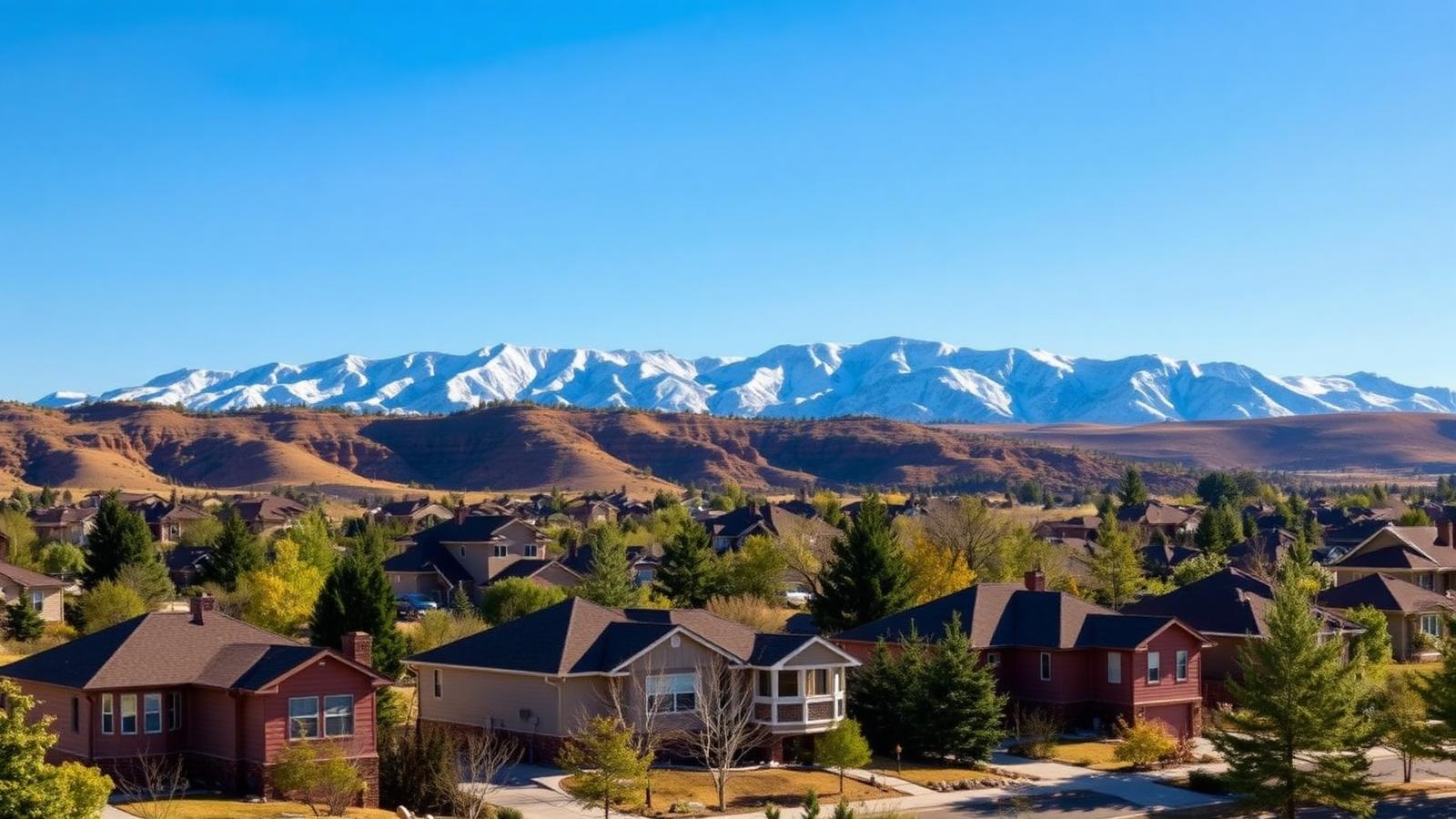
Its high-desert setting, with red-rock mesas, the Colorado National Monument at its edge, and the Grand Valley's vineyards and orchards, gives it a genuinely different climate and landscape from the rest of the state, milder in winter than anywhere else in Colorado covered in this guide.
For a Californian, Grand Junction offers some of the lowest home prices among Colorado's larger cities alongside a real airport, a full-service hospital, and a growing wine and outdoor-recreation identity built around mountain biking on the Lunch Loops and rafting on the Colorado River.
Grand Junction fits you if
- You want the mildest winters in Colorado along with real mountain and desert scenery in the same valley.
- You want among the lowest home prices of any sizable Colorado city, with a hospital, an airport, and a college in town.
- You are interested in wine country; the Grand Valley AVA is Colorado's primary wine-growing region.
- You mountain bike, raft, or hike; the Lunch Loops trail system and the Colorado River are minutes from downtown.
Look elsewhere if
- You need proximity to Denver for work or family; it is a 4 to 5 hour drive over mountain passes that can close in winter.
- You need deep specialty medical care; St. Mary's Medical Center covers a lot but complex cases still travel to Denver or Salt Lake City.
- You need a large, diversified private-sector job market; the area's economy is tied to energy extraction cycles and regional trade, both narrower than a metro's.
- You want lush greenery; the setting is high desert, with sage and red rock rather than forest close to town.
Housing in Grand Junction
Older neighborhoods near downtown and Seventh Street hold early twentieth-century bungalows, while the Redlands area to the west, beneath the Colorado National Monument, commands the highest prices for views and proximity to trails. Newer subdivisions have spread north and east toward Interstate 70.
The ACS median home value is $389,800, the median annual real estate tax for owners with a mortgage is $1,494, and the median monthly owner cost with a mortgage is $1,693, the lowest of the six Colorado cities in this guide on all three measures. That makes it the closest thing to a value play among larger Colorado cities.
Because the valley is geographically constrained by mesas and the rivers, growth is more contained than on the open Front Range, and inventory has historically moved at a steadier pace than the boom-bust Denver metro.
Work and the local economy
Grand Junction's economy has long been tied to oil, natural gas, and uranium extraction in the surrounding Piceance Basin and the broader region, and it moves with those commodity cycles more than a diversified metro would. St. Mary's Medical Center and Community Hospital are major stabilizing employers, along with Colorado Mesa University.
Agriculture, particularly the Grand Valley's peach orchards and vineyards, and a growing outdoor-recreation and tourism sector centered on mountain biking, rafting, and access to nearby national parks, round out the base.
As with other energy-linked Colorado cities, a household bringing portable income avoids the cyclicality that has periodically hit local unemployment here harder than the state average.
Climate and setting
Grand Junction sits at roughly 4,586 feet in a high desert valley shielded from the worst of the Front Range's winter storms by the intervening mountains, giving it the mildest winters of any city in this guide and considerably less snow than Denver or the northern Front Range.
Summers are hot and dry, with July highs regularly in the 90s and low humidity, more like eastern Utah than mountain Colorado, and irrigation from the Colorado River sustains the valley's orchards and vineyards through the dry months.
Air quality can suffer from wildfire smoke in late summer, drifting in from fires across the Western Slope and the broader Intermountain West, a seasonal issue worth expecting rather than being surprised by.
Getting around, care, and schools
- Commercial air
- Grand Junction Regional Airport (GJT) has direct flights to Denver, Dallas, Phoenix, Las Vegas, and Salt Lake City.
- Highways
- Interstate 70 runs through the city east to west; US 50 and US 6 also serve the area.
- Hospital
- St. Mary's Medical Center and Community Hospital.
- Public schools
- Mesa County Valley School District 51.
- Higher education
- Colorado Mesa University.
- Elevation
- About 4,586 feet.
The trade-offs
- Denver is a genuine 4 to 5 hour drive over mountain passes, which can close in winter storms; this is not a place for a regular Denver commute.
- The economy is more exposed to energy price cycles than most Front Range cities.
- Specialty medical care beyond the two local hospitals generally means travel to Denver or Salt Lake City.
- Wildfire smoke is a recurring late-summer air quality issue in the region.
Other Colorado towns people compare
Colorado Springs
Colorado's second largest city, built around Fort Carson, Peterson and Schriever Space Force Base, and the Air Force Academy, at roughly a third less housing cost than Denver.
Fort Collins
A university town at the north end of the Front Range, built around Colorado State University, with the strongest walkability and mountain access combination among the state's larger cities.
Littleton
An established south Denver metro suburb along the South Platte River, with mature neighborhoods, light rail into downtown Denver, and no metro district assessments on most existing homes.
Loveland
A quieter northern Front Range market between Fort Collins and the mountains, with strong medical-sector employment and a lower entry price than its university neighbor.
Castle Rock
A fast-growing Douglas County town between Denver and Colorado Springs, known for top-rated schools and heavy new construction, at the highest price point among Colorado's Front Range secondary markets.
Statewide figures, tax detail, and the full Colorado picture are on the Colorado page. Compare property, income, and sales tax across all 49 destination states on Taxes, and see where Californians are actually moving on Stats.
Sources
- US Census Bureau, American Community Survey 2020 to 2024 5-Year Estimates, table B25077 (median home value), retrieved via Census Reporter, September 3, 2026.
- US Census Bureau, ACS 2020 to 2024 5-Year Estimates, table B25103 (median real estate taxes paid, owner-occupied units with a mortgage), retrieved September 3, 2026.
- US Census Bureau, ACS 2020 to 2024 5-Year Estimates, table B25088 (median selected monthly owner costs, owner-occupied units with a mortgage), retrieved September 3, 2026.
- US Census Bureau, ACS 2020 to 2024 5-Year Estimates, table B01003 (total population), retrieved September 3, 2026.
- Grand Junction Regional Airport, airline destinations, gjairport.com.
- Colorado Mesa University, enrollment and campus information, coloradomesa.edu.
- St. Mary's Medical Center, intermountainhealthcare.org.
See what your California equity buys in Grand Junction
Four short questions. We match you with one local agent and apply a closing cost credit funded from our referral fee.
Start your Grand Junction move
Four short questions. We use them to decide which agent fits your move, and to build your equity report.