
Texas city guide
Moving From California to Fort Worth, TX
More house per dollar than Dallas proper, with the same regional job access and a stronger claim to a genuine historic downtown.
Housing comparison
California versus Fort Worth, side by side
- Median home value
- $725,800
- $303,000
- Median annual property tax
- $5,114
- $5,923
- Median monthly cost, owners with a mortgage
- $2,844
- $2,188
- Population
- 39.0 million (state)
- 963,194
Figures are US Census Bureau American Community Survey 2020 to 2024 5-Year Estimates for the city place. Property tax and monthly cost rows cover owner-occupied units with a mortgage, so they describe what current owners pay, not what a new buyer would pay at today's prices. California column is the statewide baseline used across this site.
Why Californians look at Fort Worth
Fort Worth is the western anchor of the Dallas–Fort Worth metroplex, close enough to share the same airport and much of the same regional job market as Dallas, but with its own identity as a former cattle and stockyards town that has kept a genuine historic downtown and a slower civic pace.
The ACS median home value in Fort Worth is $303,000, below the city of Dallas's $320,700, which makes it a common choice for households who want metroplex job access without Dallas proper's price level.
The city's economy leans more on aviation and manufacturing than Dallas does, anchored by Lockheed Martin's major aircraft plant and American Airlines' large presence near the shared DFW airport, giving Fort Worth a more blue-collar and defense-industrial employment base alongside its downtown office core.
Fort Worth fits you if
- You want metroplex job access with a lower home price than the city of Dallas.
- You work in aviation, aerospace, or manufacturing. Fort Worth's industrial base is unusually strong for a Texas city its size.
- You want a walkable historic downtown and a genuine Western heritage identity, centered on the Stockyards and Sundance Square.
- You still want access to DFW International Airport for long-haul and international travel.
Look elsewhere if
- You want to be in the cultural or corporate center of the metroplex. That role belongs to Dallas.
- You dislike commuting between the two cities. Fort Worth to downtown Dallas is a genuine 30 to 45 minute drive depending on traffic.
- You want mild weather. Fort Worth shares Dallas's hot summers, humidity, and spring severe weather risk.
- You need transit-first living. Like the rest of the metroplex, Fort Worth is built around driving.
Housing in Fort Worth
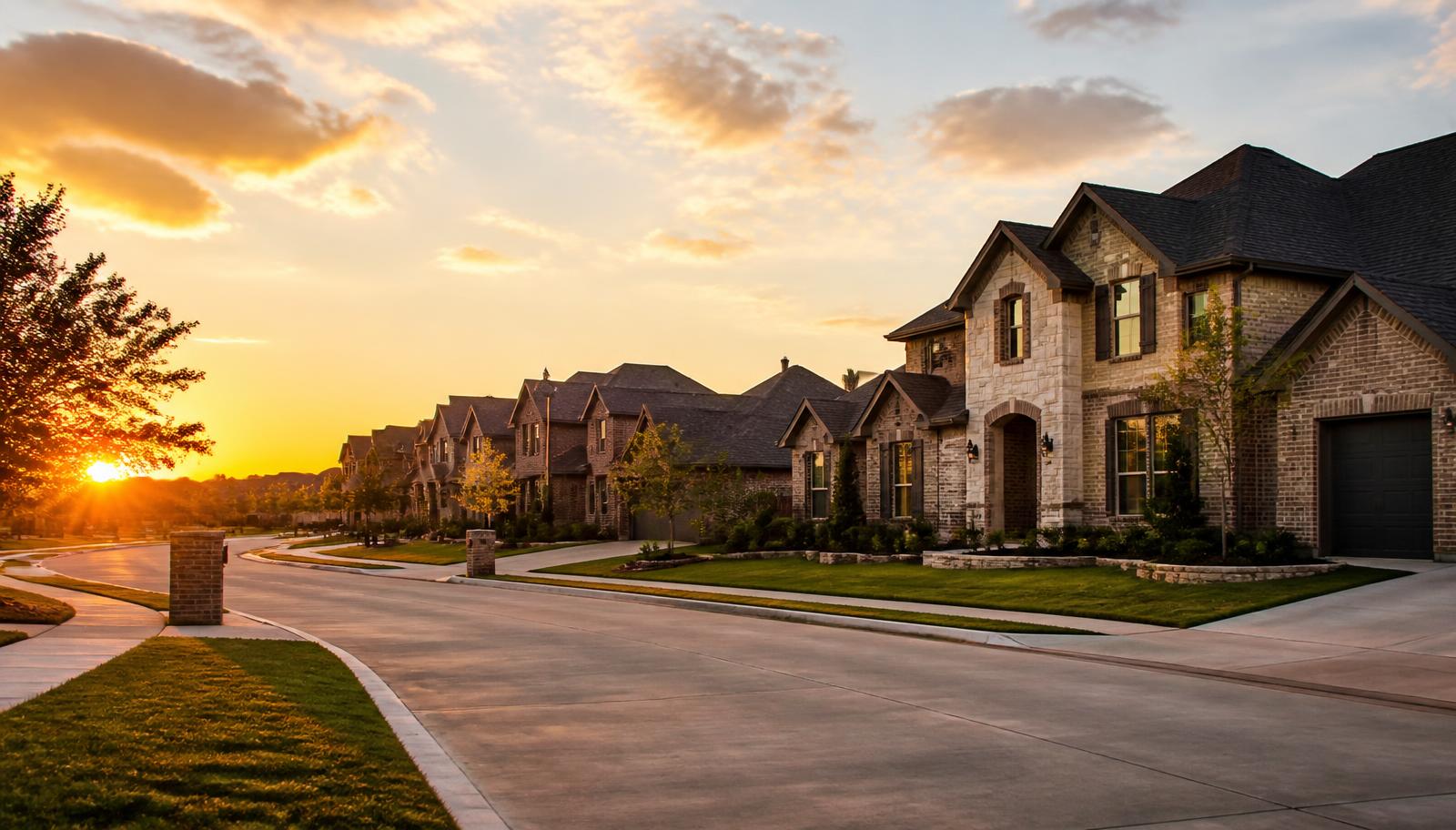
Fort Worth's housing stock includes historic neighborhoods near downtown and the cultural district, mid-century neighborhoods on the south and west sides, and heavy new-construction growth on the north side toward Alliance and the surrounding suburbs. The ACS median home value is $303,000, below the city of Dallas.
The median annual property tax for mortgaged owners is $5,923 and the median monthly owner cost is $2,188. As with the rest of Texas, there is no state income tax, so property tax and municipal rates are the main ongoing cost to compare between specific neighborhoods and suburbs.
The city's north side, anchored by the Alliance master-planned development and its airport and logistics complex, has been one of the fastest-growing parts of the metroplex, drawing new subdivisions and corporate distribution centers together.
Work and the local economy
Lockheed Martin's aircraft manufacturing plant, which builds the F-35 fighter jet, is one of the largest single-site employers in North Texas and gives Fort Worth a defense-industrial base that Dallas lacks.
American Airlines is headquartered near DFW International Airport, which straddles the Dallas and Fort Worth city limits, and the airport itself is a major direct and indirect employer for the western half of the metroplex.
Beyond aviation and defense, Fort Worth's economy includes a growing logistics and distribution sector around Alliance, energy company offices, and a healthcare cluster anchored by Texas Health Fort Worth. Downtown's office employment is smaller and less dense than downtown Dallas's.
Climate in North Texas
Fort Worth shares Dallas's humid subtropical climate: hot summers with highs commonly in the mid-90s in July and August, mild winters punctuated by occasional ice storms, and a real severe weather season in spring.
Hail and tornado risk is a standing seasonal factor across North Texas, Fort Worth included, and homeowners insurance premiums reflect that exposure along with the state's broader trend of rising insurance costs.
Humidity is present but generally a step behind Houston's, and summer evenings cool somewhat more than they do farther south and east in the state.
Getting around, care, and schools
- Commercial air
- Dallas Fort Worth International Airport (DFW), a major hub shared with Dallas, plus Fort Worth Meacham International and Perot Field Alliance for general and cargo aviation.
- Highways
- Interstates 30, 35W, and 20 serve the city, along with Loop 820 encircling it.
- Hospital
- Texas Health Harris Methodist Hospital Fort Worth, a Level I trauma center.
- Public schools
- Fort Worth Independent School District covers most of the city; several suburban districts serve the surrounding growth areas.
- Higher education
- Texas Christian University (TCU) and the University of North Texas Health Science Center.
- Setting
- Flat to gently rolling North Texas prairie, no significant elevation change across the metro.
The trade-offs
- Fort Worth is the secondary city in the metroplex, not the corporate or cultural center. That role sits with Dallas.
- Commuting between Fort Worth and Dallas for work or events is a real and regular time cost for many residents.
- The same spring severe weather risk and rising insurance costs that affect Dallas apply here.
- Growth on the north side has been rapid, and infrastructure has had to catch up to new subdivisions and logistics traffic.
Other Texas towns people compare
Dallas–Fort Worth
Texas's deepest job market and its broadest range of price points, spread across two cities and dozens of suburbs, tied together by DFW International Airport.
Houston
The largest inventory and the lowest price per square foot among the big four Texas metros, built around energy, the Port of Houston, and the Texas Medical Center.
Austin
The closest cultural fit for Bay Area transplants in Texas, and the priciest Texas market, built on a tech and university economy.
San Antonio
The lowest overall cost of living among the big Texas metros, with steady appreciation and one of the largest military communities in the country.
The Woodlands
A master-planned suburb north of Houston, popular with relocating families for its schools, greenbelts, and corporate employers along Interstate 45.
Statewide figures, tax detail, and the full Texas picture are on the Texas page. Compare property, income, and sales tax across all 49 destination states on Taxes, and see where Californians are actually moving on Stats.
Sources
- US Census Bureau, American Community Survey 2020 to 2024 5-Year Estimates, table B25077 (median home value), retrieved via Census Reporter, September 3, 2026.
- US Census Bureau, ACS 2020 to 2024 5-Year Estimates, table B25103 (median real estate taxes paid, owner-occupied units with a mortgage), retrieved September 3, 2026.
- US Census Bureau, ACS 2020 to 2024 5-Year Estimates, table B25088 (median selected monthly owner costs, owner-occupied units with a mortgage), retrieved September 3, 2026.
- US Census Bureau, ACS 2020 to 2024 5-Year Estimates, table B01003 (total population), retrieved September 3, 2026.
- Lockheed Martin Aeronautics, Fort Worth, lockheedmartin.com.
- Texas Health Resources, texashealth.org.
- Dallas Fort Worth International Airport, dfwairport.com.
See what your California equity buys in Fort Worth
Four short questions. We match you with one local agent and apply a closing cost credit funded from our referral fee.
Start your Fort Worth move
Four short questions. We use them to decide which agent fits your move, and to build your equity report.