
North Dakota city guide
Moving From California to Grand Forks, ND
A university and air base town in the Red River Valley, with low prices and a steady rental market.
Housing comparison
California versus Grand Forks, side by side
- Median home value
- $725,800
- $243,300
- Median annual property tax
- $5,114
- not available
- Median monthly cost, owners with a mortgage
- $2,844
- not available
- Population
- 39.0 million (state)
- 58,882
Figures are US Census Bureau American Community Survey 2020 to 2024 5-Year Estimates for the city place. Property tax and monthly cost rows cover owner-occupied units with a mortgage, so they describe what current owners pay, not what a new buyer would pay at today's prices. California column is the statewide baseline used across this site.
Why Californians look at Grand Forks
Grand Forks sits on the Red River across from East Grand Forks, Minnesota, in the northern part of the Red River Valley. Its economy rests on two large, stable institutions: the University of North Dakota and Grand Forks Air Force Base, which together account for a large share of local employment and give the town a younger, more transient population than most North Dakota cities.
That combination keeps home prices among the lowest of the state's larger cities while also supporting a steady rental market, since students, faculty, and rotating military families all need housing on a predictable cycle.
For a California buyer, Grand Forks offers a genuinely low cost of entry, a real hospital system, and a university town's amenities, in exchange for a narrower private-sector job market than Fargo's.
Grand Forks fits you if
- You want the lowest home prices among North Dakota's larger cities with full services still in place.
- You are retiring near a university and want access to campus events, athletics, and continuing education.
- You are affiliated with the Air Force or a military family looking to settle near Grand Forks Air Force Base.
- You want a steady rental market if you plan to hold your California property or buy a rental here.
Look elsewhere if
- You need a deep, varied private-sector job market. Outside the university, the base, and healthcare, options narrow quickly.
- You want a large city feel. Grand Forks is a small city with a small city's retail and dining scene.
- You dislike the population turnover that comes with a large student body and rotating military assignments.
- You need frequent nonstop flights to distant destinations.
Housing in Grand Forks
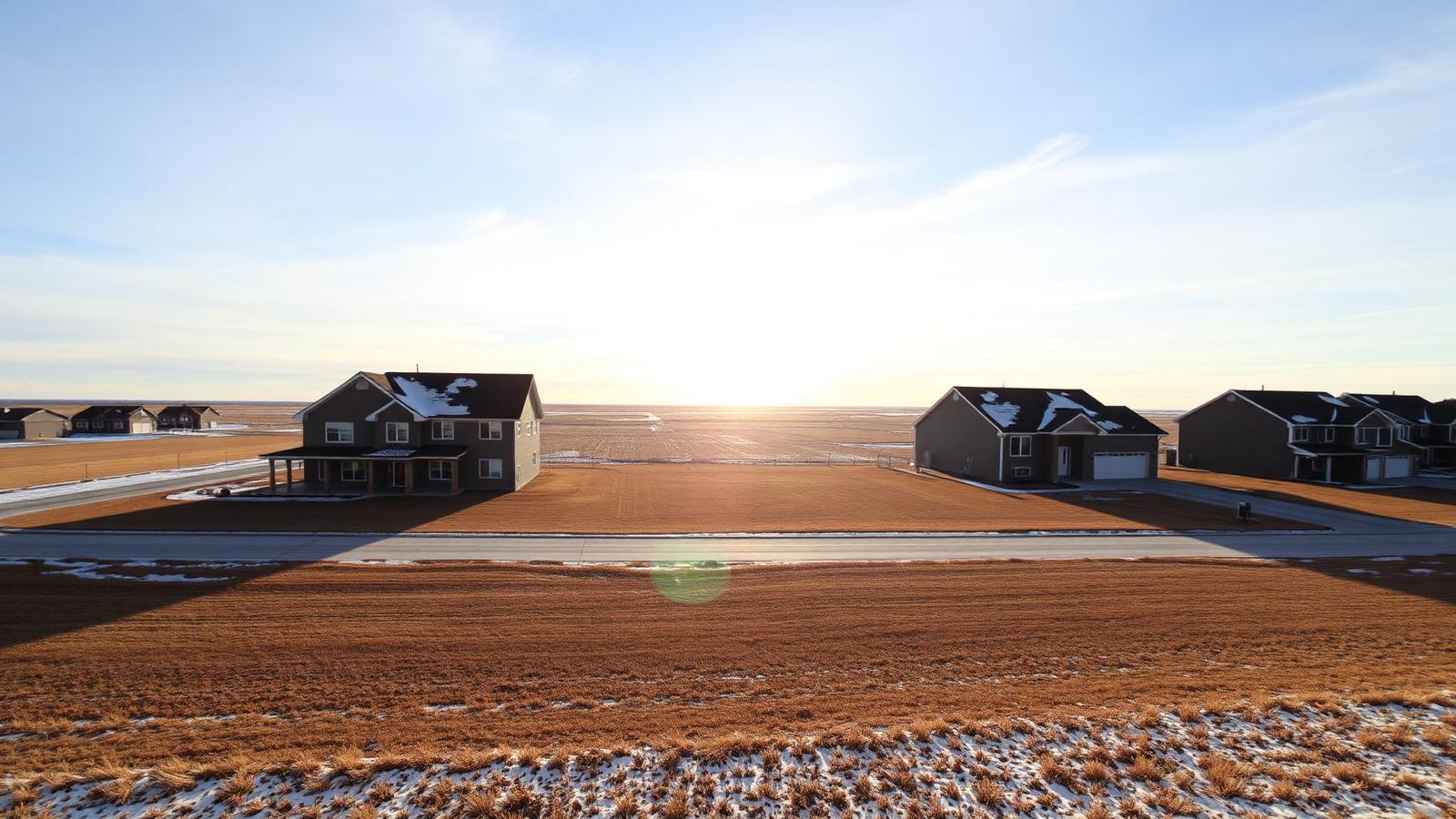
Housing near the University of North Dakota campus leans toward older homes and a large rental stock serving students, while neighborhoods further south and west offer more traditional single-family homes, including newer construction on the city's edges.
The ACS median home value for the city is $243,300, among the lowest of the cities profiled here. Specific property tax and monthly owner cost figures for Grand Forks were not confidently sourced for this page and are omitted rather than estimated.
Because a meaningful share of the population turns over with the academic year and with military rotations, rental demand is steady, which is worth knowing whether you plan to buy and hold or occupy immediately.
Work and the local economy
The University of North Dakota is the largest employer in town, with a large faculty and staff base and a well-known aviation program that draws students nationally. Grand Forks Air Force Base, just north of the city, adds a substantial and stable military and civilian workforce.
Altru Health System is the major healthcare employer and operates the region's principal hospital. Beyond these anchors, the local economy includes agriculture-related business, a growing unmanned aircraft systems and drone-technology sector tied to the base and university research, and typical regional retail and services.
The drone and unmanned aircraft cluster is a genuine emerging piece of the local economy, though it remains small relative to the university and the base as employment sources.
Climate and setting
Grand Forks sits in the flat Red River Valley and shares Fargo's basic climate pattern: long, cold winters with regular subzero temperatures, warm and sometimes humid summers, and a short growing season.
The city experienced a catastrophic Red River flood in 1997 that reshaped its riverfront and led to major flood-control investment since, including levees and a greenway system along the river. Flood control here is now considered robust, but the history is worth knowing.
Wind and ground blizzards affect winter travel in the surrounding open country, and residents plan routine trips with weather in mind from November into March.
Getting around, care, and schools
- Commercial air
- Grand Forks International Airport (GFK) offers limited commercial service; many residents also use Fargo's Hector International for a wider route selection.
- Highways
- Interstate 29 runs north to south along the western edge of the city.
- Hospital
- Altru Health System, the region's principal hospital and clinic network.
- Public schools
- Grand Forks Public Schools.
- Higher education
- University of North Dakota.
- Setting
- Red River Valley, near Grand Forks Air Force Base.
The trade-offs
- The private-sector job market is narrow outside the university, the base, and healthcare.
- Population turnover from students and military rotations changes the character of some neighborhoods year to year.
- Air service is thinner than Fargo's, and many residents drive to Fargo for more flight options.
- Winters are long and cold with the same severity as the rest of the Red River Valley.
Other North Dakota towns people compare
Fargo
North Dakota's largest city and its tech and healthcare center, with the broadest housing supply and job market in the state.
Bismarck
The state capital, with stable government employment and slightly milder winters than Fargo and Grand Forks to the east.
West Fargo
The Fargo metro's fastest-growing suburb, with newer housing stock and strong schools, at a short commute from downtown Fargo.
Minot
The hub of the energy and military economy in northwest North Dakota, with the lowest entry prices of the state's larger cities.
Statewide figures, tax detail, and the full North Dakota picture are on the North Dakota page. Compare property, income, and sales tax across all 49 destination states on Taxes, and see where Californians are actually moving on Stats.
Sources
- US Census Bureau, American Community Survey 2020 to 2024 5-Year Estimates, table B25077 (median home value), retrieved via Census Reporter, September 3, 2026.
- US Census Bureau, ACS 2020 to 2024 5-Year Estimates, table B25103 (median real estate taxes paid, owner-occupied units with a mortgage), retrieved September 3, 2026.
- US Census Bureau, ACS 2020 to 2024 5-Year Estimates, table B25088 (median selected monthly owner costs, owner-occupied units with a mortgage), retrieved September 3, 2026.
- US Census Bureau, ACS 2020 to 2024 5-Year Estimates, table B01003 (total population), retrieved September 3, 2026.
- Population Review, Grand Forks, ND population and housing data, populationreview.org.
- U.S. Census Bureau QuickFacts, Grand Forks city, North Dakota, census.gov.
See what your California equity buys in Grand Forks
Four short questions. We match you with one local agent and apply a closing cost credit funded from our referral fee.
Start your Grand Forks move
Four short questions. We use them to decide which agent fits your move, and to build your equity report.