
North Dakota city guide
Moving From California to West Fargo, ND
The Fargo metro's fastest-growing suburb, with newer housing stock and strong schools, at a short commute from downtown Fargo.
Housing comparison
California versus West Fargo, side by side
- Median home value
- $725,800
- not available
- Median annual property tax
- $5,114
- not available
- Median monthly cost, owners with a mortgage
- $2,844
- not available
- Population
- 39.0 million (state)
- not available
Figures are US Census Bureau American Community Survey 2020 to 2024 5-Year Estimates for the city place. Property tax and monthly cost rows cover owner-occupied units with a mortgage, so they describe what current owners pay, not what a new buyer would pay at today's prices. California column is the statewide baseline used across this site.
Why Californians look at West Fargo
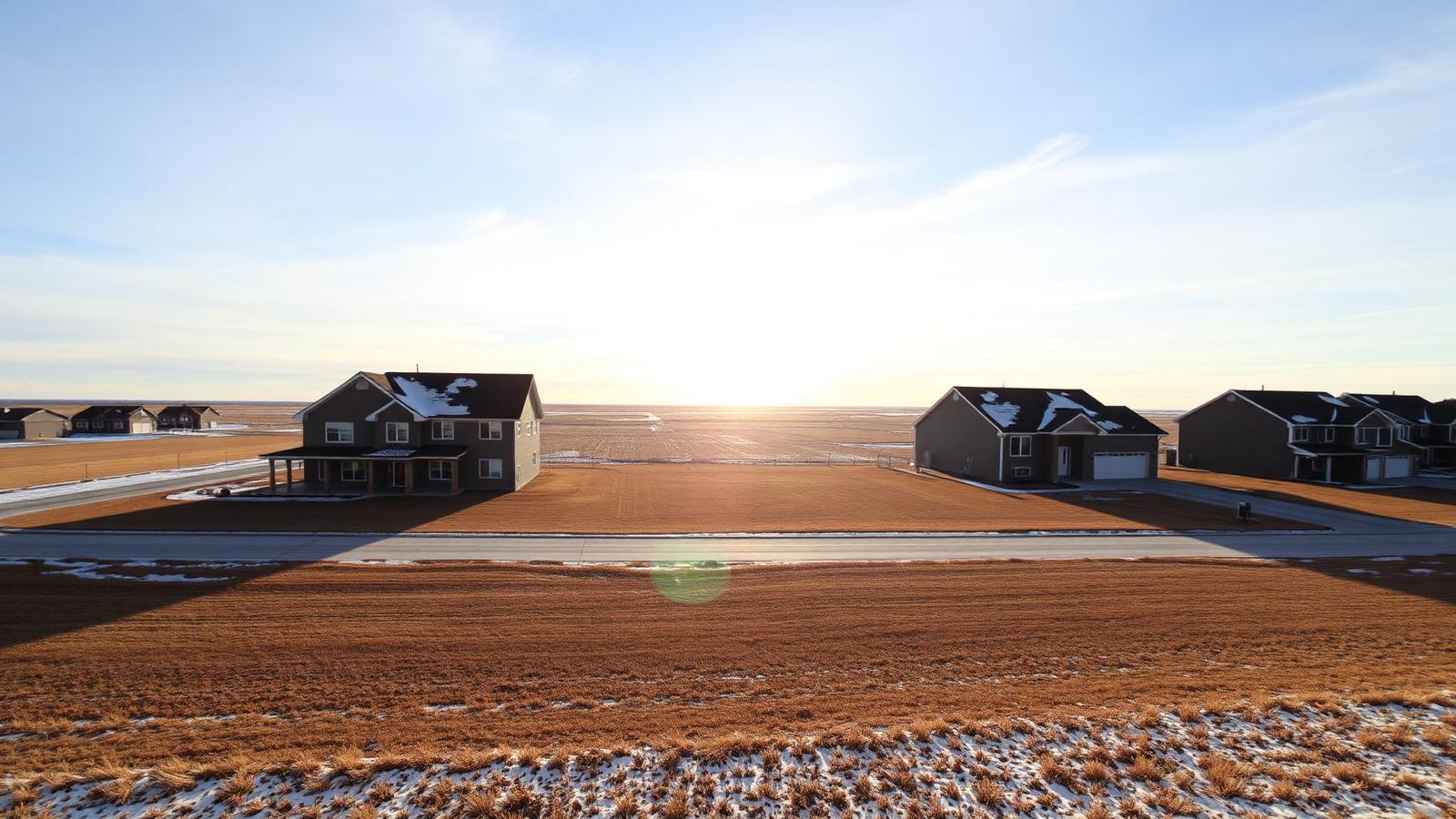
West Fargo sits immediately west of Fargo proper and has been one of the fastest-growing cities in North Dakota for two decades, driven largely by families choosing its newer housing stock and its own separate school district over the older core of Fargo.
It functions less as an independent economy and more as a bedroom community for the Fargo-Moorhead metro, so most residents commute into Fargo, Moorhead, or the Microsoft and healthcare campuses on the east side of the metro rather than working locally.
For a California household with school-age kids, West Fargo is often the first place local real estate agents point to, precisely because the housing is newer, the streets are wider, and the district has built new schools to keep pace with growth.
West Fargo fits you if
- You have school-age children and want a district that has been actively building new schools to match growth.
- You want newer construction rather than an older housing stock, with modern floor plans and larger garages.
- You want a short commute into Fargo's job market without living in the older city core.
- You want a quieter, more suburban feel while remaining part of the larger Fargo-Moorhead metro.
Look elsewhere if
- You want walkable urban amenities, historic architecture, or a downtown of your own.
- You want the widest possible selection of older, character homes at lower prices.
- You need to work locally rather than commute, since most jobs are in Fargo proper or Moorhead.
- You dislike ongoing construction and new-subdivision growth pains such as shifting school boundaries.
Housing in West Fargo
West Fargo's housing stock is dominated by construction from the 1990s onward, with large new subdivisions still being built on the west and south edges of the city. Lots tend to be larger than in older Fargo neighborhoods, and floor plans skew toward modern layouts with attached two- or three-car garages.
Specific ACS home value, property tax, and monthly owner cost figures for West Fargo were not confidently sourced for this page and are omitted rather than estimated. As a general reference point, prices in West Fargo have historically run close to or slightly above those in Fargo proper, reflecting the newer housing stock.
Because the city has grown quickly, buyers should expect ongoing new construction nearby for years to come, along with periodic school boundary changes as the district adds capacity.
Work and the local economy
West Fargo itself has a modest and growing local retail and light industrial base, but the great majority of residents commute into the broader Fargo-Moorhead metro for work, particularly to healthcare systems, Microsoft's local campus, and NDSU.
The city has worked to attract its own commercial and light-industrial development along its main corridors, which has added local jobs in retail, logistics, and services, but it remains functionally tied to Fargo's economy rather than an independent job market.
For a remote worker or retiree, this distinction does not matter much. For someone needing to find local work, it is worth understanding that West Fargo is a suburb first and an employment center second.
Climate and setting
West Fargo shares the same flat Red River Valley climate as Fargo: long, cold winters with subzero stretches, warm and sometimes humid summers, and a short but reliable growing season.
Spring flooding is a regional concern along the Sheyenne River, which runs through part of the city, and the city has invested in flood-control infrastructure. Buyers should check a specific address's flood history.
Severe spring and summer thunderstorms, including occasional tornado risk, are part of the annual pattern across the whole Fargo-Moorhead area.
Getting around, care, and schools
- Commercial air
- Hector International Airport (FAR) is a short drive away in Fargo, with direct flights to major hubs.
- Highways
- Interstate 94 runs along the southern edge of the city.
- Hospital
- Major hospitals, Sanford Medical Center Fargo and Essentia Health Fargo, are a short drive into Fargo.
- Public schools
- West Fargo Public Schools, a separate and fast-growing district from Fargo Public Schools.
- Higher education
- North Dakota State University is a short drive away in Fargo.
- Setting
- Flat prairie immediately west of Fargo, along the Sheyenne River.
The trade-offs
- Most jobs are elsewhere in the metro, so this is a commuter suburb rather than an independent economy.
- Ongoing growth means construction, traffic pattern changes, and periodic school boundary adjustments.
- It shares Fargo's long, cold winters without adding any climate advantage of its own.
- It lacks a historic downtown or core of its own the way Fargo does.
Other North Dakota towns people compare
Fargo
North Dakota's largest city and its tech and healthcare center, with the broadest housing supply and job market in the state.
Bismarck
The state capital, with stable government employment and slightly milder winters than Fargo and Grand Forks to the east.
Grand Forks
A university and air base town in the Red River Valley, with low prices and a steady rental market.
Minot
The hub of the energy and military economy in northwest North Dakota, with the lowest entry prices of the state's larger cities.
Statewide figures, tax detail, and the full North Dakota picture are on the North Dakota page. Compare property, income, and sales tax across all 49 destination states on Taxes, and see where Californians are actually moving on Stats.
Sources
- US Census Bureau, American Community Survey 2020 to 2024 5-Year Estimates, table B25077 (median home value), retrieved via Census Reporter, September 3, 2026.
- US Census Bureau, ACS 2020 to 2024 5-Year Estimates, table B25103 (median real estate taxes paid, owner-occupied units with a mortgage), retrieved September 3, 2026.
- US Census Bureau, ACS 2020 to 2024 5-Year Estimates, table B25088 (median selected monthly owner costs, owner-occupied units with a mortgage), retrieved September 3, 2026.
- US Census Bureau, ACS 2020 to 2024 5-Year Estimates, table B01003 (total population), retrieved September 3, 2026.
- U.S. Census Bureau QuickFacts, West Fargo city, North Dakota, census.gov.
See what your California equity buys in West Fargo
Four short questions. We match you with one local agent and apply a closing cost credit funded from our referral fee.
Start your West Fargo move
Four short questions. We use them to decide which agent fits your move, and to build your equity report.