
Missouri city guide
Moving From California to Kansas City, MO
Missouri's largest city, a two-state metro with a diversified economy, an active downtown core, and housing costs far below California's.
Housing comparison
California versus Kansas City, side by side
- Median home value
- $725,800
- not available
- Median annual property tax
- $5,114
- not available
- Median monthly cost, owners with a mortgage
- $2,844
- not available
- Population
- 39.0 million (state)
- 516,045
Figures are US Census Bureau American Community Survey 2020 to 2024 5-Year Estimates for the city place. Property tax and monthly cost rows cover owner-occupied units with a mortgage, so they describe what current owners pay, not what a new buyer would pay at today's prices. California column is the statewide baseline used across this site.
Why Californians look at Kansas City
Kansas City straddles the Missouri-Kansas line, but the Missouri side is the larger and more prominent half, home to downtown, the Power and Light District, the streetcar line, and most of the recent development. For a California household, the appeal is a genuine mid-size American city, with an airport, a symphony, two major league franchises, and a real restaurant scene, at a fraction of coastal housing cost.
The city's economy is broader than most people expect. It is not a one-industry town. Freight and logistics, agribusiness, financial services headquartered here for over a century, federal offices, and a growing tech and startup presence all contribute, which gives the labor market more depth than a typical secondary metro.
Downtown Kansas City has visibly recovered from the emptied-out downtowns common to Midwestern cities in the 1990s. That recovery is real, but it is concentrated in specific neighborhoods, and large stretches of the urban core still show the effects of decades of population loss and disinvestment. Know which part of the city you are moving into.
Kansas City fits you if
- You want a real airport (Kansas City International, rebuilt in 2023) with direct flights to both coasts, without paying coastal prices.
- You value a diversified job base spanning logistics, finance, agribusiness, and a growing tech sector.
- You want an active downtown with a free streetcar, professional sports, and a genuine food and music culture.
- You are comfortable with four real seasons, including cold winters and humid summers.
Look elsewhere if
- You need a compact, easily walkable city. Kansas City is spread out and built around driving.
- You want to avoid violent crime statistics. The city has struggled with a persistently high homicide rate in parts of the urban core.
- You are sensitive to severe weather. The metro sits in a tornado-prone corridor with regular spring storm activity.
- You want mountains, ocean, or dramatic terrain nearby. The surrounding landscape is flat to gently rolling.
Housing in Kansas City
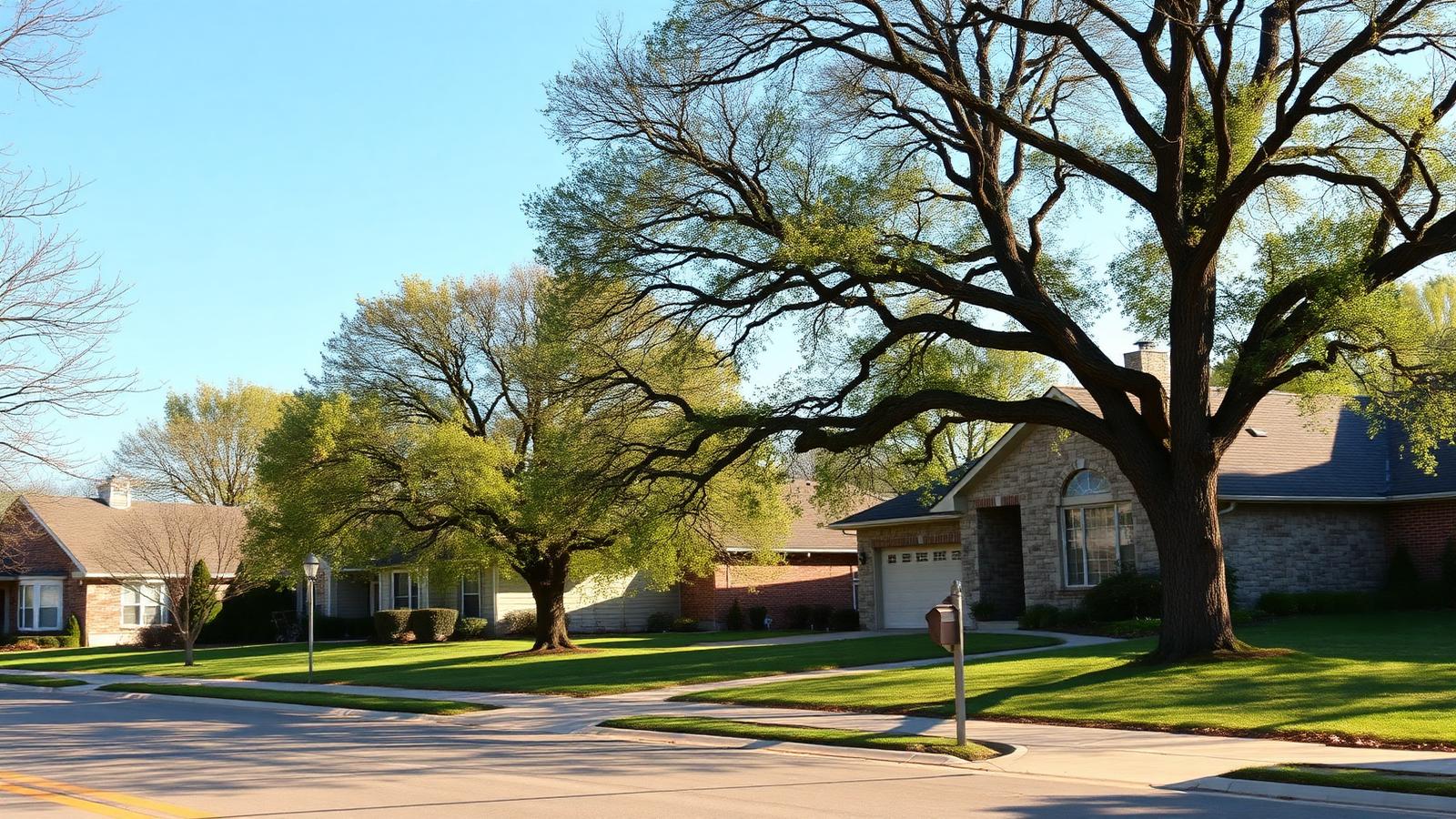
Housing stock ranges from early 20th century bungalows and brick homes in established neighborhoods like Waldo, Brookside, and the Northland, to new subdivision construction pushing out toward the suburbs on both the Missouri and Kansas sides. Prices vary sharply by neighborhood and school district, more so than in a lot of Midwestern cities.
Missouri does not cap annual property tax reassessment growth the way California does, and Kansas City sits in Jackson County, which has drawn public criticism in recent years over aggressive reassessments and a chaotic appeals process. Ask a local real estate agent for the current effective tax rate on any specific address before you buy, since it can vary block to block depending on taxing district overlaps.
Compared to nearly any California market, the raw price of a home here is dramatically lower, and that gap is the central financial case for the move. The trade-off is a property tax and assessment system that is less predictable than what a California Prop 13 owner is used to.
Work and the local economy
Kansas City's job base includes Cerner (now Oracle Health), H&R Block, Garmin, Hallmark, and a cluster of freight and rail logistics operations tied to the city's historic role as a rail hub. Federal agencies, including a large IRS processing center and a Federal Reserve Bank branch, add stable government employment.
Agribusiness and animal health form a genuine specialty here, with companies like Merck Animal Health and a broader life sciences cluster sometimes called the Kansas City Animal Health Corridor. That gives the metro a research and biotech dimension not obvious from the outside.
Downtown's tech and startup scene has grown, helped by Google Fiber's early rollout here, but it remains modest next to the coasts. If you need a deep, specialized private-sector labor market in a niche field, verify it exists locally before committing.
Climate and severe weather
Kansas City has a true four-season continental climate. Summers are hot and humid with regular days above 90 degrees, winters bring cold snaps, ice storms, and measurable snow, and spring and fall are the most pleasant stretches of the year.
The metro sits within the broader tornado-prone zone of the central United States, and severe thunderstorm and tornado watches are a normal part of spring life. Most storms pass without local damage, but taking warnings seriously and knowing where your shelter is are not optional here.
Humidity is the biggest adjustment for a coastal Californian. Summer air is thick and sticky in a way California's dry heat is not, and air conditioning is a year-round utility cost most California homes never needed.
Getting around, care, and schools
- Commercial air
- Kansas City International Airport (MCI), rebuilt with a new single terminal in 2023, offers direct flights to both coasts and many major hubs.
- Highways
- Interstates 29, 35, 49, and 70 converge in the metro, along with US 71 and US 24.
- Hospital
- Multiple major systems, including Saint Luke's Health System, University Health, and Children's Mercy Hospital.
- Public schools
- Kansas City Public Schools, plus numerous suburban districts within the metro.
- Higher education
- University of Missouri-Kansas City, Rockhurst University, and several community colleges.
- Setting
- Flat to rolling terrain along the Missouri and Kansas rivers, roughly 750 to 1,000 feet elevation.
The trade-offs
- The city is genuinely spread across two states with different tax and school systems, which adds complexity to comparing neighborhoods.
- Violent crime in specific parts of the urban core has been a persistent, well-documented civic problem for years.
- Property tax assessment practices in Jackson County have been unpredictable enough to draw state scrutiny, so verify the current tax bill before buying rather than estimating from the listed rate.
- Spring severe weather, including tornado risk, is a real seasonal fact of life, not a rare event.
Other Missouri towns people compare
Lee's Summit
A Kansas City metro suburb southeast of downtown, known for newer construction and the most consistent school performance in the metro.
St. Charles
A historic riverfront suburb west of St. Louis on the Missouri River, Missouri's first state capital, with steady home values and low crime.
Springfield
The largest city in southwest Missouri's Ozarks region, a university and healthcare hub with the state's lowest housing costs among its bigger cities.
Columbia
A university town roughly midway between Kansas City and St. Louis, home to the University of Missouri and the state's deepest healthcare access relative to its population.
Kirkwood
An established inner-ring St. Louis suburb southwest of downtown, walkable around its historic center with a Metrolink commuter rail station.
Statewide figures, tax detail, and the full Missouri picture are on the Missouri page. Compare property, income, and sales tax across all 49 destination states on Taxes, and see where Californians are actually moving on Stats.
Sources
- US Census Bureau, American Community Survey 2020 to 2024 5-Year Estimates, table B25077 (median home value), retrieved via Census Reporter, September 3, 2026.
- US Census Bureau, ACS 2020 to 2024 5-Year Estimates, table B25103 (median real estate taxes paid, owner-occupied units with a mortgage), retrieved September 3, 2026.
- US Census Bureau, ACS 2020 to 2024 5-Year Estimates, table B25088 (median selected monthly owner costs, owner-occupied units with a mortgage), retrieved September 3, 2026.
- US Census Bureau, ACS 2020 to 2024 5-Year Estimates, table B01003 (total population), retrieved September 3, 2026.
- Census Reporter, Kansas City, MO profile, censusreporter.org.
- Kansas City International Airport, flykci.com.
- Kansas City Animal Health Corridor overview.
See what your California equity buys in Kansas City
Four short questions. We match you with one local agent and apply a closing cost credit funded from our referral fee.
Start your Kansas City move
Four short questions. We use them to decide which agent fits your move, and to build your equity report.