
Missouri city guide
Moving From California to Kirkwood, MO
An established inner-ring St. Louis suburb southwest of downtown, walkable around its historic center with a Metrolink commuter rail station.
Housing comparison
California versus Kirkwood, side by side
- Median home value
- $725,800
- not available
- Median annual property tax
- $5,114
- not available
- Median monthly cost, owners with a mortgage
- $2,844
- not available
- Population
- 39.0 million (state)
- not available
Figures are US Census Bureau American Community Survey 2020 to 2024 5-Year Estimates for the city place. Property tax and monthly cost rows cover owner-occupied units with a mortgage, so they describe what current owners pay, not what a new buyer would pay at today's prices. California column is the statewide baseline used across this site.
Why Californians look at Kirkwood
Kirkwood is one of the older, more established suburbs in the St. Louis metro, laid out around a Victorian-era downtown built along the rail line that gave the suburb its name and its early identity as a commuter town for St. Louis. That history shows: Kirkwood has an actual walkable downtown with local shops and restaurants, not just a shopping center off a highway.
It is also one of the few St. Louis suburbs served directly by MetroLink, the region's light rail system, which gives residents a real transit option into downtown St. Louis rather than driving being the only choice.
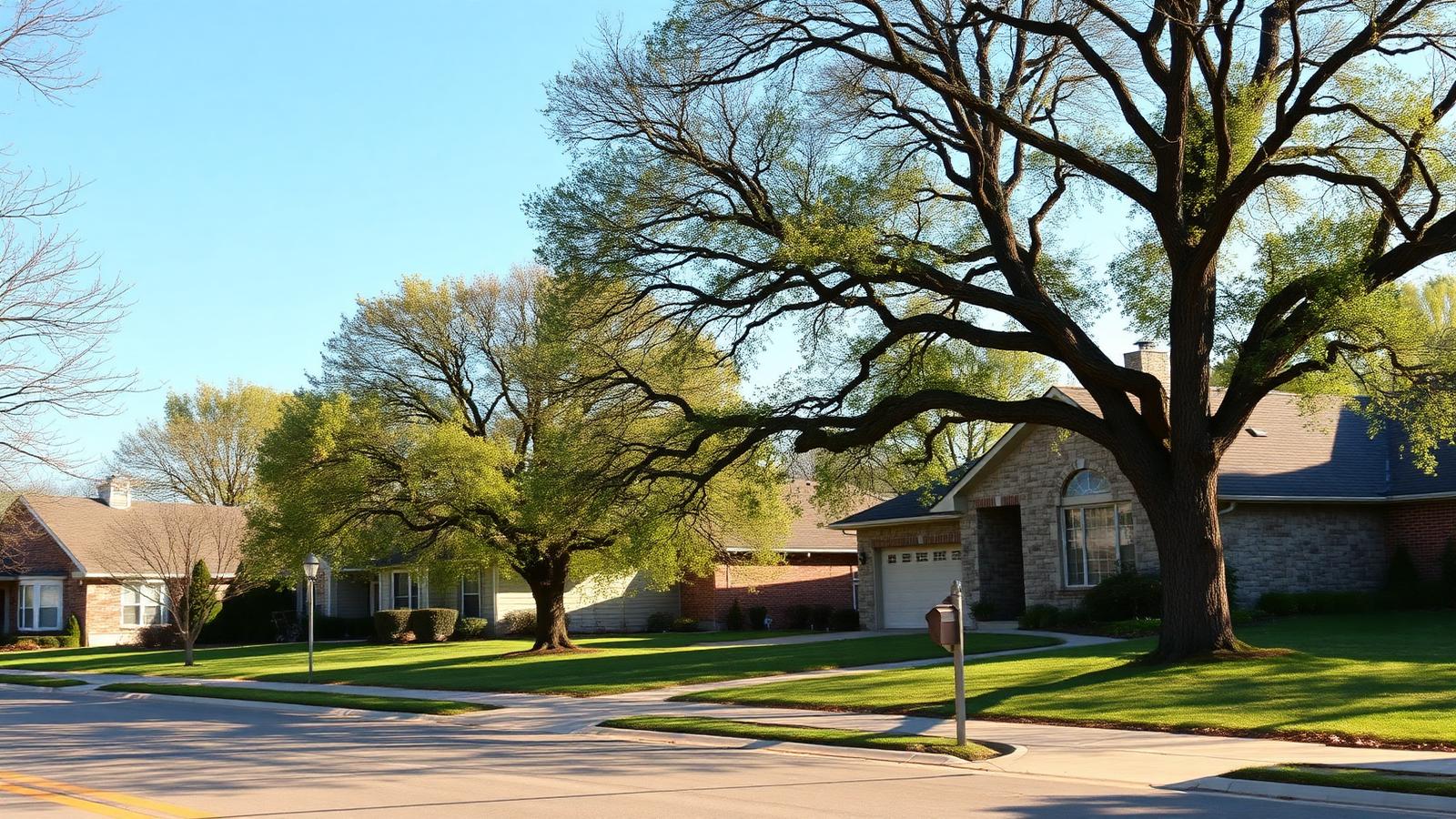
For a California family, Kirkwood offers the closest thing in the St. Louis metro to a classic, tree-lined, walkable American suburb, with a well-regarded school district and housing stock built mostly before the 1970s, at a price still far below comparable California suburbs.
Kirkwood fits you if
- You want an established, walkable suburb with an actual historic downtown rather than a newer subdivision-only community.
- You want a commuter rail option (MetroLink) into downtown St. Louis instead of relying solely on driving.
- You are drawn to older, architecturally varied housing stock over new construction.
- You want a well-regarded public school district within the St. Louis metro.
Look elsewhere if
- You want new construction with modern floor plans and larger lots.
- You want the lowest possible price point in the metro; Kirkwood carries a premium for its location and schools.
- You need a large local job market; most residents commute into St. Louis for work.
- You want rapid growth or new development; Kirkwood is largely built out and change comes slowly.
Housing in Kirkwood
Kirkwood's housing stock is dominated by homes built in the early to mid 20th century, including Craftsman bungalows, brick Tudors, and postwar ranches, concentrated on tree-lined streets close to the historic downtown and the Metrolink station.
Because the suburb is fully built out, there is little new construction, and homes near downtown and the train station typically carry the largest premium within the suburb, similar to transit-oriented pricing patterns Californians will recognize.
Even at its premium relative to other St. Louis suburbs, Kirkwood remains far more affordable than comparable walkable, transit-served suburbs in California, and property taxes remain well below what a similar California home would carry.
Work and commuting
Kirkwood itself has a modest local commercial base concentrated in its historic downtown, but most working residents commute into downtown St. Louis or the surrounding office corridors, aided by the direct MetroLink connection from the Kirkwood station.
The broader St. Louis metro economy includes major employers in healthcare, financial services, and biotech and plant science research, notably around the Danforth Plant Science Center and Washington University-affiliated institutions, all reachable from Kirkwood within a reasonable commute.
As with most established suburbs, evaluate Kirkwood primarily as a place to live with strong transit access to St. Louis jobs rather than as a place with its own deep employment base.
Climate and seasons
Kirkwood shares the St. Louis metro's humid continental climate: hot, humid summers with regular 90-degree days, cold winters with occasional ice storms, and the most comfortable stretches in spring and fall.
Being an inner suburb with mature tree canopy, Kirkwood's older neighborhoods offer more natural shade than newer, more exposed subdivisions, which takes some edge off summer heat at the street level even though air temperatures are the same across the metro.
Severe spring thunderstorms and occasional tornado warnings apply here as across the rest of the St. Louis region.
Getting around, care, and schools
- Commercial air
- St. Louis Lambert International Airport (STL) is roughly 25 minutes by car.
- Highways
- Interstate 44 and Interstate 270 provide the main connections; Kirkwood also has direct MetroLink light rail access.
- Hospital
- SSM Health St. Mary's Hospital is nearby in adjacent Richmond Heights.
- Public schools
- Kirkwood School District, one of the more well-regarded districts in the St. Louis metro.
- Higher education
- Washington University in St. Louis and Saint Louis University are both within a short drive.
- Setting
- Established inner-ring suburb southwest of downtown St. Louis, mature tree canopy.
The trade-offs
- Being fully built out means limited new construction and a persistent premium for the most desirable, walkable blocks.
- Local employment is thin; expect to commute into St. Louis proper for most professional work.
- Older housing stock often means older systems, plumbing, and wiring that may need updating.
- Humidity and winter ice storms are a real adjustment for a coastal Californian.
Other Missouri towns people compare
Kansas City
Missouri's largest city, a two-state metro with a diversified economy, an active downtown core, and housing costs far below California's.
Lee's Summit
A Kansas City metro suburb southeast of downtown, known for newer construction and the most consistent school performance in the metro.
St. Charles
A historic riverfront suburb west of St. Louis on the Missouri River, Missouri's first state capital, with steady home values and low crime.
Springfield
The largest city in southwest Missouri's Ozarks region, a university and healthcare hub with the state's lowest housing costs among its bigger cities.
Columbia
A university town roughly midway between Kansas City and St. Louis, home to the University of Missouri and the state's deepest healthcare access relative to its population.
Statewide figures, tax detail, and the full Missouri picture are on the Missouri page. Compare property, income, and sales tax across all 49 destination states on Taxes, and see where Californians are actually moving on Stats.
Sources
- US Census Bureau, American Community Survey 2020 to 2024 5-Year Estimates, table B25077 (median home value), retrieved via Census Reporter, September 3, 2026.
- US Census Bureau, ACS 2020 to 2024 5-Year Estimates, table B25103 (median real estate taxes paid, owner-occupied units with a mortgage), retrieved September 3, 2026.
- US Census Bureau, ACS 2020 to 2024 5-Year Estimates, table B25088 (median selected monthly owner costs, owner-occupied units with a mortgage), retrieved September 3, 2026.
- US Census Bureau, ACS 2020 to 2024 5-Year Estimates, table B01003 (total population), retrieved September 3, 2026.
- City of Kirkwood, Missouri, official website, kirkwoodmo.gov.
- Metro Transit St. Louis, MetroLink system information, metrostlouis.org.
See what your California equity buys in Kirkwood
Four short questions. We match you with one local agent and apply a closing cost credit funded from our referral fee.
Start your Kirkwood move
Four short questions. We use them to decide which agent fits your move, and to build your equity report.