
Missouri city guide
Moving From California to St. Charles, MO
A historic riverfront suburb west of St. Louis on the Missouri River, Missouri's first state capital, with steady home values and low crime.
Housing comparison
California versus St. Charles, side by side
- Median home value
- $725,800
- not available
- Median annual property tax
- $5,114
- not available
- Median monthly cost, owners with a mortgage
- $2,844
- not available
- Population
- 39.0 million (state)
- not available
Figures are US Census Bureau American Community Survey 2020 to 2024 5-Year Estimates for the city place. Property tax and monthly cost rows cover owner-occupied units with a mortgage, so they describe what current owners pay, not what a new buyer would pay at today's prices. California column is the statewide baseline used across this site.
Why Californians look at St. Charles
St. Charles sits on the Missouri River about 20 miles west of downtown St. Louis, and it carries real history: it was Missouri's first state capital and the departure point for the Lewis and Clark expedition. The historic Main Street district, with its cobblestone blocks of shops and restaurants along the riverfront, gives the city a sense of place uncommon among St. Louis suburbs.
It is a bedroom community more than an employment center, drawing residents who want a shorter commute into St. Louis than the far western suburbs offer, combined with lower crime rates and steadier home values than the city itself.
For a California family, St. Charles offers a specific trade: a walkable historic core for weekends and visitors, ordinary suburban subdivisions for daily life, and a cost of living well below coastal California, in exchange for St. Louis's humid summers and a metro job market narrower than the coasts.
St. Charles fits you if
- You want a suburb with real historic character rather than a generic subdivision-only feel.
- You want a shorter commute into downtown St. Louis than the outer suburbs provide.
- You prioritize low crime rates and stable, unremarkable home value appreciation.
- You are comfortable with a Midwestern river town's four-season climate.
Look elsewhere if
- You want a large, deep local job market; most residents commute into St. Louis proper or the surrounding office corridors.
- You want dense walkability beyond the small historic Main Street district.
- You want ocean, mountains, or dramatic scenery nearby.
- You need extensive public transit; the suburb is car dependent outside downtown.
Housing in St. Charles
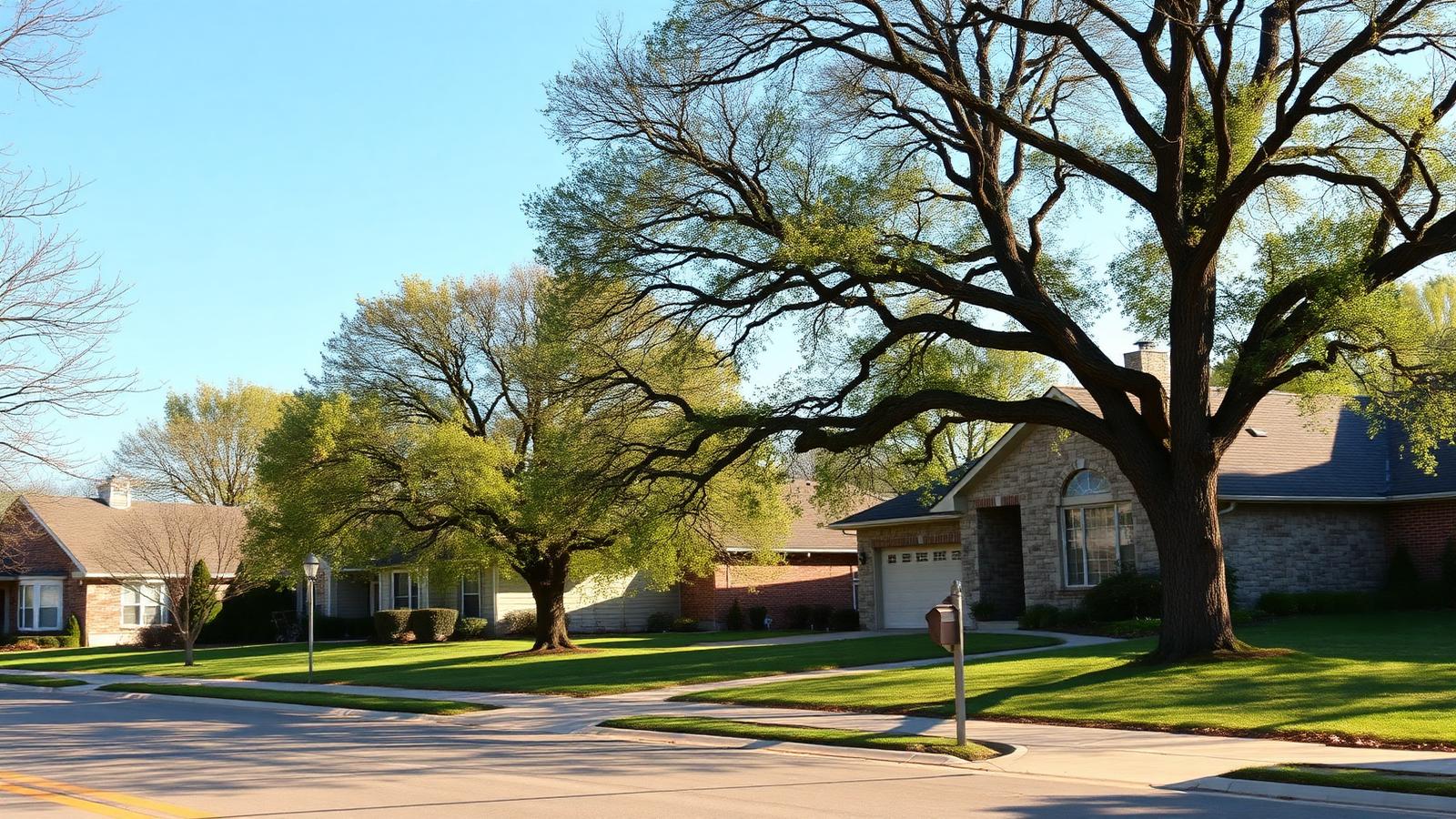
The housing stock mixes 19th century homes near the historic riverfront with mid-century and newer subdivisions spreading west and north of the old city core. Home values here are generally steadier and less volatile than in parts of the St. Louis urban core, reflecting the suburb's stable, low-turnover population.
St. Charles County, which the city is part of, is known within the St. Louis metro for lower crime and generally well-regarded public services relative to St. Louis City and some inner-ring suburbs, which supports steady rather than speculative home values.
As with the rest of the St. Louis metro, home prices remain far below coastal California even in desirable, historic neighborhoods, and property tax bills are a fraction of what a comparable California home carries.
Work and the local economy
St. Charles itself has a modest employment base built around retail, healthcare, and tourism tied to the historic district and riverfront casino, but the larger economic draw is proximity to the broader St. Louis metro, including corporate offices, healthcare systems, and manufacturing along the I-70 corridor.
St. Charles County has attracted logistics and light industrial employers due to its highway access and available land, giving the immediate area more local jobs than a purely residential suburb.
Most professional-track residents commute into St. Louis proper or the office parks along Highway 40/I-64 and I-70, so evaluate St. Charles primarily as a place to live rather than a place to find specialized work.
Climate and seasons
St. Charles shares the St. Louis metro's humid continental climate: hot, humid summers with regular days in the 90s, cold winters with occasional ice storms and measurable snow, and the most comfortable weather in spring and fall.
The Missouri River runs through the area and periodic flood risk is a real consideration for property near the lowest-lying riverfront areas, though the historic Main Street district has long managed this with flood walls and levees.
Humidity is the biggest year-round adjustment for a Californian, along with the need for real winter gear that most California homes never required.
Getting around, care, and schools
- Commercial air
- St. Louis Lambert International Airport (STL) is roughly 25 to 30 minutes away.
- Highways
- Interstate 70 runs through the city; Interstate 64 and Highway 94 provide additional access.
- Hospital
- SSM Health St. Joseph Hospital-St. Charles.
- Public schools
- St. Charles R-VI School District, along with several other districts serving parts of the city.
- Higher education
- Lindenwood University is based in St. Charles; St. Charles Community College serves the broader county.
- Setting
- Riverfront terrain along the Missouri River, roughly 450 to 500 feet elevation.
The trade-offs
- Local employment is thin outside retail, healthcare, and tourism; most professional jobs require a commute into St. Louis.
- Flood risk exists in the lowest riverfront areas and should be checked property by property.
- Humidity and winter weather are a real adjustment for a coastal Californian.
- The historic charm is concentrated in a small district; most of the city is conventional postwar and modern suburbia.
Other Missouri towns people compare
Kansas City
Missouri's largest city, a two-state metro with a diversified economy, an active downtown core, and housing costs far below California's.
Lee's Summit
A Kansas City metro suburb southeast of downtown, known for newer construction and the most consistent school performance in the metro.
Springfield
The largest city in southwest Missouri's Ozarks region, a university and healthcare hub with the state's lowest housing costs among its bigger cities.
Columbia
A university town roughly midway between Kansas City and St. Louis, home to the University of Missouri and the state's deepest healthcare access relative to its population.
Kirkwood
An established inner-ring St. Louis suburb southwest of downtown, walkable around its historic center with a Metrolink commuter rail station.
Statewide figures, tax detail, and the full Missouri picture are on the Missouri page. Compare property, income, and sales tax across all 49 destination states on Taxes, and see where Californians are actually moving on Stats.
Sources
- US Census Bureau, American Community Survey 2020 to 2024 5-Year Estimates, table B25077 (median home value), retrieved via Census Reporter, September 3, 2026.
- US Census Bureau, ACS 2020 to 2024 5-Year Estimates, table B25103 (median real estate taxes paid, owner-occupied units with a mortgage), retrieved September 3, 2026.
- US Census Bureau, ACS 2020 to 2024 5-Year Estimates, table B25088 (median selected monthly owner costs, owner-occupied units with a mortgage), retrieved September 3, 2026.
- US Census Bureau, ACS 2020 to 2024 5-Year Estimates, table B01003 (total population), retrieved September 3, 2026.
- City of St. Charles, Missouri, official website, stcharlescitymo.gov.
- Lindenwood University, lindenwood.edu.
See what your California equity buys in St. Charles
Four short questions. We match you with one local agent and apply a closing cost credit funded from our referral fee.
Start your St. Charles move
Four short questions. We use them to decide which agent fits your move, and to build your equity report.