
Moving from California to Rhode Island
What Your California Equity Buys in Rhode Island
A straight comparison of price, space, taxes, and monthly cost, plus a closing cost credit when you buy in Rhode Island.
Equity comparison
California versus Rhode Island, side by side
- Median home value
- $725,800
- $411,800
- Median annual property tax
- $5,114
- $4,644
- Median monthly cost, owners with a mortgage
- $2,844
- $2,175
- Median rooms
- 5.0 rooms
- 5.4 rooms
Rhode Island sets tax by municipal rate and several cities apply different rates to owner-occupied and non-owner-occupied property, so an investor bill and a homeowner bill differ on the same house.
These are Census medians for current homeowners, not estimates for a new purchase. California’s figure is held down by Proposition 13 assessments and long-held mortgages, so a new buyer at today’s prices would pay meaningfully more than the California column shows. Both columns measure the same thing, so the comparison holds.
Sources
- Median home value: US Census Bureau, ACS 1-Year 2023, table B25077
- Median annual property tax: US Census Bureau, ACS 1-Year 2023, table B25103 (median real estate taxes paid, owner-occupied units with a mortgage)
- Median monthly cost, owners with a mortgage: US Census Bureau, ACS 1-Year 2023, table B25088 (median selected monthly owner costs, owner-occupied units WITH a mortgage). Reflects what current owners pay, including long-held mortgages; not an estimate of a new buyer's payment.
- Median rooms: US Census Bureau, ACS 1-Year 2023, table B25018 (median rooms, all housing units)
Data as of 2026-09-02.
Why California homeowners choose Rhode Island
Rhode Island does not offer the equity advantage this site usually describes, and forcing that framing here would be dishonest. Property tax rates are high, the state has a graduated income tax, and home prices in the desirable coastal and East Bay towns are not far off California levels once you adjust for the smaller houses.
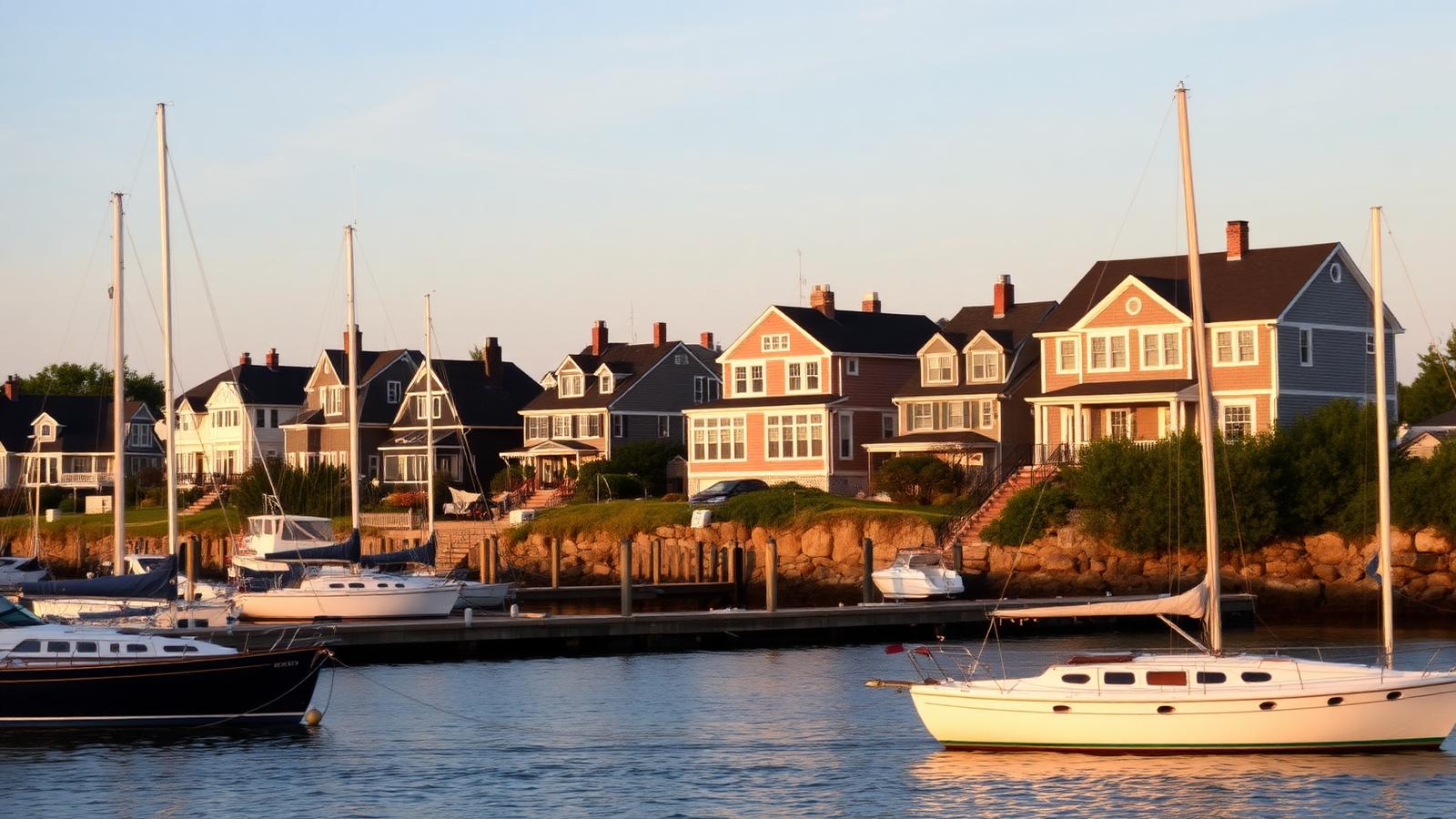
What you actually get is density of coastline. Rhode Island has more shoreline per square mile than anywhere else in the country, and no point in the state is more than a short drive from the water. Providence has a real food scene, RISD and Brown, a hospital system, and Amtrak service that puts Boston inside an hour. If proximity to Boston without Boston prices is the goal, that is a coherent reason to be here.
The specific thing to know: several Rhode Island municipalities levy differential tax rates based on owner occupancy and property class, and Providence's non-owner-occupied rate is substantially higher than its homestead rate. If you plan to keep the property as a rental later, that changes the math. If you want the standard equity story instead, North Carolina and South Carolina deliver it.
Cost of living versus California
Groceries, healthcare, and energy price like the rest of southern New England, meaning above the national average. Electricity in particular is expensive.
Housing is cheaper than coastal California in absolute dollars, but you get less square footage and an older house, and property tax closes part of the gap.
- Overall cost index vs California
- About 15% lower
- Effective property tax rate
- Among the highest in the nation
- State income tax
- Graduated, three brackets
- Coastal insurance
- Elevated in shoreline communities
Taxes: what actually changes
The income tax has only three brackets and the top rate is well below California's, so a high earner does see relief on the income side. That relief is partly consumed by the property tax bill.
Property tax is municipal, and rates vary sharply between adjacent towns. Owner-occupancy classification matters and should be confirmed with the assessor before closing.
Rhode Island has a state estate tax with a low exemption relative to the federal threshold. Social Security is exempt for residents below income limits, and there is a limited exclusion for other retirement income at full retirement age.
The housing market
Inventory is extremely tight. The state built very little for a long time and the shortage shows up as fast sales and escalating offers on anything well located.
Housing stock is genuinely old. Lead paint is the dominant issue, and Rhode Island's lead disclosure and rental certificate rules are among the strictest in the country. Buried oil tanks and knob-and-tube wiring are also common findings.
Along the south shore and in Newport County, wind and flood insurance are separate policies and the coastal wind pool pricing should be quoted before you make an offer.
Where people land in Rhode Island
Moving to East Greenwich
Top schools, a walkable Main Street, and the most consistent demand in the state.
Moving to Barrington
East Bay town with the highest rated public schools and a short Providence commute.
Moving to Newport
Sailing culture, tourism economy, and prices that reflect both.
Moving to Providence
The state's only city, with universities, hospitals, and Amtrak service toward Boston.
Moving to Narragansett
Surf town on the south shore with beach access and a heavy seasonal rental market.
Get the honest numbers on a Rhode Island move
We will build your equity report against actual municipal rates and owner-occupancy classifications, including the towns where this move costs you more, and introduce you to a vetted local agent. A closing cost credit applies at purchase. Free, with no obligation.
Start your Rhode Island move
Four short questions. We use them to decide which agent fits your move, and to build your equity report.