
New York city guide
Moving From California to Beacon, NY
A Hudson Valley arts town with a direct Metro-North line to Manhattan, popular with people who need occasional access to the city rather than a daily commute.
Housing comparison
California versus Beacon, side by side
- Median home value
- $725,800
- $471,600
- Median annual property tax
- $5,114
- $7,958
- Median monthly cost, owners with a mortgage
- $2,844
- not available
- Population
- 39.0 million (state)
- 14,834
Figures are US Census Bureau American Community Survey 2020 to 2024 5-Year Estimates for the city place. Property tax and monthly cost rows cover owner-occupied units with a mortgage, so they describe what current owners pay, not what a new buyer would pay at today's prices. California column is the statewide baseline used across this site.
Why Californians look at Beacon
Beacon sits on the east bank of the Hudson River about 65 miles north of New York City, a former hat-making and manufacturing town that spent decades declining before Dia:Beacon, a large contemporary art museum in a converted Nabisco box-printing factory, opened in 2003 and helped pull the town's Main Street back to life. Galleries, restaurants, and renovated storefronts now line Main Street in a way that would have been unrecognizable twenty years ago.
The Metro-North Hudson Line runs directly from Beacon to Grand Central Terminal, with an express trip of roughly 90 minutes. That is far from a light commute, and most residents who work in the city do it a few days a week rather than daily, but it is a real and direct option that most of upstate New York does not have.
For a California household, Beacon offers Hudson Valley scenery, an arts-driven small-city culture, and rail access to Manhattan, at a price closer to a mid-tier California inland market than to the low prices of Rochester or Buffalo. It suits people who want occasional city access more than people trying to escape high housing costs entirely.
Beacon fits you if
- You want direct rail access to Manhattan without living in or near the city full time.
- You value an arts and gallery scene, anchored by Dia:Beacon, in a walkable small-city downtown.
- You want Hudson Valley scenery, hiking on Mount Beacon, and access to the wider river towns.
- You are comfortable paying Hudson Valley prices rather than upstate discount prices.
Look elsewhere if
- You are looking for upstate New York's low cost of living. Beacon prices reflect Hudson Valley and New York City proximity, not upstate norms.
- You need a daily easy commute; even the express train is roughly 90 minutes each way to Grand Central.
- You need a large hospital system in town; the nearest major hospitals are in Poughkeepsie or Newburgh.
- You want a large private-sector local job market; much of Beacon's daytime economy is retail, hospitality, and the arts.
Housing in Beacon
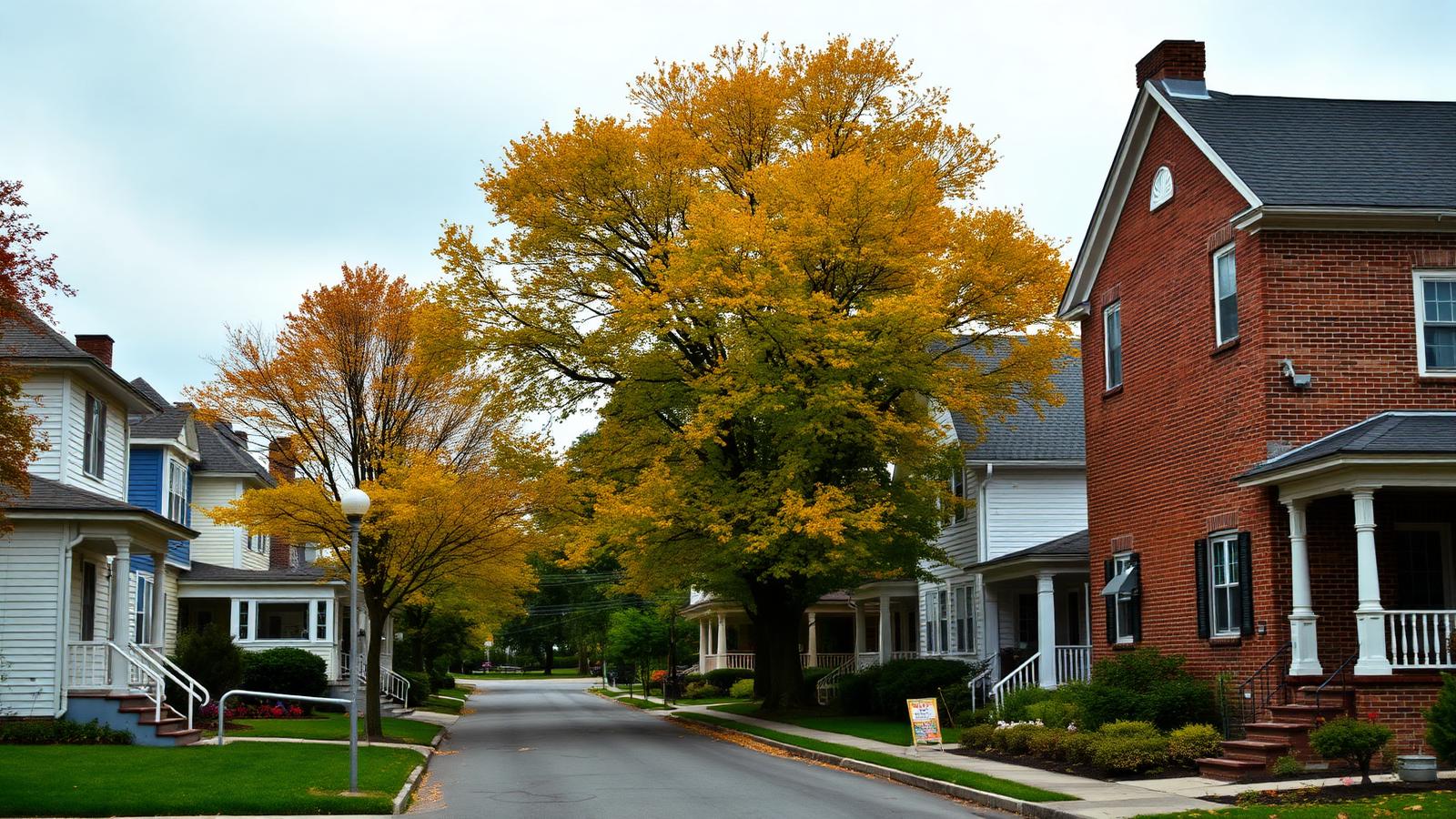
Beacon's housing stock is a mix of nineteenth and early twentieth-century homes near Main Street, many renovated as the town's arts economy has grown, and more modest housing on the hillsides above downtown and toward Fishkill Creek. Newer townhouse and condo development has added inventory near the waterfront and train station in recent years.
The ACS median home value for the city is $471,600, and the median annual real estate tax bill for owners with a mortgage is $7,958, both firmly in Hudson Valley commuter-town territory rather than upstate New York's discount range.
Proximity to the train station commands a real premium. Homes within easy walking distance of the Beacon Metro-North stop sell at a markup over otherwise comparable houses further from downtown.
Work and the local economy
A significant share of Beacon's working residents commute out of town, either into New York City via Metro-North or to jobs in Poughkeepsie, Newburgh, or Fishkill. Within Beacon itself, retail, hospitality, and the arts economy around Dia:Beacon and Main Street's galleries and restaurants form the core of local employment.
The Beacon City School District and city government provide additional local jobs. Larger employers in nearby Fishkill and Poughkeepsie, including healthcare systems and IBM's legacy presence in the area, are within a short drive.
Beacon works best for households with remote income, a commuting job in the city or nearby metros, or retirement income, rather than for someone depending entirely on jobs inside the town itself.
Climate and setting
Beacon has a typical Hudson Valley climate: cold winters with moderate snowfall, warm and humid summers, and a genuine four-season year with strong fall foliage along the river and surrounding hills.
Mount Beacon rises directly above the city and offers hiking with river views; the town's setting on the Hudson is part of its appeal and its price.
The Hudson Valley carries low hurricane risk and no wildfire exposure comparable to California, though river flooding and occasional heavy snow or ice storms are the practical weather concerns.
Getting around, care, and schools
- Commercial air
- Stewart International Airport, about 20 miles away in Newburgh, offers limited service; New York City airports are roughly 90 minutes to two hours by car.
- Rail
- Metro-North Hudson Line direct to Grand Central Terminal, approximately 90 minutes on express trains.
- Highways
- Interstate 84 crosses the Hudson at Beacon via the Newburgh-Beacon Bridge.
- Hospital
- Nearest major hospitals are in Poughkeepsie (Vassar Brothers Medical Center) and Newburgh.
- Public schools
- Beacon City School District.
- Setting
- East bank of the Hudson River, about 65 miles north of New York City.
The trade-offs
- Prices reflect Hudson Valley and Manhattan-commuter demand, not upstate New York's typical discount.
- The Metro-North commute is real but long; this suits occasional trips into the city more than a daily five-day commute.
- Beacon does not have its own major hospital; serious medical care means a drive to Poughkeepsie or Newburgh.
- The local job market outside retail, hospitality, and the arts is thin; most higher-paying work is commuted to elsewhere.
Other New York towns people compare
Rochester
The cheapest real housing stock of any sizable Northeast city, built on an imaging and optics engineering base that survived Kodak's decline.
Buffalo
A revived waterfront and downtown core, a healthcare and finance-driven economy, and some of the lowest home prices among large Northeast cities.
Saratoga Springs
Upstate New York's most desirable small city, built around thoroughbred racing, mineral springs, and a walkable downtown, priced well above the rest of upstate.
Ithaca
Two colleges, deep gorges, and the most left-leaning small city in the Finger Lakes, with prices set by student demand rather than the regional market.
Kingston
Catskills access, a walkable historic core, and the small city widely credited with, and blamed for, the Hudson Valley's rising prices.
Statewide figures, tax detail, and the full New York picture are on the New York page. Compare property, income, and sales tax across all 49 destination states on Taxes, and see where Californians are actually moving on Stats.
Sources
- US Census Bureau, American Community Survey 2020 to 2024 5-Year Estimates, table B25077 (median home value), retrieved via Census Reporter, September 3, 2026.
- US Census Bureau, ACS 2020 to 2024 5-Year Estimates, table B25103 (median real estate taxes paid, owner-occupied units with a mortgage), retrieved September 3, 2026.
- US Census Bureau, ACS 2020 to 2024 5-Year Estimates, table B25088 (median selected monthly owner costs, owner-occupied units with a mortgage), retrieved September 3, 2026.
- US Census Bureau, ACS 2020 to 2024 5-Year Estimates, table B01003 (total population), retrieved September 3, 2026.
- GeoStat.org, Beacon, New York home values and property tax data drawn from the US Census Bureau American Community Survey.
- Hudson River Realtors, Metro-North commute times from Hudson Valley towns, hudsonriverrealtors.com.
See what your California equity buys in Beacon
Four short questions. We match you with one local agent and apply a closing cost credit funded from our referral fee.
Start your Beacon move
Four short questions. We use them to decide which agent fits your move, and to build your equity report.