
New York city guide
Moving From California to Buffalo, NY
A revived waterfront and downtown core, a healthcare and finance-driven economy, and some of the lowest home prices among large Northeast cities.
Housing comparison
California versus Buffalo, side by side
- Median home value
- $725,800
- $164,200
- Median annual property tax
- $5,114
- $1,622
- Median monthly cost, owners with a mortgage
- $2,844
- not available
- Population
- 39.0 million (state)
- 276,618
Figures are US Census Bureau American Community Survey 2020 to 2024 5-Year Estimates for the city place. Property tax and monthly cost rows cover owner-occupied units with a mortgage, so they describe what current owners pay, not what a new buyer would pay at today's prices. California column is the statewide baseline used across this site.
Why Californians look at Buffalo
Buffalo has spent the last fifteen years reversing a half-century of decline. The waterfront along Lake Erie and the Buffalo River, largely abandoned grain silos and rail yards a generation ago, now holds Canalside, a growing medical campus, and a genuinely walkable downtown. That turnaround is real, but it is concentrated: large stretches of the East Side and other city neighborhoods have not seen the same investment.
The city's economy has shifted from its old steel and manufacturing base toward healthcare, finance and insurance back-office operations, and education. Kaleida Health and the Roswell Park Comprehensive Cancer Center anchor a medical corridor that is the largest employer cluster in the region.
For a California seller, Buffalo offers a home price a fraction of the statewide California median and a metro of nearly 1.2 million people with a full range of hospitals, an international airport, and proximity to Toronto and Niagara Falls. The trade is New York's income tax and a genuinely severe winter climate.
Buffalo fits you if
- You want the lowest prices among large Northeast cities with a real downtown, waterfront, and airport.
- You or a household member works in healthcare, insurance, or finance back-office operations.
- You want proximity to Toronto and Niagara Falls, both under two hours away.
- You are comfortable with older urban housing stock and a city still working through uneven redevelopment.
Look elsewhere if
- You are moving specifically for milder winters. Buffalo has severe lake-effect snow events, some historic.
- You need every neighborhood in a city to be equally invested; Buffalo's revival has been concentrated downtown and along the waterfront.
- You expect no state income tax. New York taxes wages and most retirement income.
- You need frequent long-haul nonstop flights; most routes from Buffalo connect through a hub.
Housing in Buffalo
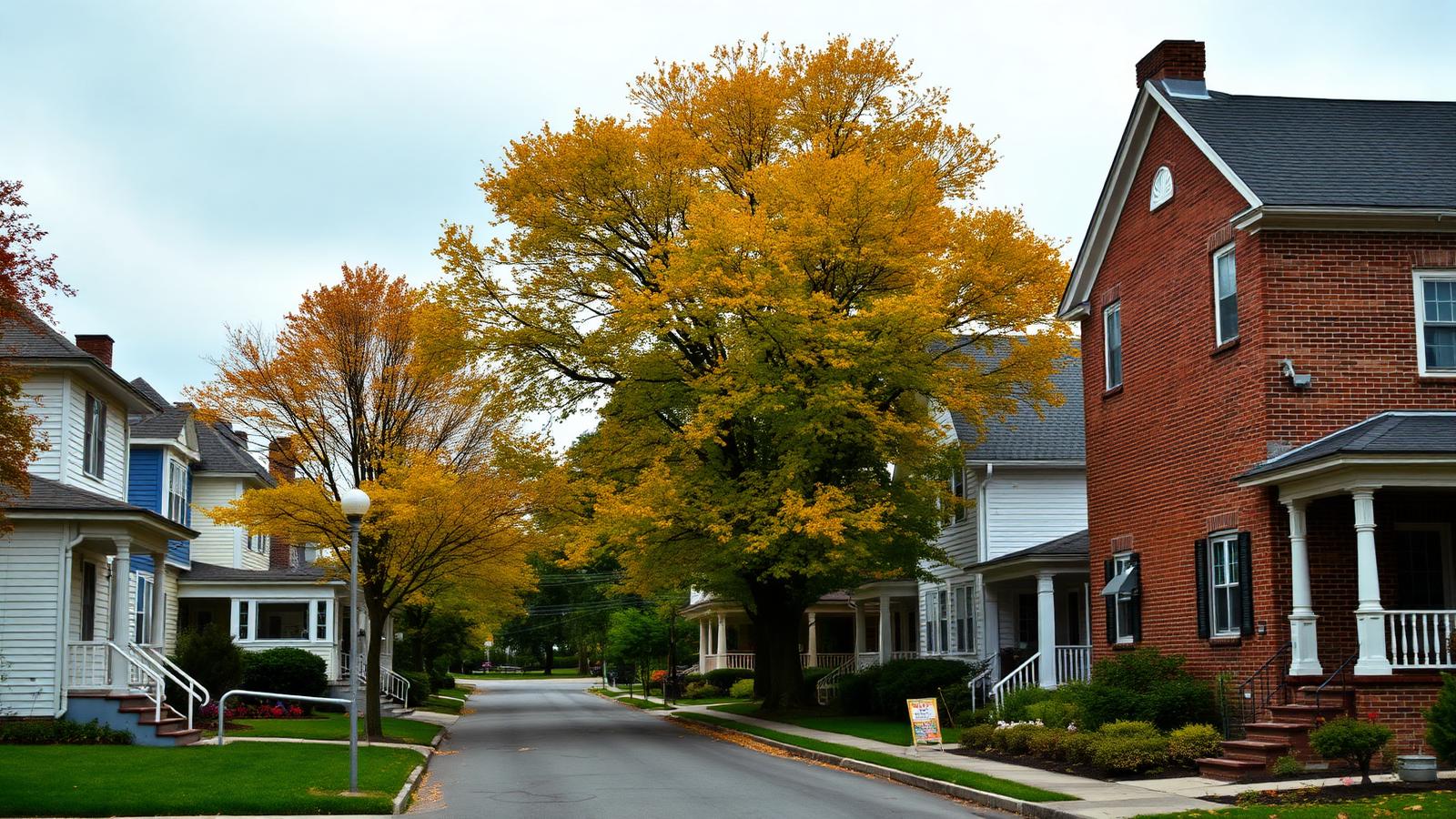
The city's housing stock is dominated by early twentieth-century two-family and single-family homes, many with the deep front porches typical of the era. Elmwood Village, North Buffalo, and parts of the West Side have seen the strongest price appreciation as demand for walkable, transit-adjacent neighborhoods has grown; the East Side remains the most affordable and the least redeveloped part of the city.
The ACS median home value for the city is $164,200, and the median annual real estate tax bill for owners with a mortgage is $1,622, both well below the statewide New York figures and a fraction of California's statewide median.
Winterizing an older Buffalo house matters more than in most cities: insulation, roof condition, and heating system age are worth scrutinizing closely given the snow load and heating-season length.
Work and the local economy
Kaleida Health, Roswell Park Comprehensive Cancer Center, and the University at Buffalo's academic medical campus form the region's largest employment cluster, part of the Buffalo Niagara Medical Campus development downtown.
M&T Bank, headquartered in Buffalo, and a cluster of insurance and financial services back-office operations provide a second pillar. Manufacturing persists in smaller, more specialized forms than the city's old steel-era base, including advanced manufacturing tied to Tesla's Gigafactory 2 solar panel plant on the old steel site in South Buffalo.
The private-sector job market is broader than most upstate New York cities of similar size, but it is not California-scale. Remote workers and retirees get the full benefit of the low cost of living without depending on the local market.
Climate and lake-effect winters
Buffalo sits at the eastern end of Lake Erie, which sets up some of the most intense lake-effect snow events in the country when cold air crosses the open lake. The city is famous for storms that dump feet of snow in narrow bands over a day or two, including historic events that have shut the metro down entirely.
Outside of those events, winters are cold but manageable, and the city clears snow efficiently given how much practice it gets. Summers are mild and pleasant, moderated by the lake, without the humidity extremes of the mid-Atlantic.
Buffalo's inland location means minimal hurricane, wildfire, or drought risk, and insurance costs reflect that; homeowners insurance here is a fraction of coastal California premiums.
Getting around, care, and schools
- Commercial air
- Buffalo Niagara International Airport (BUF) offers up to 100 nonstop flights daily to more than 30 destinations, mostly East Coast and Midwest.
- Highways
- Interstate 90 (New York State Thruway), Interstate 190, and Interstate 290 serve the metro.
- Hospital
- Kaleida Health's Buffalo General Medical Center and Roswell Park Comprehensive Cancer Center.
- Public schools
- Buffalo Public Schools within the city; suburban districts vary in performance.
- Higher education
- University at Buffalo, the largest campus in the SUNY system.
- Setting
- Eastern shore of Lake Erie at the head of the Niagara River.
The trade-offs
- Lake-effect snow events can be severe and occasionally shut down the entire metro for a day or more.
- Redevelopment has been uneven; parts of the East Side have not shared in the downtown and waterfront revival.
- New York taxes wages and most retirement income, unlike no-income-tax states.
- Most long-haul flights connect through a hub rather than flying nonstop.
Other New York towns people compare
Rochester
The cheapest real housing stock of any sizable Northeast city, built on an imaging and optics engineering base that survived Kodak's decline.
Saratoga Springs
Upstate New York's most desirable small city, built around thoroughbred racing, mineral springs, and a walkable downtown, priced well above the rest of upstate.
Ithaca
Two colleges, deep gorges, and the most left-leaning small city in the Finger Lakes, with prices set by student demand rather than the regional market.
Beacon
A Hudson Valley arts town with a direct Metro-North line to Manhattan, popular with people who need occasional access to the city rather than a daily commute.
Kingston
Catskills access, a walkable historic core, and the small city widely credited with, and blamed for, the Hudson Valley's rising prices.
Statewide figures, tax detail, and the full New York picture are on the New York page. Compare property, income, and sales tax across all 49 destination states on Taxes, and see where Californians are actually moving on Stats.
Sources
- US Census Bureau, American Community Survey 2020 to 2024 5-Year Estimates, table B25077 (median home value), retrieved via Census Reporter, September 3, 2026.
- US Census Bureau, ACS 2020 to 2024 5-Year Estimates, table B25103 (median real estate taxes paid, owner-occupied units with a mortgage), retrieved September 3, 2026.
- US Census Bureau, ACS 2020 to 2024 5-Year Estimates, table B25088 (median selected monthly owner costs, owner-occupied units with a mortgage), retrieved September 3, 2026.
- US Census Bureau, ACS 2020 to 2024 5-Year Estimates, table B01003 (total population), retrieved September 3, 2026.
- GeoStat.org, Buffalo, New York home values and property tax data drawn from the US Census Bureau American Community Survey.
- Buffalo Niagara International Airport, air carriers and nonstop destinations, buffaloairport.com.
See what your California equity buys in Buffalo
Four short questions. We match you with one local agent and apply a closing cost credit funded from our referral fee.
Start your Buffalo move
Four short questions. We use them to decide which agent fits your move, and to build your equity report.