
New York city guide
Moving From California to Ithaca, NY
Two colleges, deep gorges, and the most left-leaning small city in the Finger Lakes, with prices set by student demand rather than the regional market.
Housing comparison
California versus Ithaca, side by side
- Median home value
- $725,800
- $342,700
- Median annual property tax
- $5,114
- $8,897
- Median monthly cost, owners with a mortgage
- $2,844
- not available
- Population
- 39.0 million (state)
- 32,814
Figures are US Census Bureau American Community Survey 2020 to 2024 5-Year Estimates for the city place. Property tax and monthly cost rows cover owner-occupied units with a mortgage, so they describe what current owners pay, not what a new buyer would pay at today's prices. California column is the statewide baseline used across this site.
Why Californians look at Ithaca
Ithaca sits at the southern tip of Cayuga Lake in the Finger Lakes region, defined by Cornell University on the hill above downtown and Ithaca College across the valley on South Hill. The combination gives a city of under 33,000 people a cultural and political character closer to a much larger university town than to the rest of rural upstate New York, sometimes summarized locally as 'ten square miles surrounded by reality.'
The gorges that cut through and around the city, Cascadilla, Fall Creek, Six Mile Creek, and Buttermilk Falls, are a defining physical feature, with waterfalls and swimming holes inside city limits and in the state parks just beyond it.
For a California buyer, Ithaca's median home value of $342,700 is closer to a mid-tier inland California city than to the rest of upstate New York, driven by Cornell-adjacent demand and a tight local supply of buildable land between the lake and the hills. Property taxes are also high, among the highest of any city profiled here.
Ithaca fits you if
- You want deep cultural and educational access, from Cornell's museums and lectures to Ithaca College's arts programming, in a small city.
- You want gorges, waterfalls, and Finger Lakes wine country within walking or short driving distance.
- You are comfortable with a politically progressive small city that stands apart from its rural surroundings.
- You are bringing portable income and do not need Ithaca's tight local job market to carry you.
Look elsewhere if
- You expect upstate New York's typical low prices. Ithaca's home values and property taxes run well above the regional norm.
- You need a large hospital system; Cayuga Medical Center is a solid community hospital but not a major referral center.
- You dislike college-town rental turnover and student housing pressure in central neighborhoods.
- You need frequent long-haul flights without a connection.
Housing in Ithaca
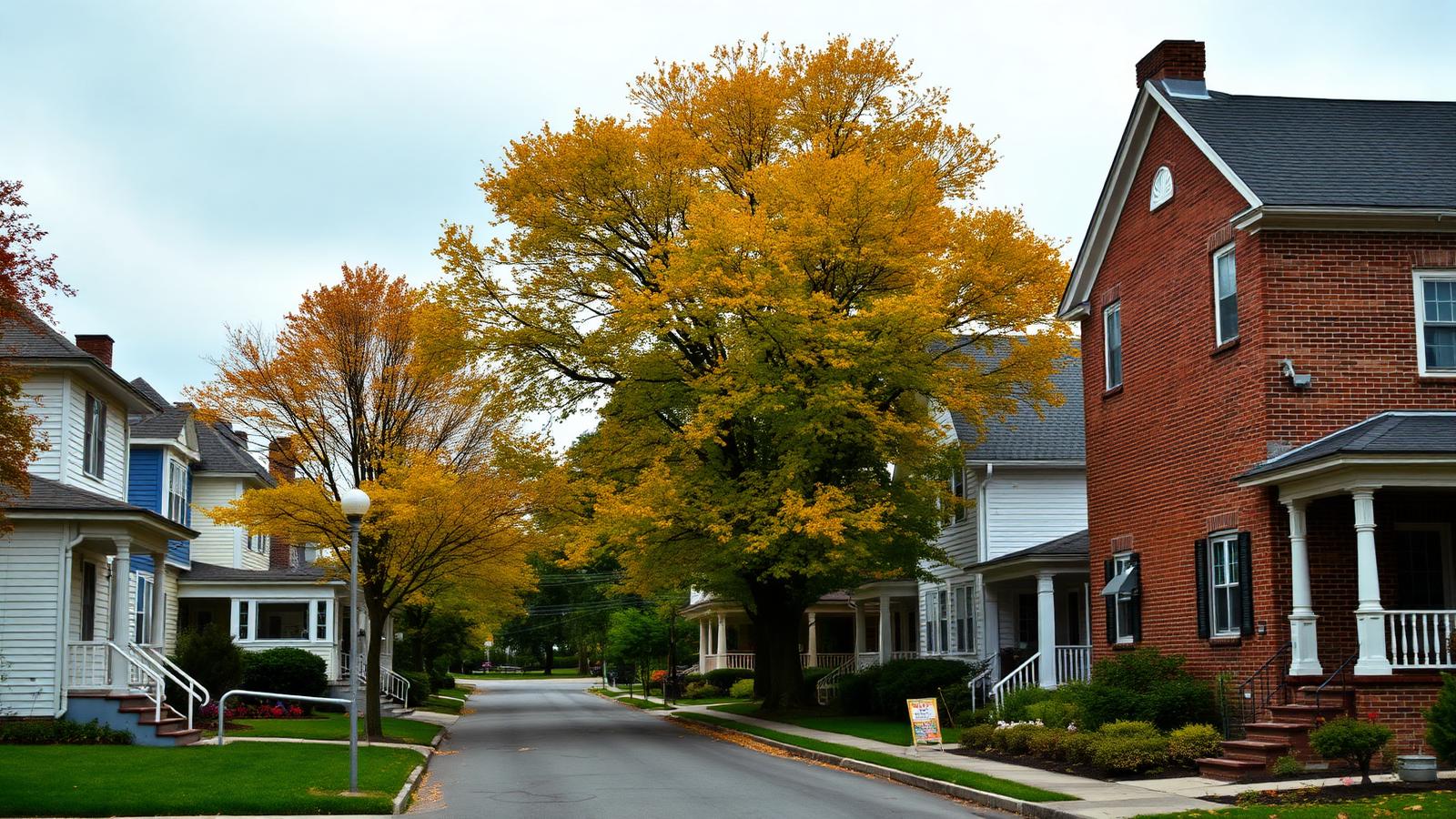
Housing near Cornell's campus and downtown is dominated by older homes converted to student rentals, which keeps ownership inventory tight and prices elevated in those areas. Fall Creek and the West End hold owner-occupied Victorian and early twentieth-century homes at a premium; the outlying town of Ithaca and neighboring Lansing and Trumansburg offer somewhat more affordable options with a longer commute.
The ACS median home value for the city is $342,700, and the median annual real estate tax bill for owners with a mortgage is $8,897, the highest property tax figure among the cities in this guide and a real cost to budget for regardless of the home's price.
Steep topography matters here in a way it does not in most upstate cities: many properties sit on hillsides above the gorges, with driveways and access roads that need real winter maintenance.
Work and the local economy
Cornell University, including Weill Cornell's local research operations, is by far the largest employer in the county, followed by Ithaca College. Between them, higher education dominates local employment in a way similar to Laramie's relationship with the University of Wyoming.
Cayuga Medical Center, the school district, and a modest technology and biotech sector spun out of Cornell research provide the rest of the base. Tourism tied to the gorges, waterfalls, and Finger Lakes wineries adds seasonal employment.
Outside of the university system, the private-sector job market is narrow for a city this expensive. Remote workers and retirees benefit from Ithaca's culture without depending on its local labor market.
Climate, gorges, and winters
Ithaca has a cold, snowy upstate New York winter moderated somewhat by Cayuga Lake, which delays the coldest temperatures and can produce lake-effect snow bands, though less severe than Buffalo's or Rochester's exposure to the larger Great Lakes.
Summers are pleasant and relatively short, and the gorges and lake provide swimming and recreation that much of the rest of upstate New York lacks in comparable convenience.
Steep terrain means some roads and driveways face real ice and grade challenges in winter. The gorges themselves have drowning risk in high water; local safety signage and periodic closures reflect a real, not hypothetical, hazard.
Getting around, care, and schools
- Commercial air
- Ithaca Tompkins International Airport (ITH) offers direct flights to New York (JFK) and Washington (Dulles); Syracuse Hancock International, about 65 miles away, offers broader service.
- Highways
- State Route 13 and State Route 96 are the main arterials; no interstate runs directly through the city.
- Hospital
- Cayuga Medical Center, the county's community hospital.
- Public schools
- Ithaca City School District.
- Higher education
- Cornell University and Ithaca College, both in the city.
- Setting
- Southern tip of Cayuga Lake, surrounded by gorges and hillside terrain.
The trade-offs
- Property taxes are the highest among the cities profiled here, a real cost independent of purchase price.
- No interstate serves the city directly, which lengthens most regional trips.
- The local economy is dominated by two universities, similar to the single-employer risk seen in other college towns.
- Central neighborhoods near campus are shaped heavily by student rental demand, which affects both price and neighborhood character.
Other New York towns people compare
Rochester
The cheapest real housing stock of any sizable Northeast city, built on an imaging and optics engineering base that survived Kodak's decline.
Buffalo
A revived waterfront and downtown core, a healthcare and finance-driven economy, and some of the lowest home prices among large Northeast cities.
Saratoga Springs
Upstate New York's most desirable small city, built around thoroughbred racing, mineral springs, and a walkable downtown, priced well above the rest of upstate.
Beacon
A Hudson Valley arts town with a direct Metro-North line to Manhattan, popular with people who need occasional access to the city rather than a daily commute.
Kingston
Catskills access, a walkable historic core, and the small city widely credited with, and blamed for, the Hudson Valley's rising prices.
Statewide figures, tax detail, and the full New York picture are on the New York page. Compare property, income, and sales tax across all 49 destination states on Taxes, and see where Californians are actually moving on Stats.
Sources
- US Census Bureau, American Community Survey 2020 to 2024 5-Year Estimates, table B25077 (median home value), retrieved via Census Reporter, September 3, 2026.
- US Census Bureau, ACS 2020 to 2024 5-Year Estimates, table B25103 (median real estate taxes paid, owner-occupied units with a mortgage), retrieved September 3, 2026.
- US Census Bureau, ACS 2020 to 2024 5-Year Estimates, table B25088 (median selected monthly owner costs, owner-occupied units with a mortgage), retrieved September 3, 2026.
- US Census Bureau, ACS 2020 to 2024 5-Year Estimates, table B01003 (total population), retrieved September 3, 2026.
- GeoStat.org, Ithaca, New York home values and property tax data drawn from the US Census Bureau American Community Survey.
- Ithaca Tompkins International Airport, about and directions, flyithaca.com.
See what your California equity buys in Ithaca
Four short questions. We match you with one local agent and apply a closing cost credit funded from our referral fee.
Start your Ithaca move
Four short questions. We use them to decide which agent fits your move, and to build your equity report.